4.0(2)

A Hunger Artist

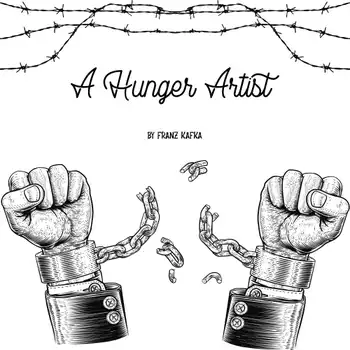
A Hunger Artist is a short story by Franz Kafka. The protagonist, a hunger artist who experiences the decline in appreciation of his craft, is an archetypical creation of Kafka: an individual marginalized and victimized by society at large. The title of the story has been translated also to "A Fasting Artist" and "A Starvation Artist". A Hunger Artist explores the familiar Kafka themes of death, art, isolation, asceticism, spiritual poverty, futility, personal failure and the corruption of human relationships. There is a sharp division among critical interpretations of "A Hunger Artist". Most commentators concur that the story is an allegory, but they disagree as to what is represented. Some critics, pointing to the hunger artist's asceticism, regard him as a saintly or even Christ-like figure. In support of this view they emphasize the unworldliness of the protagonist, the priest-like quality of the watchers, and the traditional religious significance of the forty-day period. Other critics insist that A Hunger Artist is an allegory of the misunderstood artist, whose vision of transcendence and artistic excellence is rejected or ignored by the public. This interpretation is sometimes joined with a reading of the story as autobiographical. According to this view, this story, written near the end of Kafka's life, links the hunger artist with the author as an alienated artist who is dying. The moral of the story, says literature critic Maud Ellmann, is that it is not by food that we survive but by the gaze of others and "it is impossible to live by hunger unless we can be seen or represent doing so".

Über dieses Buch

A Hunger Artist is a short story by Franz Kafka. The protagonist, a hunger artist who experiences the decline in appreciation of his craft, is an archetypical creation of Kafka: an individual marginalized and victimized by society at large. The title of the story has been translated also to "A Fasting Artist" and "A Starvation Artist". A Hunger Artist explores the familiar Kafka themes of death, art, isolation, asceticism, spiritual poverty, futility, personal failure and the corruption of human relationships. There is a sharp division among critical interpretations of "A Hunger Artist". Most commentators concur that the story is an allegory, but they disagree as to what is represented. Some critics, pointing to the hunger artist's asceticism, regard him as a saintly or even Christ-like figure. In support of this view they emphasize the unworldliness of the protagonist, the priest-like quality of the watchers, and the traditional religious significance of the forty-day period. Other critics insist that A Hunger Artist is an allegory of the misunderstood artist, whose vision of transcendence and artistic excellence is rejected or ignored by the public. This interpretation is sometimes joined with a reading of the story as autobiographical. According to this view, this story, written near the end of Kafka's life, links the hunger artist with the author as an alienated artist who is dying. The moral of the story, says literature critic Maud Ellmann, is that it is not by food that we survive but by the gaze of others and "it is impossible to live by hunger unless we can be seen or represent doing so".
Starte noch heute mit diesem Buch für € 0

  • Hole dir während der Testphase vollen Zugriff auf alle Bücher in der App
  • Keine Verpflichtungen, jederzeit kündbar
Jetzt kostenlos testen
Mehr als 52 000 Menschen haben Nextory im App Store und auf Google Play 5 Sterne gegeben.

  1. 4.4

    Franz Kafka: Die Verwandlung

    Franz Kafka

  2. 3.5

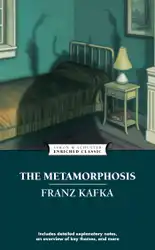
    The Metamorphosis

    Franz Kafka

  3. 17. Juli

    Der Heizer. Eine Erzählung. : Hörbuchzeit: Klassiker der Weltliteratur

    Hörbuchzeit, Franz Kafka

  4. 3.5

    The Metamorphosis

    Franz Kafka

  5. Neu

    El Fogonero

    Franz Kafka

  6. Neu

    La Métamorphose - Livre Audio

    Franz Kafka

  7. Neu
    3.7

    The Trial :

    Franz Kafka

  8. Neu

    Gesammelte Werke : Franz Kafka

    Franz Kafka

  9. Neu

    100 Clásicos de la Literatura Universal

    Francis Scott Fitzgerald, Mary Shelley, Lyman Frank Baum, Louisa May Alcott, Dante Alighieri, Jane Austen, Ambrose Bierce, Emily Brontë, Edgar Rice Burroughs, Lewis Carroll, Wilkie Collins, René Descartes, Charles Dickens, Emily Dickinson, Alexandre Dumas, Gustave Flaubert, Benito Pérez Galdós, Johann Wolfgang von Goethe, Thomas Hardy, E T A Hoffmann, Washington Irving, Henry James, James Joyce, Franz Kafka, Gaston Leroux, Federico García Lorca, H.P. Lovecraft, Publio Virgilio Marón, Lucy Maud Montgomery, John William Polidori, Marco Polo, Antoine de Saint-Exupéry, Emilio Salgari, Walter Scott, Mark Twain, Jules Verne, Julio Verne, H.G. Wells, Edith Wharton, Mary Wollstonecraft, Stefan Zweig, Sun Tzu, Bram Stoker, - Aristoteles, George Bernard Shaw, Henryk Sienkiewicz, Concepción Arenal, Charlotte Brontë, Miguel de Cervantes, G.K. Chesterton, Daniel Defoe, Fyodor Mikhailovich Dostoyevsky, Arthur Conan Doyle, Sigmund Freud, H. Rider Haggard, Homero, Immanuel Kant, Rudyard Kipling, Molière, Friedrich Nietzsche, Fernando de Rojas, Sófocles, William Makepeace Thackeray, León Tolstói, Voltaire, Ramón María del Valle-Inclán, Oscar Wilde, Virginia Woolf

  10. Neu

    100 Obras Maestras Que Debes Leer Antes De Morir

    Francis Scott Fitzgerald, Mary Shelley, Lyman Frank Baum, Edith Nesbit, Dante Alighieri, Jane Austen, Ambrose Bierce, Emily Brontë, Edgar Rice Burroughs, Lewis Carroll, Wilkie Collins, René Descartes, Charles Dickens, Emily Dickinson, Alexandre Dumas, Gustave Flaubert, Benito Pérez Galdós, Johann Wolfgang von Goethe, Thomas Hardy, E T A Hoffmann, Washington Irving, Henry James, James Joyce, Franz Kafka, Gaston Leroux, Federico García Lorca, H.P. Lovecraft, Publio Virgilio Marón, Lucy Maud Montgomery, John William Polidori, Marco Polo, Antoine de Saint-Exupéry, Emilio Salgari, Walter Scott, Mark Twain, Jules Verne, H.G. Wells, Edith Wharton, Mary Wollstonecraft, Fernando de Rojas

  11. Neu

    Obras completas : Franz Kafka

    Franz Kafka

  12. Neu

    Metamorphosis :

    Franz Kafka