Über dieses Buch

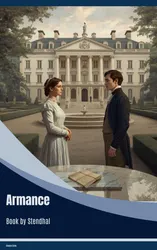
Stendhal's Armance (1827), his first novel, is a subtle study of desire, pride, and social paralysis in Restoration France. Centered on Octave de Malivert, a brilliant but tormented young aristocrat, and his love for the noble Armance de Zohiloff, the novel transforms a seemingly conventional courtship plot into a psychological investigation of secrecy and self-division. Its restrained, ironic prose anticipates Stendhal's later realism, while its elliptical treatment of Octave's "fatal secret" places it within the moral and emotional tensions of post-Napoleonic fiction. Stendhal, born Henri Beyle, wrote from the perspective of a man formed by the Revolution, Napoleon's campaigns, and a lifelong suspicion of social hypocrisy. His experience among aristocratic circles, his fascination with inward passion, and his theory of love as "crystallization" all inform Armance. The novel reflects his acute awareness of a generation caught between heroic memory and the sterile codes of restored monarchy. Readers interested in psychological fiction, early realism, or the literature of frustrated passion will find Armance indispensable. It is a compressed, demanding, and elegant work that reveals Stendhal already mastering the art of exposing society through the wounds of the heart.

This enriched edition has been carefully crafted to add value to your reading experience.

- A succinct Introduction situates the work's timeless appeal and themes.

- The Synopsis outlines the central plot, highlighting key developments without spoiling critical twists.

- A detailed Historical Context immerses you in the era's events and influences that shaped the writing.

- An Author Biography reveals milestones in the author's life, illuminating the personal insights behind the text.

- A thorough Analysis dissects symbols, motifs, and character arcs to unearth underlying meanings.

- Reflection questions prompt you to engage personally with the work's messages, connecting them to modern life.

- Hand‐picked Memorable Quotes shine a spotlight on moments of literary brilliance.

- Interactive footnotes clarify unusual references, historical allusions, and archaic phrases for an effortless, more informed read.
Starte noch heute mit diesem Buch für € 0

  • Hole dir während der Testphase vollen Zugriff auf alle Bücher in der App
  • Keine Verpflichtungen, jederzeit kündbar
Jetzt kostenlos testen
Mehr als 52 000 Menschen haben Nextory im App Store und auf Google Play 5 Sterne gegeben.

  1. 100 Klassiker der Romantik - Meisterwerke, die man kennen muss : Liebes-, Bildungs- und Gesellschaftsromane der europäischen Literaturgeschichte

    Jane Austen, Louisa May Alcott, D. H. Lawrence, Fjodor Dostojewski, William Shakespeare, Hedwig Courths-Mahler, Frances Burney, Charlotte Brontë, Alexandre Dumas, Margaret Mitchell, Charles Dickens, L.M. Montgomery, Eugenie Marlitt, Wilhelmine Heimburg, Elisabeth Bürstenbinder, Stendhal, Johann Wolfgang Goethe, Walter Scott, Guy De Maupassant, Victor Hugo, George Sand, Leo Tolstoi, Gabriele D’Annunzio, Rudyard Kipling, Gustave Flaubert, Nathaniel Hawthorne, Jean-Jacques Rousseau, Bernardin de Saint-Pierre, F. Scott Fitzgerald, Prosper Mérimée, Edith Wharton, Lena Christ, François-René de Chateaubriand, Stefan Zweig, Alexander Sergejewitsch Puschkin, Ida Boy-Ed, Arthur Schnitzler, Anatole France, Johanna Spyri, George Eliot, Gaston Leroux, Nataly von Eschstruth, Gottfried von Straßburg, Sophie Mereau, Caroline von Wolzogen, Benedikte Naubert, Henry De Stacpoole, Levin Schücking

  2. Neu

    Le Rouge et le Noir

    Stendhal

  3. 5.0

    La chartreuse de Parme

    Stendhal

  4. Neu

    Armance

    Stendhal

  5. Neu

    Die größten Klassiker der französischen Literatur

    Victor Hugo, Marcel Proust, Voltaire, George Sand, Émile Zola, Gustave Flaubert, Honoré de Balzac, Francois Rabelais, Alexandre Dumas, Charles Baudelaire, Stendhal, Denis Diderot, Jean-Jacques Rousseau, Madame de Fayette, Alphonse Daudet

  6. Neu

    Armance

    Stendhal

  7. Neu

    50 Masterpieces You Have to Read : Volume Two - A Second Library of World Literature

    Joseph Sheridan Fanu, Madame de Fayette, Jerome K Jerome, James Joyce, Charles Kingsley, Rudyard Kipling, Pierre Choderlos Laclos, D. H. Lawrence, Matthew Gregory Lewis, Sinclair Lewis, Jack London, H.P. Lovecraft, Thomas Mann, W. Somerset Maugham, Guy De Maupassant, Herman Melville, Edgar Allan Poe, Marcel Proust, Ann Radcliffe, Samuel Richardson, George Sand, Walter Scott, Mary Shelley, Henryk Sienkiewicz, May Sinclair, Upton Sinclair, Stendhal, Laurence Sterne, Robert Louis Stevenson, Bram Stoker, Harriet Beecher Stowe, Jonathan Swift, Rabindranath Tagore, William Makepeace Thackeray, Leo Tolstoy, Anthony Trollope, Ivan Turgenev, Mark Twain, Jules Verne, Lew Wallace, H.G. Wells, Rebecca West, Edith Wharton, Oscar Wilde, Cao Xueqin, Émile Zola

  8. Neu
    4.0

    The Red and the Black

    Stendhal

  9. 4.5

    The Charterhouse of Parma

    Stendhal

  10. The Charterhouse of Parma : A Young Nobleman Chases Glory at Waterloo, Then Has to Survive the Peace That Follows

    Stendhal

  11. The Red and the Black : An Ambitious Young Man Claws His Way Out of Poverty Into French High Society. Nothing About How He Does It Is Admirable.

    Stendhal

  12. 3.9

    Rojo y negro

    Stendhal