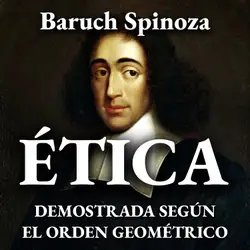
Ethics : Enriched edition. Exploring Reality and Ethics: A Rationalist Approach to Philosophy in the 17th Century

Baruch Spinoza's seminal work, 'Ethics,' presents a groundbreaking philosophical system built on the foundations of rationalism and a unique interpretation of the nature of God, the universe, and humanity. Written in a geometric format reminiscent of Euclidean principles, Spinoza meticulously lays out his arguments, exploring the interconnectedness of all existence and the pursuit of human knowledge and happiness. The book challenges traditional views on religion and morality, asserting that understanding the natural world leads to a profound sense of freedom and ethical living, positioning it as a cornerstone of modern philosophical discourse. Born in Amsterdam in 1632 to a Portuguese Jewish family, Spinoza's upbringing in a diverse cultural milieu profoundly influenced his thinking. His critical stance towards organized religion and the established norms of his time stemmed from a desire for intellectual honesty and ethical clarity. Despite facing excommunication and personal challenges, Spinoza's relentless pursuit of truth imbued his work with a radical spirit, making him one of the key figures of the Enlightenment and the modern philosophical tradition. 'Ethics' is essential for readers interested in philosophy, theology, and ethics, offering deep insights into the nature of existence and the human condition. Its relevance resonates today as it prompts us to reflect on the complexities of life and the ethical decisions we make, making it a must-read for anyone seeking a profound understanding of philosophical ideals.

In this enriched edition, we have carefully created added value for your reading experience:

- A succinct Introduction situates the work's timeless appeal and themes.

- The Synopsis outlines the central plot, highlighting key developments without spoiling critical twists.

- A detailed Historical Context immerses you in the era's events and influences that shaped the writing.

- An Author Biography reveals milestones in the author's life, illuminating the personal insights behind the text.

- A thorough Analysis dissects symbols, motifs, and character arcs to unearth underlying meanings.

- Reflection questions prompt you to engage personally with the work's messages, connecting them to modern life.

- Hand‐picked Memorable Quotes shine a spotlight on moments of literary brilliance.

- Interactive footnotes clarify unusual references, historical allusions, and archaic phrases for an effortless, more informed read.

global.banner_device.title.dynamic

  • Hole dir während der Testphase vollen Zugriff auf alle Bücher in der App
  • Keine Verpflichtungen, jederzeit kündbar
Jetzt kostenlos testen
Mehr als 52 000 Menschen haben Nextory im App Store und auf Google Play 5 Sterne gegeben.

  1. Spinoza: En busca de la verdad y la felicidad [Cómic] : Tratado de la reforma del entendimiento

    Baruch Spinoza

  2. 50 citations de Spinoza

    Baruch Spinoza

  3. 1800 Citations de philosophes

    Aristote, Épicure, Platon, Thalès de Milet, – Socrate, Protagoras, Anaximandre, Épictète, Héraclite, Marc Aurèle, René Descartes, Michel de Montaigne, Alexis de Tocqueville, Voltaire, Charles De Montesquieu, Jean-Jacques Rousseau, Emmanuel Kant, Hannah Arendt, Gottfried Wilhelm Leibniz, Georg Wilhelm Friedrich Hegel, Friedrich Nietzsche, Arthur Schopenhauer, David Hume, John Locke, Francis Bacon, Thomas Hobbes, Thomas More, Confucius, Érasme, Lao Tseu, Baruch Spinoza, Søren Kierkegaard, Nicolas Machiavel, Thomas d'Aquin, Henry David Thoreau

  4. 400 citations de philosophes essentiels

    Confucius, Érasme, Lao Tseu, Baruch Spinoza, Søren Kierkegaard, Nicolas Machiavel, Thomas d'Aquin, Henry David Thoreau

  5. 5.0

    Comprendre Spinoza

    Baruch Spinoza

  6. Traité théologico-politique : Aux origines de la laïcité moderne : comment Spinoza a révolutionné notre conception de la religion, de l'État, et de liberté de conscience

    Baruch Spinoza, Émile Saisset

  7. 50 Meisterwerke der Philosophie : Metaphysik, Das Gastmahl, Bhagavadgita, Tractatus logico-philosophicus, Kritik der reinen Vernunft, Also sprach Zarathustra, Selbstbetrachtungen von Marcus Aurelius

    Ludwig Wittgenstein, Edmund Husserl, Karl Marx, Søren Kierkegaard, Friedrich Nietzsche, Ralph Waldo Emerson, John Stuart Mill, Georg Wilhelm Friedrich Hegel, Friedrich Schelling, Johann Gottlieb Fichte, Immanuel Kant, John Locke, Montesquieu, Jean-Jacques Rousseau, David Hume, Gottfried Wilhelm Leibniz, Baruch Spinoza, - Konfuzius, Lao Tse, Platon, Xenophon, - Aristoteles, Marcus Tullius Cicero, Seneca, Epiktet, Marc Aurel, Plotin, Thomas von Aquin, Nicolaus von Cues, - Erasmus von Rotterdam, Niccolò Machiavelli, Tommaso Campanella, Martin Luther, Giordano Bruno, Samuel von Pufendorf, Abbé Castel de Saint-Pierre, Michel de Montaigne, René Descartes, Francis Bacon, Blaise Pascal

  8. ETHIK : Deduktive Folgerungen aus dem Gedanken des Ineinsfalls von Gott und Natur

    Baruch Spinoza

  9. Philosophie der Aufklärung : Die wichtigsten Werke von Immanuel Kant, John Locke, Rousseau, Voltaire, Denis Diderot, David Hume, Leibniz, Johann Gottfried Herder

    Johann Gottfried Herder, Montesquieu, David Hume, Denis Diderot, Jean-Jacques Rousseau, John Locke, Thomas Hobbes, Benjamin Franklin, Francis Bacon, Immanuel Kant, Baruch Spinoza, Isaac Newton, Freiherr von Gottfried Wilhelm Leibniz, Voltaire, René Descartes

  10. Die größten Philosophen der Aufklärung : Neues Organon, Kritik der reinen Vernunft, Der Gesellschaftsvertrag, Candide, Monadologie, Mathematische Principien der Naturlehre

    Jean-Jacques Rousseau, Voltaire, Denis Diderot, David Hume, Johann Gottfried Herder, John Locke, Thomas Hobbes, Benjamin Franklin, Francis Bacon, Immanuel Kant, Montesquieu, Baruch Spinoza, Isaac Newton, Freiherr von Gottfried Wilhelm Leibniz, René Descartes

  11. Metaphysik: Zwischen flüchtiger Wahrheit und ewiger Suche : Entdeckungsreise durch Existenz und Realität: Von klassischen Ontologien zu ethischen Paradigmen

    Platon, - Aristoteles, Plotin, Thomas von Aquin, René Descartes, Baruch Spinoza, Thomas Hobbes, Immanuel Kant, Gottfried Wilhelm Leibniz, Friedrich Wilhelm Joseph Schelling, Georg Wilhelm Friedrich Hegel, Arthur Schopenhauer, Moses Mendelssohn, Friedrich Nietzsche, Rudolf Steiner

  12. Die ethischen Lehren der größten Philosophen : Nikomachische Ethik, Von den Pflichten, Kritik der praktischen Vernunft, Jenseits von Gut und Böse, Aphorismen zur Lebensweisheit

    Platon, - Aristoteles, Marcus Tullius Cicero, Seneca, Marcus Aurelius, Plotin, David Hume, Immanuel Kant, Baruch Spinoza, Henry David Thoreau, Arthur Schopenhauer, Baltasar Gracián, René Descartes, Friedrich Schelling, Friedrich Nietzsche, Christoph Martin Wieland