Über dieses Buch

"Do you think, because I am poor, obscure, plain, and little, I am soulless and heartless? You think wrong!"

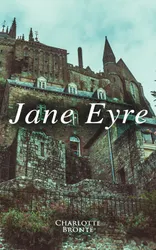
A story of resilience, longing, and self‑respect, Jane Eyre (1847) is a powerful and passionate depiction of a young woman's search for equality, love and the freedom to determine her own fate.

Growing up under the cruelty of her aunt and the harsh conditions of Lowood School, the plain but fiercely independent Jane Eyre survives through sheer strength of character. When she takes a position as a governess at the isolated Thornfield Hall, she finds herself drawn to her employer, the cynical and brooding Edward Rochester.

As their unconventional bond deepens into a passionate love, Jane's quest for belonging is shattered by a dark secret. Forced to choose between her heart and her integrity, Jane must flee into the unknown to discover if a woman of no fortune can ever truly be free.

Born in Yorkshire as the third of six children to an Anglican curate, Charlotte Brontë (1816–1855) grew up in the isolated parsonage of Haworth on the edge of the wild Yorkshire moors. After a childhood spent creating elaborate imaginary worlds with her siblings, Charlotte worked as a governess and teacher—experiences that would later serve as inspiration for her novels.

In 1847, writing under the masculine pseudonym Currer Bell, she published Jane Eyre to immediate and sensational success. Brontë went on to write Shirley and Villette, works that moved away from Gothic romance toward social commentary and deep psychological realism, and in which she continued her exploration of independence, desire, and the constraints placed on women's lives. Though her career was brief—she died aged just thirty-eight—her influence has been profound, securing her place as one of the central voices of English literature.

Starte noch heute mit diesem Buch für € 0

  • Hole dir während der Testphase vollen Zugriff auf alle Bücher in der App
  • Keine Verpflichtungen, jederzeit kündbar
Jetzt kostenlos testen
Mehr als 52 000 Menschen haben Nextory im App Store und auf Google Play 5 Sterne gegeben.

Mehr von Charlotte Brontë

  1. Jane Eyre with a Student Guide (as told by Charlotte Brontë) (Unabridged)

    Charlotte Brontë

  2. Grundlegende Werke des Feminismus : Texte zur Frauenfrage, Geschlechterrollen und feministischen Ideengeschichte

    Virginia Woolf, George Sand, Louise Otto, Clara Zetkin, Rosa Luxemburg, Rosa Mayreder, Bertha Pappenheim, Grete Meisel-Heß, George Eliot, Luise Ahlborn, Adalbert Stifter, Jane Austen, Wilhelmine von Hillern, Charlotte Brontë, Nathaniel Hawthorne, Daniel Defoe, Victor Hugo, Anne Brontë, Henrik Ibsen, Hedwig Dohm, Sinclair Lewis

  3. Neu

    Jane Eyre

    Charlotte Brontë

  4. Neu

    Jane Eyre ou Les Mémoires d'une institutrice

    Charlotte Brontë

  5. Neu

    50 Masterpieces you have to read before you die vol: 1

    Louisa May Alcott, Jane Austen, Honoré de Balzac, Henri Barbusse, Anne Brontë, Charlotte Brontë, Emily Brontë, Edgar Rice Burroughs, Samuel Butler, Lewis Carroll, Willa Cather, Miguel de Cervantes, Kate Chopin, John Cleland, Wilkie Collins, Joseph Conrad, Charles Dickens, Fyodor Dostoevsky, Alexandre Dumas, George Eliot, Ralph Waldo Emerson, Gustave Flaubert, E. M. Forster, H. Rider Haggard, Thomas Hardy, Nathaniel Hawthorne, Robert Heinlein, Victor Hugo, Aldous Huxley, Henry James, D. H. Lawrence, H.P. Lovecraft, Herman Melville, John Milton, Robert Musil, Vladimir Nabokov, George Orwell, Edgar Allan Poe, Marcel Proust, William Shakespeare, Mary Shelley, Leo Tolstoy

  6. Neu

    Shirley : Roman

    Charlotte Brontë

  7. Neu

    Jane Eyre : Roman

    Charlotte Brontë

  8. Neu

    Villette : Roman

    Charlotte Brontë

  9. Neu

    Jane Eyre

    Charlotte Brontë

  10. Neu

    Jane Eyre : Le destin d’une jeune gouvernante entre amour, secrets et indépendance

    Charlotte Brontë

  11. Neu

    Villette : Solitude, amour et indépendance d’une jeune femme loin de l’Angleterre

    Charlotte Brontë

  12. Neu

    Shirley : Amour, révolte sociale et indépendance dans l’Angleterre industrielle

    Charlotte Brontë