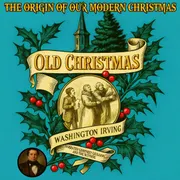
Washington Irving’s Old Christmas: The Origin of Our Modern Christmas recounts his visit to Bracebridge Hall, the fictionalized but closely based estate modeled on Aston Hall in Birmingham, where he stays as a holiday guest of the benevolent Squire Bracebridge. Irving guides the reader room-by-room through an authentic early-1800s English Christmas, describing the exact foods on the groaning board—boar’s head wreathed in rosemary, spiced goose, mince pies sealed with thick crust, plum pudding flamed in brandy—and even the precise decorations, from real holly branches above the oak mantel to the kissing bough hung with apples, oranges, and ribbons. He records the return of centuries-old customs such as the Yule log ceremony, the Lord of Misrule, and the rural practice of wassailing the orchard trees at dawn to ensure a fertile harvest. These details are not symbolic; they are literal, grounded in the living folklore Irving observed and meticulously documented.
Irving also zooms in on specific characters: the elderly housekeeper Mrs. Bracebridge bustling through the corridors with a lantern in hand, the outspoken parish clerk, old Christy scribbling his notes for midnight service, and the rosy-cheeked village children who gather at the great hall door to sing traditional carols like “God Rest Ye Merry, Gentlemen.” He describes the exact games played—snapdragon with flaming raisins in a darkened room, forfeits, blind-man’s buff—and the raucous country dance led by fiddler Peter Brush in the candlelit drawing room. Irving captures not just the mood but the literal calendar rhythm of the season: Christmas Eve church bells, the early-morning trek through snow-covered lanes to the parish chapel, and the Boxing Day visits to tenant families around the estate.