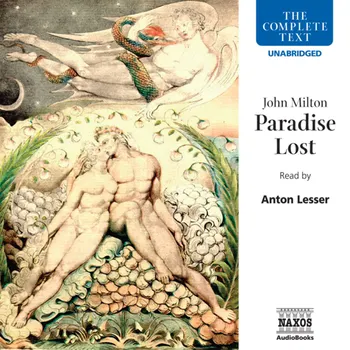
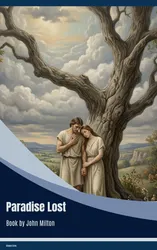
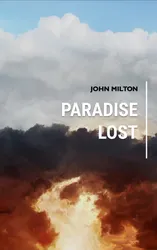
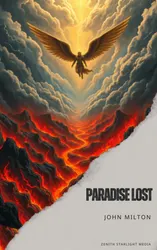
Paradise Lost

John Milton's "Paradise Lost" is an epic poem that meticulously explores the biblical story of the Fall of Man, blending classical literary techniques with profound theological inquiry. Composed in blank verse, this monumental work unfolds through a grand narrative that delves into themes of free will, obedience, and the struggle between good and evil. Rich in allegory and symbolism, Milton employs vivid characterizations of iconic figures such as Satan, Adam, and Eve to convey the complexities of human nature and divine justice, thereby situating his work in the context of the Renaissance's burgeoning interest in individual agency and moral philosophy. John Milton, a prolific writer and staunch advocate for personal liberties, drew from his own experiences of political upheaval and religious turbulence in 17th-century England. Influenced by the Civil War and his subsequent loss of sight, Milton's fervent belief in the role of divine providence and human choice informs the narrative structure and moral underpinnings of "Paradise Lost." His background as a scholar and his deep engagement with both classical and biblical texts lend the poem an intellectual depth that reflects the era's cumulative knowledge. "Paradise Lost" is a must-read for those seeking to encounter a profound meditation on existential questions that resonate throughout time. Milton's deft intertwining of poetic mastery and philosophical inquiry invites readers to reflect on their own beliefs and the human condition, offering a rich tapestry of language and thought that continues to inspire readers, scholars, and theologians alike.

Über dieses Buch

John Milton's "Paradise Lost" is an epic poem that meticulously explores the biblical story of the Fall of Man, blending classical literary techniques with profound theological inquiry. Composed in blank verse, this monumental work unfolds through a grand narrative that delves into themes of free will, obedience, and the struggle between good and evil. Rich in allegory and symbolism, Milton employs vivid characterizations of iconic figures such as Satan, Adam, and Eve to convey the complexities of human nature and divine justice, thereby situating his work in the context of the Renaissance's burgeoning interest in individual agency and moral philosophy. John Milton, a prolific writer and staunch advocate for personal liberties, drew from his own experiences of political upheaval and religious turbulence in 17th-century England. Influenced by the Civil War and his subsequent loss of sight, Milton's fervent belief in the role of divine providence and human choice informs the narrative structure and moral underpinnings of "Paradise Lost." His background as a scholar and his deep engagement with both classical and biblical texts lend the poem an intellectual depth that reflects the era's cumulative knowledge. "Paradise Lost" is a must-read for those seeking to encounter a profound meditation on existential questions that resonate throughout time. Milton's deft intertwining of poetic mastery and philosophical inquiry invites readers to reflect on their own beliefs and the human condition, offering a rich tapestry of language and thought that continues to inspire readers, scholars, and theologians alike.

Starte noch heute mit diesem Buch für € 0

  • Hole dir während der Testphase vollen Zugriff auf alle Bücher in der App
  • Keine Verpflichtungen, jederzeit kündbar
Jetzt kostenlos testen
Mehr als 52 000 Menschen haben Nextory im App Store und auf Google Play 5 Sterne gegeben.

  1. 100 Meisterwerke der englischen Literatur - Klassiker, die man kennen muss

    George Orwell, Charles Dickens, Jane Austen, Katherine Mansfield, H.P. Lovecraft, William Wordsworth, John Keats, Percy Bysshe Shelley, Robert Burns, John Milton, William Shakespeare, Christopher Marlowe, Geoffrey Chaucer, Laurence Sterne, Henry Fielding, Mary Shelley, Emily Brontë, Charlotte Brontë, Anne Brontë, William Makepeace Thackeray, George Eliot, D. H. Lawrence, Herman Melville, Thomas Wolfe, Virginia Woolf, Joseph Conrad, Sinclair Lewis, Walt Whitman, Edgar Allan Poe, Oscar Wilde, Jerome K Jerome, Washington Irving, Bram Stoker, H.G. Wells, Daniel Defoe, Lew Wallace, James Fenimore Cooper, Jonathan Swift, Robert Louis Stevenson, Mark Twain, Lewis Carrol, Edward Bulwer-Lytton, F. Scott Fitzgerald, Arthur Conan Doyle, Jack London, Henry David Thoreau, G.K. Chesterton, Edith Wharton, Henry James, Thomas Hardy, Margaret Mitchell, Kate Chopin, Willa Cather, Charlotte Perkins Gilman, James Joyce, John Galsworthy, Francis Hodgson Burnett, Lucy Maud Montgomery, Louisa May Alcott, Rudyard Kipling

  2. Neu

    The Epic Poems Anthology

    Homer, Virgil, Marcel Proust, John Milton

  3. Neu

    Paradise Lost : Adapted to Modern Accessible English

    John Milton

  4. Neu
    3.0

    Paradise Lost

    John Milton

  5. 3.0

    Paradise Lost

    John Milton

  6. The Epic Poems Anthology

    Homer, Virgil, Marcel Proust, John Milton

  7. De la liberté de la presse et de la censure

    John Milton

  8. 3.0

    Paradise Lost

    John Milton

  9. 3.0

    Paradise Lost

    John Milton

  10. Simson - Blind hämnd

    John Milton

  11. Frestelsen

    John Milton

  12. 3.4
    #1

    Det förlorade paradiset

    John Milton