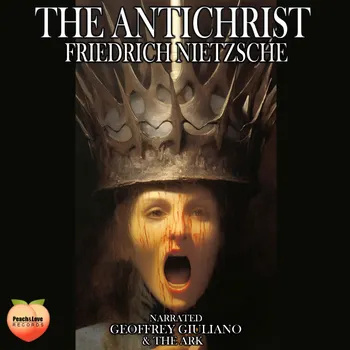

The Antichrist :

Friedrich Nietzsche's "The Antichrist" is a philosophical work that presents his critical analysis of Christianity and its impact on Western culture. Written in 1888, towards the end of Nietzsche's productive life, "The Antichrist" reflects his deep-seated criticisms of traditional Christian values and morality. In the text, Nietzsche vehemently opposes what he sees as the life-denying aspects of Christianity. He argues that the Christian emphasis on otherworldly concerns, asceticism, and moral values such as humility and self-sacrifice are detrimental to the flourishing of human life. Nietzsche contends that Christianity has fostered a culture of weakness, passivity, and resentment, suppressing the natural instincts and drives that lead to individual strength and vitality.

"The Antichrist" also delves into Nietzsche's critique of the figure of Jesus Christ, whom he views as a symbol of weakness and a distortion of true strength. Nietzsche contends that the Christian notion of God represents a negation of life, promoting an idealized realm beyond this world at the expense of embracing earthly existence. Nietzsche's writing style in "The Antichrist" is often controversial and provocative, reflecting his desire to challenge established beliefs and provoke critical thinking. The work serves as a forceful critique of organized religion, morality, and the cultural influence of Christianity in Western societies.

It's essential to approach Nietzsche's "The Antichrist" within the broader context of his philosophical works, as it contributes to his overarching critique of morality, metaphysics, and the prevailing cultural values of his time. While the title may suggest a direct opposition to Christian beliefs, Nietzsche intends to provoke thought and encourage a reevaluation of existing values rather than presenting a straightforward condemnation.

Starte noch heute mit diesem Buch für € 0

  • Hole dir während der Testphase vollen Zugriff auf alle Bücher in der App
  • Keine Verpflichtungen, jederzeit kündbar
Jetzt kostenlos testen
Mehr als 52 000 Menschen haben Nextory im App Store und auf Google Play 5 Sterne gegeben.

  1. 2.0

    Liebe Liebe, ... : Eine Auseinandersetzung mit der Liebe

    Khalil Gibran, Erich Kästner, Eva Illouz, Virginia Woolf, Adele Schopenhauer, Clara Wieck, Else Lasker-Schüler, Erich Fromm, Franz Grillparzer, Franz Kafka, Friedrich Nietzsche, Friedrich Schiller, G. W. F. Hegel, Gabriele Reuter, Helene Stöcker, Hermann Jaitner, James Krüss, Kathinka Zitz, Mascha Kaléko, Nikolai Gogol, Novalis, Paula Becker, Platon, Rainer Maria Rilke, Ricarda Huch, Sigmund Freud, Ute Richter, Elke Heinrich, Martin Luther, G. Science

  2. 2. Aug.

    Ausgewählte Briefe. Ein Grundlagenwerk der Philosophie. : Hörbuchzeit: Klassiker der Weltliteratur

    Hörbuchzeit, Friedrich Nietzsche

  3. 15. Mai
    4.3

    Ecce Homo : Cómo se llega a ser lo que se es

    Friedrich Nietzsche

  4. 2. Apr.
    4.3

    Thus Spoke Zarathustra

    Friedrich Nietzsche

  5. Neu

    Über Wahrheit und Lüge im außermoralischen Sinn. Ein philosophischer Essay. : Hörbuchzeit: Klassiker der Weltliteratur

    Hörbuchzeit, Friedrich Nietzsche

  6. Neu

    Die Geburt der Tragödie aus dem Geiste der Musik. Versuch einer Selbstkritik und philosophisches Weltbild. : Hörbuchzeit: Klassiker der Weltliteratur

    Hörbuchzeit, Friedrich Nietzsche

  7. El nacimiento de la tragedia

    Friedrich Nietzsche

  8. Lyrikalische Bibliothek

    Heinrich Heine, Annette von Droste-Hülshoff, Charles Baudelaire, John Keats, Rainer Maria Rilke, Georg Heym, Wilhelm Busch, Arno Holz, Johann Wolfgang von Goethe, Christian Morgenstern, Joachim Ringelnatz, Georg Trakl, Ludwig Tieck, Stefan Zweig, Hugo von Hoffmannsthal, Edgar Allan Poe, Frank Wedekind, Franz Werfel, Wolfgang Borchert, Karl Kraus, Kurt Tucholsky, Friedrich Nietzsche, Else Lasker-Schüler, Ludwig Kalisch, Jakob van Hoddis, Joseph von Eichendorff, Gotthold Ephraim Lessing

  9. La genealogía de la moral : El arte de demoler altares

    Friedrich Nietzsche

  10. Thus Spoke Zarathustra : A Book for Everyone and No One

    Friedrich Nietzsche

  11. Sobre mi vida (esbozos autobiográficos) y apuntes filosóficos de juventud temprana

    Friedrich Nietzsche

  12. La filosofía en la época trágica de los griegos : Homero y la Filología Clásica. Cinco prólogos a cinco libros no escritos.

    Friedrich Nietzsche