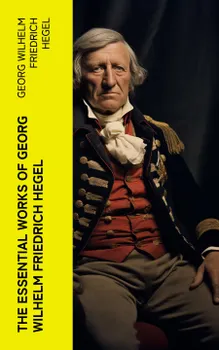
The Essential Works of Georg Wilhelm Friedrich Hegel (Annotated) : Enriched Edition. Phenomenology of Mind, Philosophy of Mind, Aesthetics, The Criticism of Hegle's Work…

The Essential Works of Georg Wilhelm Friedrich Hegel gathers the decisive writings of one of modern philosophy's most demanding architects, presenting the movement of thought through logic, nature, spirit, history, art, religion, and the state. Its style is famously dense, dialectical, and systematic: concepts are not merely defined but made to unfold through contradiction, negation, and reconciliation. Read in the context of German Idealism after Kant, the volume reveals Hegel's ambition to comprehend modernity as a rational, historical process. Hegel (1770–1831), formed by classical learning, Protestant theology, the Enlightenment, and the upheavals of the French Revolution, wrote in an age that made philosophy answerable to history. His work reflects a lifelong effort to overcome divisions between subject and object, freedom and institution, faith and reason. As a teacher at Jena, Heidelberg, and Berlin, he transformed philosophy into an encyclopedic science of experience and self-consciousness. This collection is recommended to readers seeking the foundations of continental philosophy, political theory, aesthetics, theology, and historical thought. Though challenging, it rewards patience with a vision of reason as living, conflicted, and world-making.

This enriched edition has been carefully crafted to add value to your reading experience.

- A comprehensive Introduction outlines these selected works' unifying features, themes, or stylistic evolutions.

- The Author Biography highlights personal milestones and literary influences that shape the entire body of writing.

- A Historical Context section situates the works in their broader era—social currents, cultural trends, and key events that underpin their creation.

- A concise Synopsis (Selection) offers an accessible overview of the included texts, helping readers navigate plotlines and main ideas without revealing critical twists.

- A unified Analysis examines recurring motifs and stylistic hallmarks across the collection, tying the stories together while spotlighting the different work's strengths.

- Reflection questions inspire deeper contemplation of the author's overarching message, inviting readers to draw connections among different texts and relate them to modern contexts.

- Lastly, our hand‐picked Memorable Quotes distill pivotal lines and turning points, serving as touchstones for the collection's central themes.
Über dieses Buch

The Essential Works of Georg Wilhelm Friedrich Hegel gathers the decisive writings of one of modern philosophy's most demanding architects, presenting the movement of thought through logic, nature, spirit, history, art, religion, and the state. Its style is famously dense, dialectical, and systematic: concepts are not merely defined but made to unfold through contradiction, negation, and reconciliation. Read in the context of German Idealism after Kant, the volume reveals Hegel's ambition to comprehend modernity as a rational, historical process. Hegel (1770–1831), formed by classical learning, Protestant theology, the Enlightenment, and the upheavals of the French Revolution, wrote in an age that made philosophy answerable to history. His work reflects a lifelong effort to overcome divisions between subject and object, freedom and institution, faith and reason. As a teacher at Jena, Heidelberg, and Berlin, he transformed philosophy into an encyclopedic science of experience and self-consciousness. This collection is recommended to readers seeking the foundations of continental philosophy, political theory, aesthetics, theology, and historical thought. Though challenging, it rewards patience with a vision of reason as living, conflicted, and world-making.

This enriched edition has been carefully crafted to add value to your reading experience.

- A comprehensive Introduction outlines these selected works' unifying features, themes, or stylistic evolutions.

- The Author Biography highlights personal milestones and literary influences that shape the entire body of writing.

- A Historical Context section situates the works in their broader era—social currents, cultural trends, and key events that underpin their creation.

- A concise Synopsis (Selection) offers an accessible overview of the included texts, helping readers navigate plotlines and main ideas without revealing critical twists.

- A unified Analysis examines recurring motifs and stylistic hallmarks across the collection, tying the stories together while spotlighting the different work's strengths.

- Reflection questions inspire deeper contemplation of the author's overarching message, inviting readers to draw connections among different texts and relate them to modern contexts.

- Lastly, our hand‐picked Memorable Quotes distill pivotal lines and turning points, serving as touchstones for the collection's central themes.

Starte noch heute mit diesem Buch für € 0

  • Hole dir während der Testphase vollen Zugriff auf alle Bücher in der App
  • Keine Verpflichtungen, jederzeit kündbar
Jetzt kostenlos testen
Mehr als 52 000 Menschen haben Nextory im App Store und auf Google Play 5 Sterne gegeben.

  1. 50 Meisterwerke der Philosophie : Metaphysik, Das Gastmahl, Bhagavadgita, Tractatus logico-philosophicus, Kritik der reinen Vernunft, Also sprach Zarathustra, Selbstbetrachtungen von Marcus Aurelius

    Ludwig Wittgenstein, Edmund Husserl, Karl Marx, Søren Kierkegaard, Friedrich Nietzsche, Ralph Waldo Emerson, John Stuart Mill, Georg Wilhelm Hegel, Friedrich Schelling, Johann Gottlieb Fichte, Immanuel Kant, John Locke, Montesquieu, Jean-Jacques Rousseau, David Hume, Gottfried Wilhelm Leibniz, Baruch Spinoza, - Konfuzius, Lao Tse, Platon, Xenophon, - Aristoteles, Marcus Tullius Cicero, Seneca, Epiktet, Marc Aurel, Plotin, Thomas von Aquin, Nicolaus von Cues, - Erasmus von Rotterdam, Niccolò Machiavelli, Tommaso Campanella, Martin Luther, Giordano Bruno, Samuel von Pufendorf, Abbé Castel Saint-Pierre, Michel de Montaigne, René Descartes, Francis Bacon, Blaise Pascal

  2. Wissenschaft der Logik (Kommentiert) : Erweiterte Ausgabe. Dialektische Kategorien von Sein, Wesen und Begriff als spekulative Metaphysik des reinen Denkens

    Georg Wilhelm Hegel

  3. Philosophie des Deutschen Idealismus (Kommentiert) : Erweiterte Ausgabe. Die Quelle der ewigen Wahrheiten, Kritik der reinen Vernunft, Wissenschaft der Logik, Grundlage der gesamten Wissenschaftslehre

    Georg Wilhelm Hegel, Johann Gottlieb Fichte, Immanuel Kant, Friedrich Schelling, Friedrich Schleiermacher

  4. Die größten Philosophen des Deutschen Idealismus (Kommentiert) : Erweiterte Ausgabe. Die wichtigsten Werke von Kant, Hegel, Schelling, Jacobi, Fichte und Schleiermacher

    Immanuel Kant, Johann Gottlieb Fichte, Georg Wilhelm Hegel, Friedrich Schelling, Friedrich Schleiermacher

  5. The Collected Works of Georg Wilhelm Friedrich Hegel : Enriched edition.

    Georg Wilhelm Hegel

  6. Hegel : Enriched edition. The Philosophy of History, The History of Philosophy, The Proofs of the Existence of God

    Georg Wilhelm Hegel

  7. Die größten Klassiker der Philosophie (Kommentiert) : Erweiterte Ausgabe. Also sprach Zarathustra, Utopia, Phänomenologie des Geistes, Neues Organon, Selbstbetrachtungen, Das Gastmahl, Nikomachische Ethik

    Immanuel Kant, Søren Kierkegaard, Edmund Husserl, Ludwig Wittgenstein, Friedrich Nietzsche, - Konfuzius, Platon, Xenophon, - Aristoteles, Lao Tse, Marcus Tullius Cicero, Marcus Aurelius, Plotin, Thomas von Aquin, Niccolò Machiavelli, Thomas Morus, Giordano Bruno, Michel de Montaigne, René Descartes, Francis Bacon, Blaise Pascal, Baruch Spinoza, Gottfried Wilhelm Leibniz, David Hume, Jean-Jacques Rousseau, Friedrich Schelling, John Locke, Georg Wilhelm Hegel, John Stuart Mill, Karl Marx

  8. Metaphysik : Erweiterte Ausgabe. Entdeckungsreise durch Existenz und Realität: Von klassischen Ontologien zu ethischen Paradigmen

    Platon, - Aristoteles, Plotin, Thomas von Aquin, René Descartes, Baruch Spinoza, Thomas Hobbes, Immanuel Kant, Gottfried Wilhelm Leibniz, Friedrich Wilhelm Schelling, Georg Wilhelm Hegel, Arthur Schopenhauer, Moses Mendelssohn, Friedrich Nietzsche, Rudolf Steiner

  9. Die vergängliche Wahrheit in der Metaphysik : Erweiterte Ausgabe. Metaphysische Anfangsgründe der Naturwissenschaft, Träume eines Geistersehers, Grundzüge der Philosophie, Götzen-Dämmerung

    Platon, - Aristoteles, Plotin, Thomas von Aquin, René Descartes, Baruch Spinoza, Thomas Hobbes, Immanuel Kant, Gottfried Wilhelm Leibniz, Friedrich Wilhelm Schelling, Georg Wilhelm Hegel, Arthur Schopenhauer, Moses Mendelssohn, Friedrich Nietzsche, Rudolf Steiner

  10. Meisterwerke der Weltphilosophie (Kommentiert) : Erweiterte Ausgabe. Das Gastmahl, Nikomachische Ethik, Also sprach Zarathustra, Utopia, Phänomenologie des Geistes, Neues Organon, Selbstbetrachtungen

    Immanuel Kant, Søren Kierkegaard, Edmund Husserl, Ludwig Wittgenstein, Friedrich Nietzsche, - Konfuzius, Platon, Xenophon, - Aristoteles, Lao Tse, Marcus Tullius Cicero, Marcus Aurelius, Plotin, Thomas von Aquin, Niccolò Machiavelli, Thomas Morus, Giordano Bruno, Michel de Montaigne, René Descartes, Francis Bacon, Blaise Pascal, Baruch Spinoza, Gottfried Wilhelm Leibniz, David Hume, Jean-Jacques Rousseau, Friedrich Schelling, John Locke, Georg Wilhelm Hegel, John Stuart Mill, Karl Marx

  11. Hegel : Enriched edition. Exploring the Essence of Reality: A Deep Dive into Hegelian Metaphysics and Dialectics

    Georg Wilhelm Hegel

  12. The Phenomenology of Mind : Enriched edition. System of Science

    Georg Wilhelm Hegel