À propos de ce livre

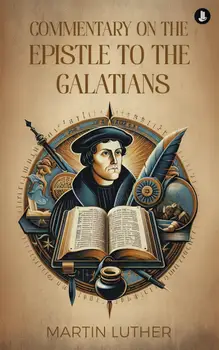
Martin Luther's "Commentary on the Epistle to the Galatians" is a foundational work that has left an unmistakable effect on the landscape of Christian theology. This work, published in 1535, is a thorough examination of the biblical Epistle to the Galatians, written by the apostle Paul. Martin Luther, the Protestant Reformation's emblematic figure, provides readers with a comprehensive and significant exegesis of this New Testament epistle. The fundamental focus of Luther's essay is justification by faith alone, a central principle of Protestant theology. Luther fiercely contends for the supremacy of faith in Christ as the way of salvation, opposing Roman Catholic Church beliefs and practices. Beyond its theological relevance, Luther's remark reflects his personal hardships and profound devotion to church reform. His writing reflects a strong commitment to provide clarity and realism to issues of faith and redemption. "Commentary on the Epistle to the Galatians" is a classic text in Christian theology. It has shaped the evolution of Protestant thought and the comprehension of major theological principles, influencing generations of theologians, scholars, and believers. Luther's work attests to his tremendous influence on the Reformation and his lasting legacy in the Christian faith.
Commencez ce livre dès aujourd'hui pour 0 €

  • Accédez à tous les livres de l'app pendant la période d'essai
  • Sans engagement, annulez à tout moment
Essayer gratuitement
Plus de 52 000 personnes ont noté Nextory 5 étoiles sur l'App Store et Google Play.

Plus de Martin Luther

  1. Harvard Classics : The Five-Foot Shelf of Books

    Aesop, Dante Alighieri, Hans Christian Andersen, Augustine of Hippo, Marcus Aurelius, Jane Austen, Francis Bacon, Honoré de Balzac, Francis Beaumont, Bjørnstjerne Bjørnson, Thomas Browne, Robert Browning, John Bunyan, EDMUND BURKE, Robert Burns, Lord Byron, Thomas Carlyle, Benvenuto Cellini, Miguel de Cervantes, Marcus Tullius Cicero, Richard Henry Jr., Charles Darwin, Alphonse Daudet, Thomas Dekker, Charles Dickens, Fyodor Dostoevsky, John Dryden, Charles W. Eliot, George Eliot, Ralph Waldo Emerson, Epictetus, John Fletcher, Theodor Fontane, Benjamin Franklin, Johann Wolfgang Goethe, Oliver Goldsmith, Jacob Grimm, Edward Everett Hale, Bret Harte, Nathaniel Hawthorne, Homer, Victor Hugo, Washington Irving, Henry James, Ben Jonson, Gottfried Keller, Thomas à Kempis, Alexander L. Kielland, Martin Luther, Niccolò Machiavelli, Alessandro Manzoni, Christopher Marlowe, Philip Massinger, Guy De Maupassant, John Stuart Mill, John Milton, Thomas More, William Morris, Alfred de Musset, William Allan Neilson, William Penn, Plato, Pliny the Younger, Plutarch, George Sand, Percy Bysshe Shelley, Richard Brinsley Sheridan, Adam Smith, Laurence Sterne, Theodor Storm, William Makepeace Thackeray, Leo Tolstoy, Ivan Turgenev, Mark Twain, Juan Valera, Virgil, Izaak Walton, John Webster, John Woolman

  2. Le petit catéchisme

    Martin Luther

  3. lettre à mon barbier : une manière simple de prier

    Martin Luther

  4. 95 Theses

    Martin Luther

  5. On Indulgences

    Martin Luther, Adolph Spaeth

  6. 95 Theses

    Martin Luther, Adolph Spaeth

  7. Address to the Christian Nobility of the German Nation

    Martin Luther, J.H. Robinson

  8. Martin Luther : Pensées et Colères d’un Moine Contre l’Église

    Martin Luther

  9. The Bondage of the Will

    Martin Luther

  10. The Big Book of Christmas : A Treasure Trove of Holiday Magic

    Hans Christian Andersen, Charles Dickens, Louisa May Alcott, O.Henry, Mark Twain, Beatrix Potter, William Shakespeare, Harriet Beecher Stowe, Emily Dickinson, Robert Louis Stevenson, Rudyard Kipling, Selma Lagerlöf, Martin Luther, Walter Scott

  11. #9

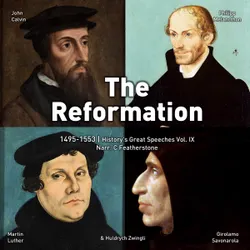
    The Reformation, 1495-1553 : The Thinkers That Changed Christianity

    Martin Luther, Phillip Melanchthon, John Calvin, Girolamo Savonarola, Huldrych Zwingli