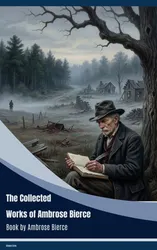
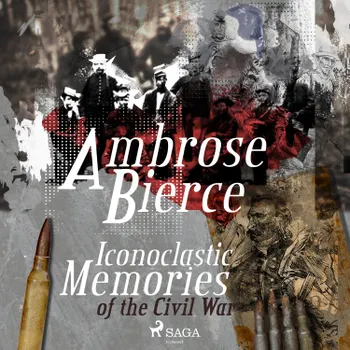
Iconoclastic Memories of the Civil War

In "Iconoclastic Memories of the Civil War: Bits of Autobiography," Bierce recounts some of his experiences as a soldier.

At the outset of the American Civil War, Bierce enlisted in the Union Army's 9th Indiana Infantry Regiment. In February 1862 he was commissioned First Lieutenant, and served on the staff of General William Babcock Hazen as a topographical engineer, making maps of likely battlefields. Bierce fought at the Battle of Shiloh (April 1862), a terrifying experience that became a source for several later short-stories as well as the memoir, "What I Saw of Shiloh". In June 1864, he sustained a serious head wound at the Battle of Kennesaw Mountain, and spent the rest of the summer on furlough, returning to active duty in September. He was discharged from the army in January 1865.

Ambrose Bierce (1842-1914) was an American writer, journalist, critic, poet, and Civil War veteran, best known for "The Devil's Dictionary" (1911). He dominated the horror genre as the preeminent innovator of supernatural storytelling in the period between the death of Edgar Allan Poe and the rise of H.P. Lovecraft. Bierce’s death was as mysterious as his strange stories; sometime around 1914 he left for Mexico, wanting to experience the Mexican Revolution firsthand, and was never to be seen again.
À propos de ce livre

In "Iconoclastic Memories of the Civil War: Bits of Autobiography," Bierce recounts some of his experiences as a soldier.

At the outset of the American Civil War, Bierce enlisted in the Union Army's 9th Indiana Infantry Regiment. In February 1862 he was commissioned First Lieutenant, and served on the staff of General William Babcock Hazen as a topographical engineer, making maps of likely battlefields. Bierce fought at the Battle of Shiloh (April 1862), a terrifying experience that became a source for several later short-stories as well as the memoir, "What I Saw of Shiloh". In June 1864, he sustained a serious head wound at the Battle of Kennesaw Mountain, and spent the rest of the summer on furlough, returning to active duty in September. He was discharged from the army in January 1865.

Ambrose Bierce (1842-1914) was an American writer, journalist, critic, poet, and Civil War veteran, best known for "The Devil's Dictionary" (1911). He dominated the horror genre as the preeminent innovator of supernatural storytelling in the period between the death of Edgar Allan Poe and the rise of H.P. Lovecraft. Bierce’s death was as mysterious as his strange stories; sometime around 1914 he left for Mexico, wanting to experience the Mexican Revolution firsthand, and was never to be seen again.

Commencez ce livre dès aujourd'hui pour 0 €

  • Accédez à tous les livres de l'app pendant la période d'essai
  • Sans engagement, annulez à tout moment
Essayer gratuitement
Plus de 52 000 personnes ont noté Nextory 5 étoiles sur l'App Store et Google Play.

  1. Nouveau

    A Baby Tramp

    Ambrose Bierce

  2. Nouveau
    3.0
    #177

    The Death of Halpin Frayser

    Ambrose Bierce

  3. Nouveau

    100 obras maestras que debes leer antes de morir

    Francis Scott Fitzgerald, Mary Shelley, Lyman Frank Baum, Edith Nesbit, Dante Alighieri, Jane Austen, Ambrose Bierce, Emily Brontë, Edgar Rice Burroughs, Lewis Carroll, Wilkie Collins, René Descartes, Charles Dickens, Emily Dickinson, Alexandre Dumas, Gustave Flaubert, Benito Pérez Galdós, Johann Wolfgang Goethe, Thomas Hardy, E. T. Hoffmann, Washington Irving, Henry James, James Joyce, Franz Kafka, Gaston Leroux, Federico García Lorca, H.P. Lovecraft, Publio Virgilio Marón, Lucy Maud Montgomery, John William Polidori, Marco Polo, Antoine de Saint-Exupéry, Emilio Salgari, Walter Scott, Mark Twain, Jules Verne

  4. Nouveau

    A Resumed Identity

    Ambrose Bierce

  5. Nouveau

    The Complete Works of Ambrose Bierce

    Ambrose Bierce

  6. Staley Fleming's Hallucination :

    Ambrose Bierce

  7. 1900 to 1939 Science Fiction - 17 Classic Science Fiction Short Stories from 1900 to 1939

    H.G. Wells, Murray Leinster, H.P. Lovecraft, Robert E. Howard, Clark Ashton Smith, Jack Williamson, Henry Kuttner, Paul Ernst, Mack Reynolds, George T. Spillman, William Hope Hodgson, August Derleth, Carl W. Ganzlin, Ambrose Bierce, Carl Jacobi, William Brittain, Edmond Hamilton, Frank Belknap Long

  8. 100 Clásicos de la Literatura Universal

    Francis Scott Fitzgerald, Mary Shelley, Lyman Frank Baum, Louisa May Alcott, Dante Alighieri, Jane Austen, Ambrose Bierce, Emily Brontë, Edgar Rice Burroughs, Lewis Carroll, Wilkie Collins, René Descartes, Charles Dickens, Emily Dickinson, Alexandre Dumas, Gustave Flaubert, Benito Pérez Galdós, Johann Wolfgang von Goethe, Thomas Hardy, E T A Hoffmann, Washington Irving, Henry James, James Joyce, Franz Kafka, Gaston Leroux, Federico García Lorca, H.P. Lovecraft, Publio Virgilio Marón, Lucy Maud Montgomery, John William Polidori, Marco Polo, Antoine de Saint-Exupéry, Emilio Salgari, Walter Scott, Mark Twain, Jules Verne, Julio Verne, H.G. Wells, Edith Wharton, Mary Wollstonecraft, Stefan Zweig, Sun Tzu, Bram Stoker, - Aristoteles, George Bernard Shaw, Henryk Sienkiewicz, Concepción Arenal, Charlotte Brontë, Miguel de Cervantes, G.K. Chesterton, Daniel Defoe, Fyodor Mikhailovich Dostoyevsky, Arthur Conan Doyle, Sigmund Freud, H. Rider Haggard, Homero, Immanuel Kant, Rudyard Kipling, Molière, Friedrich Nietzsche, Fernando de Rojas, Sófocles, William Makepeace Thackeray, León Tolstói, Voltaire, Ramón María del Valle-Inclán, Oscar Wilde, Virginia Woolf

  9. 100 Obras Maestras Que Debes Leer Antes De Morir

    Francis Scott Fitzgerald, Mary Shelley, Lyman Frank Baum, Edith Nesbit, Dante Alighieri, Jane Austen, Ambrose Bierce, Emily Brontë, Edgar Rice Burroughs, Lewis Carroll, Wilkie Collins, René Descartes, Charles Dickens, Emily Dickinson, Alexandre Dumas, Gustave Flaubert, Benito Pérez Galdós, Johann Wolfgang von Goethe, Thomas Hardy, E T A Hoffmann, Washington Irving, Henry James, James Joyce, Franz Kafka, Gaston Leroux, Federico García Lorca, H.P. Lovecraft, Publio Virgilio Marón, Lucy Maud Montgomery, John William Polidori, Marco Polo, Antoine de Saint-Exupéry, Emilio Salgari, Walter Scott, Mark Twain, Jules Verne, H.G. Wells, Edith Wharton, Mary Wollstonecraft, Fernando de Rojas

  10. A Jug of Sirup :

    Ambrose Bierce

  11. Tales of Soldiers and Civilians

    Ambrose Bierce

  12. The Middle Toe of the Right Foot :

    Ambrose Bierce