When the American Revolution ended, the United States and Britain reached an impressively comprehensive peace in the Treaty of Paris. Among the important terms of the treaty, Britain recognized the colonies as free and relinquished territorial claims to them. The two sides then negotiated the boundaries that separated the United States from the British colonies in present-day Canada.
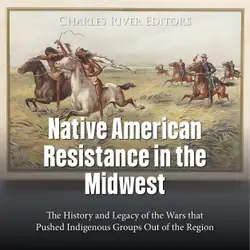
However, the new United States was faced with a fundamental problem: to expand, it had to settle lands to the west of the Appalachian Mountains, ceded to it by the British. However, the mountains were occupied by Native American groups who had no desire to make way for white settlers. The treaty had created a vast frontier for the fledgling nation, and any American settlers pushing west along it were bound to encounter hostile natives.
For the most part, the conflicts that followed consisted mostly of the Native Americans suffering defeat in the face of a better-equipped adversary, interspersed with binding treaties, which, on the side of the federal government, proved not very binding at all. Occasionally, however, there arose a Native American leader of such ability that such defeats were temporarily reversed, and Little Turtle, the war chief of the Miami tribe, was one such man. Under his leadership, a confederation of Miami and other tribes inflicted the worst defeat ever suffered by an American army in the newly independent nation.
From the American Revolution up through the Battle of Tippecanoe, Native Americans in the Old Northwest (today’s Midwestern states) had been putting up stout resistance to that region’s settlement by white land speculators and settlers. Things came to a head when Tecumseh and his brother, the Prophet Tenskwatawa, spearheaded a movement in the region that greatly influenced the area’s Native Americans.