3.5(2)

The Air Raids Over Japan during World War II: The History of the Allies’ Bombing Campaigns on the Japanese Mainland

The Americans would turn the war in the Pacific around in the middle of 1942, but in the wake of Pearl Harbor and the Japanese invasion of the Philippines, the country was in desperate need of a morale boost, and it would come in the form of the Doolittle Raid. In part to show that the Japanese were not invincible, and in part to reassure the American public that the nation would not lose the war, the Doolittle Raid included both Army and Navy units that launched 16 land-based medium bombers from an aircraft carrier, a feat that was the first of its kind but also one involving a great deal of risk. Getting the bombers and carriers in place to execute the mission involved much strategic planning and cooperation within the American military, and had it failed, it could have dealt a serious blow to the Americans’ Pacific presence due to the nation’s limited resources in that theater.

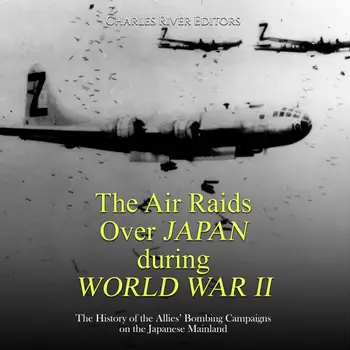
The first serious air raids over Japan came in November 1944, after the Americans had captured the Marianas Islands, and through February 1945, American bombers concentrated on military targets at the fringes of the city, particularly air defenses. However, the air raids of March 1945, and particularly on the night of March 9, were a different story altogether. In what is generally referred to as strategic or area bombing, waves of bombers flew low over Tokyo for over two and a half hours, dropping incendiary bombs with the intention of producing a massive firestorm. The American raids intended to produce fires that would kill soldiers and civilians, as well as the munitions factories and apartment buildings of those who worked in them. 325 B-29s headed toward Tokyo, and nearly 300 of them dropped bombs on it. Additional raids, this time largely on the north and west, came in April, and in May, raids hit Ginza and the south. Altogether, American bombers flew more than 4,000 missions over Tokyo before surrender.

À propos de ce livre

The Americans would turn the war in the Pacific around in the middle of 1942, but in the wake of Pearl Harbor and the Japanese invasion of the Philippines, the country was in desperate need of a morale boost, and it would come in the form of the Doolittle Raid. In part to show that the Japanese were not invincible, and in part to reassure the American public that the nation would not lose the war, the Doolittle Raid included both Army and Navy units that launched 16 land-based medium bombers from an aircraft carrier, a feat that was the first of its kind but also one involving a great deal of risk. Getting the bombers and carriers in place to execute the mission involved much strategic planning and cooperation within the American military, and had it failed, it could have dealt a serious blow to the Americans’ Pacific presence due to the nation’s limited resources in that theater.

The first serious air raids over Japan came in November 1944, after the Americans had captured the Marianas Islands, and through February 1945, American bombers concentrated on military targets at the fringes of the city, particularly air defenses. However, the air raids of March 1945, and particularly on the night of March 9, were a different story altogether. In what is generally referred to as strategic or area bombing, waves of bombers flew low over Tokyo for over two and a half hours, dropping incendiary bombs with the intention of producing a massive firestorm. The American raids intended to produce fires that would kill soldiers and civilians, as well as the munitions factories and apartment buildings of those who worked in them. 325 B-29s headed toward Tokyo, and nearly 300 of them dropped bombs on it. Additional raids, this time largely on the north and west, came in April, and in May, raids hit Ginza and the south. Altogether, American bombers flew more than 4,000 missions over Tokyo before surrender.

Commencez ce livre dès aujourd'hui pour 0 €

  • Accédez à tous les livres de l'app pendant la période d'essai
  • Sans engagement, annulez à tout moment
Essayer gratuitement
Plus de 52 000 personnes ont noté Nextory 5 étoiles sur l'App Store et Google Play.

  1. The Age of Sail’s Most Famous Battles: The History of the Naval Engagements that Shaped Europe in the Early Modern Period

    Charles River Editors

  2. The Counter-Reformation: The History of the Catholic Church’s Response to the Protestant Reformation

    Charles River Editors

  3. The Iranian Revolution and Iran Hostage Crisis: The History of the Events that Broke American Relations with Iran

    Charles River Editors

  4. Persepolis and Susa: The History of the Achaemenid Persian Empire’s Capitals

    Charles River Editors

  5. The Christianization of Rome: The History of the Roman Empire’s Religious Conversion

    Charles River Editors

  6. Indian Removal: The History of the Battles and Policies that Displaced Native Americans East of the Mississippi River

    Charles River Editors

  7. The Height of the Cold War: The History of the Events that Brought the Soviet Union and United States to the Brink

    Charles River Editors

  8. Across the Silk Road and the Atlantic: The History of Marco Polo and Christopher Columbus’ Groundbreaking Voyages

    Charles River Editors

  9. The Dawn of the Age of Exploration: The History of the Initial Expeditions that Led to European Imperialism across the Globe

    Charles River Editors

  10. Kublai Khan and Marco Polo: The History of a Unique Partnership at the Court of the Mongol Empire

    Charles River Editors

  11. The Start of the Cold War: The History of the Burgeoning Rivalry Between the United States and Soviet Union

    Charles River Editors

  12. Ancient Greek Astronomy and Astrology: The History of Celestial Observations in Greece

    Charles River Editors