À propos de ce livre

In the wake of World War II, the European continent was devastated, and the conflict left the Soviet Union and the United States as uncontested superpowers. This ushered in over 45 years of the Cold War, and a political alignment of Western democracies against the Communist Soviet bloc that produced conflicts pitting allies on each sides fighting, even as the American and Soviet militaries never engaged each other. Though it never got “hot” between the two superpowers, the Cold War was a tense era until the dissolution of the USSR, and nothing symbolized the split more than the division of Berlin. Berlin had been a flashpoint even before World War II ended, and the city was occupied by the different Allies even as the close of the war turned them into adversaries.

If anyone wondered whether the Cold War would dominate geopolitics, any hopes that it wouldn’t were dashed by the Soviets’ blockade of West Berlin in April 1948, ostensibly to protest the currency being used in West Berlin but unquestionably aiming to extend their control over Germany’s capital. By cutting off all access via roads, rail, and water, the Soviets hoped to force the Allies out, and at the same time, Stalin’s action would force a tense showdown that would test their mettle.

After the Soviets’ blockade of West Berlin was prevented by the Berlin Airlift, the Eastern Bloc and the Western powers continued to control different sections of the city, and by the 1960s, East Germany was pushing for a solution to the problem of an enclave of freedom within its borders. West Berlin was a haven for highly-educated East Germans who wanted freedom and a better life in the West, and this “brain drain” was threatening the survival of the East German economy. In order to stop this, in August 1961, Soviet premier Nikita Khrushchev authorized East German leader Walter Ulbricht to begin construction of what would become known as the Berlin Wall.
Commencez ce livre dès aujourd'hui pour 0 €

  • Accédez à tous les livres de l'app pendant la période d'essai
  • Sans engagement, annulez à tout moment
Essayer gratuitement
Plus de 52 000 personnes ont noté Nextory 5 étoiles sur l'App Store et Google Play.

Livres similaires

  1. 3.0

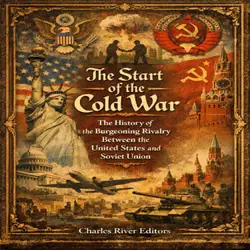
    The Start of the Cold War: The History of the Burgeoning Rivalry Between the United States and Soviet Union

    Charles River Editors

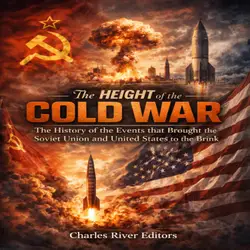
  2. The Height of the Cold War: The History of the Events that Brought the Soviet Union and United States to the Brink

    Charles River Editors

  3. The Story of the Berlin Wall (A Divided World) :

    Onofre Quezada

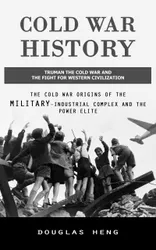
  4. Cold War History: Truman the Cold War and the Fight for Western Civilization (The Cold War Origins of the Military-industrial Complex and the Power Elite)

    Douglas Heng

  5. Cold War History: The Secret Battles That Shaped the Modern World (The History of the Emergency Cold War Bunker Designed for Congress During a Nuclear War)

    Samuel Stancil

  6. Cold War History: The Cold War Origins of the Military-industrial Complex (The History of the Emergency Cold War Bunker Designed for Congress During a Nuclear War)

    Alejandro Barnes

  7. Cold War History: Navigating a New Era of Uncertainty for the Economy (The History of the Emergency Cold War Bunker Designed for Congress During a Nuclear War)

    James Simmons

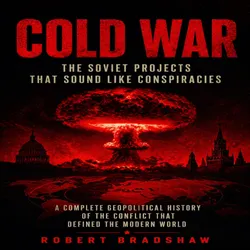
  8. Cold War: The Soviet Projects That Sound Like Conspiracies : A Complete Geopolitical History of the Conflict That Defined the Modern World

    Robert Bradshaw

  9. Cold War History: The Secret History of the Cia and a Cold War Assassination (A Captivating Guide to the Tense Conflict Between the United States of America)

    Frank Townsend

  10. The Space Race : The History of the Technological Rivalry Between the Soviets and Americans during the Cold War

    Charles River Editors

  11. Cold War History: American and Soviet Espionage Activities During the Cold War (The History of the Emergency Cold War Bunker Designed for Congress During a Nuclear War)

    Timothy Hoskins

  12. 2.0

    The Worst Nuclear Meltdowns of the Cold War: The History of the Biggest Nuclear Disasters in the United States and Soviet Union

    Charles River Editors