À propos de ce livre

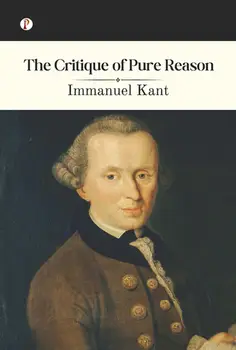
Immanuel Kant, a German philosopher, attempts to define the boundaries and scope of metaphysics in his book The Critique of Pure Reason. It aims to establish the groundwork for another type of metaphysics while demonstrating the impossibility of one. Kant challenged the metaphysics of German philosopher Gottfried Wilhelm Leibniz for supposing that the human intellect can reach facts about things like God, freedom, and immortality—things that, by their very nature, can never be the objects of experience. But according to Kant, the mind lacks such power, making rationalist metaphysics a fraud. Knowledge, according to Kant, must be based on "priori" judgements since they can only be necessary and synthetic—that is, such that the predicate term contains more information than is analytically contained in the subject—if they are distinct from the contingencies of experience.
Commencez ce livre dès aujourd'hui pour 0 €

  • Accédez à tous les livres de l'app pendant la période d'essai
  • Sans engagement, annulez à tout moment
Essayer gratuitement
Plus de 52 000 personnes ont noté Nextory 5 étoiles sur l'App Store et Google Play.

Livres similaires

Plus de Immanuel Kant

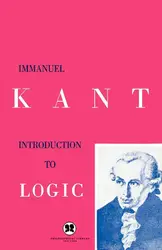
  1. Introduction to Logic

    Immanuel Kant

  2. Nouveau

    Fundamental Principles of the Metaphysic of Morals

    Immanuel Kant

  3. Nouveau

    Kant's Prolegomena to Any Future Metaphysics

    Immanuel Kant

  4. Nouveau

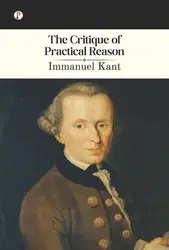
    The Critique of Practical Reason

    Immanuel Kant

  5. Nouveau

    Of the Injustice of Counterfeiting Books

    Immanuel Kant

  6. Nouveau

    Perpetual Peace: A Philosophical Essay

    Immanuel Kant

  7. Nouveau

    The Metaphysical Elements of Ethics

    Immanuel Kant

  8. Lo Bello y Lo Sublime : Ensayo de Estética y Moral

    Immanuel Kant

  9. 100 Clásicos de la Literatura Universal

    Francis Scott Fitzgerald, Mary Shelley, Lyman Frank Baum, Louisa May Alcott, Dante Alighieri, Jane Austen, Ambrose Bierce, Emily Brontë, Edgar Rice Burroughs, Lewis Carroll, Wilkie Collins, René Descartes, Charles Dickens, Emily Dickinson, Alexandre Dumas, Gustave Flaubert, Benito Pérez Galdós, Johann Wolfgang von Goethe, Thomas Hardy, E T A Hoffmann, Washington Irving, Henry James, James Joyce, Franz Kafka, Gaston Leroux, Federico García Lorca, H.P. Lovecraft, Publio Virgilio Marón, Lucy Maud Montgomery, John William Polidori, Marco Polo, Antoine de Saint-Exupéry, Emilio Salgari, Walter Scott, Mark Twain, Jules Verne, Julio Verne, H.G. Wells, Edith Wharton, Mary Wollstonecraft, Stefan Zweig, Sun Tzu, Bram Stoker, - Aristoteles, George Bernard Shaw, Henryk Sienkiewicz, Concepción Arenal, Charlotte Brontë, Miguel de Cervantes, G.K. Chesterton, Daniel Defoe, Fyodor Mikhailovich Dostoyevsky, Arthur Conan Doyle, Sigmund Freud, H. Rider Haggard, Homero, Immanuel Kant, Rudyard Kipling, Molière, Friedrich Nietzsche, Fernando de Rojas, Sófocles, William Makepeace Thackeray, León Tolstói, Voltaire, Ramón María del Valle-Inclán, Oscar Wilde, Virginia Woolf

  10. Hacia la paz perpetua

    Immanuel Kant

  11. Teoría y praxis : Estudio preliminar: Eduardo García Belsunce

    Immanuel Kant