À propos de ce livre

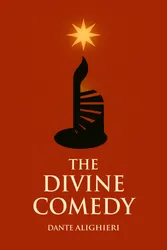
The Divine Comedy – PURGATORIOThis is an unabridged version of PURGATORIO, the second part of The Divine Comedy, an epic poem written by Dante Alighieri.The Divine Comedy is written in the first person, and tells of Dante's journey through the three realms of the dead, lasting from the night before Good Friday to the Wednesday after Easter in the spring of 1300. The Roman poet Virgil guides him through Hell and Purgatory, and Beatrice, Dante's ideal woman, guides him through Heaven. On the surface, the poem describes Dante's travels through Inferno (Hell), Purgatorio (Purgatory), and Paradiso (Paradise/Heaven), but at a deeper level, it represents allegorically the soul's journey towards God.In PURGATORIO, Dante and Virgil having survived the depths of Hell, ascend out of the undergloom to the Mountain of Purgatory on the far side of the world. The Mountain is on an island, the only land in the Southern Hemisphere, created by the displacement of rock which resulted when Satan's fall created Hell (which Dante portrays as existing underneath Jerusalem).The mountain has seven terraces, corresponding to the seven deadly sins or "seven roots of sinfulness." The classification of sin here is more psychological than that of the Inferno, being based on motives, rather than actions. Below the seven purges of the soul is the Ante-Purgatory, containing the Excommunicated from the church and the Late repentant who died, often violently, before receiving rites.This translation by Charles Eliot Norton from 1891 is written in prose, a form of grammatical structure and natural flow of speech rather than the original blank verse. The translation includes more than 1,300 footnotes and explanations.Audiobook read by Tony Addison, running time 5 hours, 25 min. Also available as E-Book: ePUB, contains 55,800 words including the endnotes. Average reading time should be around 4 hours and 40 min, but is likely longer due to the content text.The Divine Comedy is available in one full volume including all three parts, or as separate E-Books or audio books;INFERNO (5 hours, 16 min), PURGATORIO (5 hours, 25 min), and PARADISO (5 hours, 38 min.Dante Alighieri (c. 1265–1321), was a major Italian poet of the Middle Ages. His Divine Comedy, is widely considered the greatest literary work composed in the Italian language and a masterpiece of world literature.

Commencez ce livre dès aujourd'hui pour 0 €

  • Accédez à tous les livres de l'app pendant la période d'essai
  • Sans engagement, annulez à tout moment
Essayer gratuitement
Plus de 52 000 personnes ont noté Nextory 5 étoiles sur l'App Store et Google Play.

  1. 2.4

    The Divine Comedy

    Dante Alighieri

  2. Nouveau
    2.4

    The Divine Comedy

    Dante Alighieri

  3. Les mieux notés
    4.6

    La Divina Comedia

    Dante Alighieri

  4. Nouveau

    La Divina Commedia

    Dante Alighieri

  5. Nouveau

    50 Clásicos que debes leer antes de morir

    Dante Alighieri, Aristóteles, Jane Austen, Charles Baudelaire, Giovanni Boccaccio, Anne Brontë, C. Collodi, James Fenimore Cooper, Fedor Mikhaïlovitch Dostoïevski, Arthur Conan Doyle, Alexandre Dumas, José de Espronceda, Gustave Flaubert, Sigmund Freud, Benito Pérez Galdós, Kahlil Gibran

  6. Nouveau

    100 Clásicos de la Literatura Universal

    Francis Scott Fitzgerald, Mary Shelley, Lyman Frank Baum, Louisa May Alcott, Dante Alighieri, Jane Austen, Ambrose Bierce, Emily Brontë, Edgar Rice Burroughs, Lewis Carroll, Wilkie Collins, René Descartes, Charles Dickens, Emily Dickinson, Alexandre Dumas, Gustave Flaubert, Benito Pérez Galdós, Johann Wolfgang Goethe, Thomas Hardy, E. T. Hoffmann, Washington Irving, Henry James, James Joyce, Franz Kafka

  7. Nouveau

    100 Obras Maestras Que Debes Leer Antes De Morir

    Francis Scott Fitzgerald, Mary Shelley, L. Frank Baum, Edith Nesbit, Dante Alighieri, Jane Austen, Ambrose Bierce, Emily Brontë, Edgar Rice Burroughs, Lewis Carroll, Wilkie Collins, René Descartes, Charles Dickens, Emily Dickinson, Alexandre Dumas

  8. Nouveau

    The Epic Poems Collection : Cinq chefs-d'oeuvre de la poesie epique occidentale

    Homer, Virgil, Dante Alighieri, William Shakespeare, John Milton

  9. Harvard Classics : The Five-Foot Shelf of Books

    Aesop, Dante Alighieri, Hans Christian Andersen, Augustine of Hippo, Marcus Aurelius, Jane Austen, Francis Bacon, Honoré de Balzac, Francis Beaumont, Bjørnstjerne Bjørnson, Thomas Browne, Robert Browning, John Bunyan, EDMUND BURKE, Robert Burns, Lord Byron, Thomas Carlyle, Benvenuto Cellini, Miguel de Cervantes, Marcus Tullius Cicero, Richard Henry Jr., Charles Darwin, Alphonse Daudet, Thomas Dekker, Charles Dickens, Fyodor Dostoevsky, John Dryden, Charles W. Eliot, George Eliot, Ralph Waldo Emerson, Epictetus, John Fletcher, Theodor Fontane, Benjamin Franklin, Johann Wolfgang Goethe, Oliver Goldsmith, Jacob Grimm, Edward Everett Hale, Bret Harte, Nathaniel Hawthorne, Homer, Victor Hugo, Washington Irving, Henry James, Ben Jonson, Gottfried Keller, Thomas à Kempis, Alexander L. Kielland, Martin Luther, Niccolò Machiavelli, Alessandro Manzoni, Christopher Marlowe, Philip Massinger, Guy De Maupassant, John Stuart Mill, John Milton, Thomas More, William Morris, Alfred de Musset, William Allan Neilson, William Penn, Plato, Pliny the Younger, Plutarch, George Sand, Percy Bysshe Shelley, Richard Brinsley Sheridan, Adam Smith, Laurence Sterne, Theodor Storm, William Makepeace Thackeray, Leo Tolstoy, Ivan Turgenev, Mark Twain, Juan Valera, Virgil, Izaak Walton, John Webster, John Woolman

  10. 2.4

    The Divine Comedy

    Dante Alighieri

  11. La Divina Commedia

    Dante Alighieri

  12. 100 obras maestras que debes leer antes de morir

    Francis Scott Fitzgerald, Mary Shelley, Lyman Frank Baum, Edith Nesbit, Dante Alighieri, Jane Austen, Ambrose Bierce, Emily Brontë, Edgar Rice Burroughs, Lewis Carroll, Wilkie Collins, René Descartes, Charles Dickens, Emily Dickinson, Alexandre Dumas, Gustave Flaubert, Benito Pérez Galdós, Johann Wolfgang Goethe, Thomas Hardy, E. T. Hoffmann, Washington Irving, Henry James, James Joyce, Franz Kafka, Gaston Leroux, Federico García Lorca, H.P. Lovecraft, Publio Virgilio Marón, Lucy Maud Montgomery, John William Polidori, Marco Polo, Antoine de Saint-Exupéry, Emilio Salgari, Walter Scott, Mark Twain, Jules Verne