The Establishment of the League of Nations and United Nations: The Controversial Starts of Both International Bodies in the 20th Century

The United Nations is one of the most famous bodies in the world, and its predecessor, the League of Nations, might be equally notorious. In fact, President Woodrow Wilson’s pet project was controversial from nearly the minute it was conceived. Wilson mostly found himself shut out, but Britain and France did not want American contributions to the war to go totally unappreciated, if only out of fear that the U.S. might turn towards improving their relations with Germany in response. Thus, to appease Wilson and the Americans, France and Britain consented to the creation of a League of Nations. However, even though his participation in the crafting of the Treaty of Versailles earned him a Nobel Prize that year, Wilson soon learned to his consternation that diplomacy with Congress would go no better than his diplomacy with European leaders. The only major provision that Wilson achieved in Europe, the League of Nations, was the most controversial in the United States.

While it would attempt to resolve some territorial disputes, it simply proved too weak to prevent international aggression, primarily among the Axis Powers in the buildup to World War II. Thus, the League’s greatest legacy ended up being its dismal failure to prevent World War II and ensure that World War I had truly been the “war to end all wars,” as originally intended.

Although the League of Nations was short-lived and clearly failed in its primary mission, it did essentially spawn the United Nations at the end of World War II, and many of the UN’s structures and organizations came straight from its predecessor, with the concepts of an International Court and a General Assembly coming straight from the League. More importantly, the failures of the League ensured that the UN was given stronger authority and enforcement mechanisms, most notably through the latter’s Security Council, and the UN has survived the last 80 years.

À propos de ce livre

The United Nations is one of the most famous bodies in the world, and its predecessor, the League of Nations, might be equally notorious. In fact, President Woodrow Wilson’s pet project was controversial from nearly the minute it was conceived. Wilson mostly found himself shut out, but Britain and France did not want American contributions to the war to go totally unappreciated, if only out of fear that the U.S. might turn towards improving their relations with Germany in response. Thus, to appease Wilson and the Americans, France and Britain consented to the creation of a League of Nations. However, even though his participation in the crafting of the Treaty of Versailles earned him a Nobel Prize that year, Wilson soon learned to his consternation that diplomacy with Congress would go no better than his diplomacy with European leaders. The only major provision that Wilson achieved in Europe, the League of Nations, was the most controversial in the United States.

While it would attempt to resolve some territorial disputes, it simply proved too weak to prevent international aggression, primarily among the Axis Powers in the buildup to World War II. Thus, the League’s greatest legacy ended up being its dismal failure to prevent World War II and ensure that World War I had truly been the “war to end all wars,” as originally intended.

Although the League of Nations was short-lived and clearly failed in its primary mission, it did essentially spawn the United Nations at the end of World War II, and many of the UN’s structures and organizations came straight from its predecessor, with the concepts of an International Court and a General Assembly coming straight from the League. More importantly, the failures of the League ensured that the UN was given stronger authority and enforcement mechanisms, most notably through the latter’s Security Council, and the UN has survived the last 80 years.

Commencez ce livre dès aujourd'hui pour 0 €

  • Accédez à tous les livres de l'app pendant la période d'essai
  • Sans engagement, annulez à tout moment
Essayer gratuitement
Plus de 52 000 personnes ont noté Nextory 5 étoiles sur l'App Store et Google Play.

  1. The Counter-Reformation: The History of the Catholic Church’s Response to the Protestant Reformation

    Charles River Editors

  2. The Age of Sail’s Most Famous Battles: The History of the Naval Engagements that Shaped Europe in the Early Modern Period

    Charles River Editors

  3. The Iranian Revolution and Iran Hostage Crisis: The History of the Events that Broke American Relations with Iran

    Charles River Editors

  4. The Christianization of Rome: The History of the Roman Empire’s Religious Conversion

    Charles River Editors

  5. Persepolis and Susa: The History of the Achaemenid Persian Empire’s Capitals

    Charles River Editors

  6. Indian Removal: The History of the Battles and Policies that Displaced Native Americans East of the Mississippi River

    Charles River Editors

  7. Kublai Khan and Marco Polo: The History of a Unique Partnership at the Court of the Mongol Empire

    Charles River Editors

  8. The Dawn of the Age of Exploration: The History of the Initial Expeditions that Led to European Imperialism across the Globe

    Charles River Editors

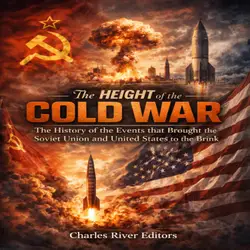
  9. The Height of the Cold War: The History of the Events that Brought the Soviet Union and United States to the Brink

    Charles River Editors

  10. Across the Silk Road and the Atlantic: The History of Marco Polo and Christopher Columbus’ Groundbreaking Voyages

    Charles River Editors

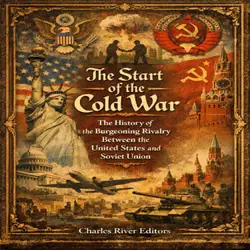
  11. The Start of the Cold War: The History of the Burgeoning Rivalry Between the United States and Soviet Union

    Charles River Editors

  12. Ancient Greek Astronomy and Astrology: The History of Celestial Observations in Greece

    Charles River Editors