À propos de ce livre

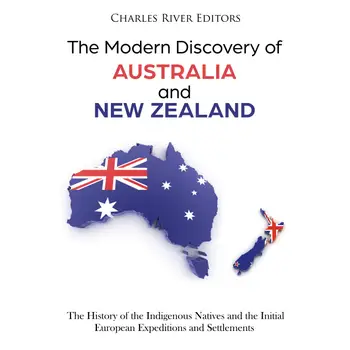
A land of almost 3 million square miles has lain since time immemorial on the southern flank of the planet, so isolated that it remained entirely outside of European knowledge until 1770. However, the first human footprints on this vast territory were felt 70,000 years earlier, as people began to cross the periodic land bridges and the short sea crossings from Southeast Asia.

By the mid-17th century, the existence of a land in the south referred to as Terra Australis was generally known and understood by the Europeans, and incrementally, its shores were observed and mapped. Van Diemen’s Land, an island off the south coast of Australia now called Tasmania, was identified in 1642 by Dutch mariner Abel Tasman, and a few months later, the intrepid Dutchman would add New Zealand to the map of the known world.

At the time, the English were the greatest naval power in Europe, but they arrived on the scene rather later. The first to appear was William Dampier, captain of the HMS Roebuck, in 1699, after he had been granted a Royal Commission by King William III to explore the east coast of New Holland. By then, the general global balance of power was shifting, and with the English gaining a solid foothold in India, their supremacy in the Indian Ocean trade zone began. The Dutch, once predominant in the region, began slowly to lose ground, slipping out of contention as a major global trading power. So too were the Portuguese, also once dominant in the region. It was now just the French and the English who were facing one another down in a quest to dominate the world, but their imperial interests were focused mainly in India and the East Indies, as well as the Caribbean and the Americas. As a result, the potential of a vast, practically uninhabited great southern continent did not yet hold much interest. By then the world was largely mapped, with just regions such as the Arctic Archipelago and the two poles remaining terra incognita.
Commencez ce livre dès aujourd'hui pour 0 €

  • Accédez à tous les livres de l'app pendant la période d'essai
  • Sans engagement, annulez à tout moment
Essayer gratuitement
Plus de 52 000 personnes ont noté Nextory 5 étoiles sur l'App Store et Google Play.

Livres similaires

  1. The Frontier Wars and the New Zealand Wars: The History of the British Empire’s Conflicts against Indigenous Groups in Australia and New Zealand

    Charles River Editors

  2. History of New Zealand: A Captivating Guide to the History of the Land of the Long White Cloud, from the Polynesians Through the Māori Musket Wars to the Present

    Captivating History

  3. 3.0

    The History of Australia

    History Nerds

  4. The Conquest of the Americas: A Captivating Guide to the Discovery of the New World, European Colonization, and Indigenous Resistance

    Captivating History

  5. The Spanish Empire in the Americas: The History of Spain’s Colonization across Central America and South America

    Charles River Editors

  6. The Spanish and Portuguese in the New World: The History and Legacy of the First European Rivalry in the Americas

    Charles River Editors

  7. The Dawn of the Age of Exploration: The History of the Initial Expeditions that Led to European Imperialism across the Globe

    Charles River Editors

  8. The Fight for North America: The History of the European Rivalries and Conflicts Before the American Revolution

    Charles River Editors

  9. The Conquistadors: A Captivating Guide to the Spanish Explorers, Conquest of the Americas, Cultural Exchange, and Legacy

    Captivating History

  10. Imperial Germany’s Colonization in Africa: The History of the German Efforts and Conflicts to Colonize Parts of Africa

    Charles River Editors

  11. 2.0

    Across the Silk Road and the Atlantic: The History of Marco Polo and Christopher Columbus’ Groundbreaking Voyages

    Charles River Editors

  12. These Isles : A People’s History of England, Ireland, Scotland and Wales

    Brian Groom