4.0(1)

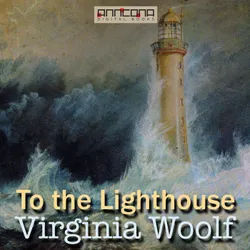
To the Lighthouse

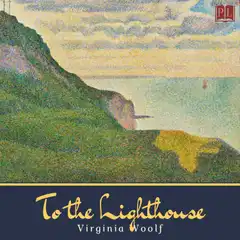
Set on an island off the Scottish coast, To the Lighthouse minutely examines the fleeting impressions of a large cast of family, friends, lovers, and hangers-on. Who can we be, Virginia Woolf invites us to ask, if no one can ever know our hearts - if they're unknowable even to ourselves? To the Lighthouse remains one of the most important Modernist novels, exquisitely composed by one of the most gifted writers of the Modernist movement.

The opening section follows the passage of a day with a thwarted objective: to go to the nearby lighthouse. The concluding section revisits this expedition a decade later, when so much is irrevocably changed, as a chance to glimpse interpersonal understandings and connections. The novel provides a brilliant example of stream-of-consciousness writing, and raises questions that provoke us still: questions about whether children are the fullest realization of one's posterity, how women artists are regarded socially, and how money and status enable - or close off - networks, relationships, and the dreams we hold most dear.

As masterful as its technique is, however, the lasting value of this novel for twenty-first-century readers may be its sharp representation of the emotional labor that people - particularly women - perform in order to manage the needs and expectations of others. Woolf wrote in an age when women's participation in society was tightly restricted by class norms and stultifying domesticity. Nearly a century later, scholars still have a great deal to say about Mrs. Ramsay, Lily Briscoe, and the tension between Mr. Ramsay and his son James.

Woolf's fifth novel, and one of her most successful books both critically and commercially, To the Lighthouse was originally published in 1927, simultaneously in England and the United States. Due to a quirk in the management and correction of the proofs, according to scholar Hans Walter Gabler, the two editions were "not identical, since in a significant number of instances Virginia Woolf marked up the first proofs differently" for her two publishers.
À propos de ce livre

Set on an island off the Scottish coast, To the Lighthouse minutely examines the fleeting impressions of a large cast of family, friends, lovers, and hangers-on. Who can we be, Virginia Woolf invites us to ask, if no one can ever know our hearts - if they're unknowable even to ourselves? To the Lighthouse remains one of the most important Modernist novels, exquisitely composed by one of the most gifted writers of the Modernist movement.

The opening section follows the passage of a day with a thwarted objective: to go to the nearby lighthouse. The concluding section revisits this expedition a decade later, when so much is irrevocably changed, as a chance to glimpse interpersonal understandings and connections. The novel provides a brilliant example of stream-of-consciousness writing, and raises questions that provoke us still: questions about whether children are the fullest realization of one's posterity, how women artists are regarded socially, and how money and status enable - or close off - networks, relationships, and the dreams we hold most dear.

As masterful as its technique is, however, the lasting value of this novel for twenty-first-century readers may be its sharp representation of the emotional labor that people - particularly women - perform in order to manage the needs and expectations of others. Woolf wrote in an age when women's participation in society was tightly restricted by class norms and stultifying domesticity. Nearly a century later, scholars still have a great deal to say about Mrs. Ramsay, Lily Briscoe, and the tension between Mr. Ramsay and his son James.

Woolf's fifth novel, and one of her most successful books both critically and commercially, To the Lighthouse was originally published in 1927, simultaneously in England and the United States. Due to a quirk in the management and correction of the proofs, according to scholar Hans Walter Gabler, the two editions were "not identical, since in a significant number of instances Virginia Woolf marked up the first proofs differently" for her two publishers.
Commencez ce livre dès aujourd'hui pour 0 €

  • Accédez à tous les livres de l'app pendant la période d'essai
  • Sans engagement, annulez à tout moment
Essayer gratuitement
Plus de 52 000 personnes ont noté Nextory 5 étoiles sur l'App Store et Google Play.

  1. 1 oct.
    #6

    La señora Dalloway en Bond Street

    Virginia Woolf

  2. 1 oct.
    4.0
    #3

    Una Habitación Propia :

    Virginia Woolf

  3. 17 sept.

    La habitación de Jacob

    Virginia Woolf

  4. 1 août
    4.0

    Ett eget rum

    Virginia Woolf

  5. Nouveau

    50 Clásicos que Debes Leer Antes de Morir : Un viaje literario por los tesoros de la literatura universal

    Dante Alighieri, Aristóteles, Jane Austen, Charles Baudelaire, Giovanni Boccaccio, Anne Brontë, C. Collodi, James Fenimore Cooper, Fedor Mikhaïlovitch Dostoïevski, Arthur Conan Doyle, Alexandre Dumas, José de Espronceda, Gustave Flaubert, Sigmund Freud, Benito Pérez Galdós, Kahlil Gibran, Johann Wolfgang Goethe, Victor Hugo, Thomas Hardy, Nathaniel Hawthorne, Vicente Blasco Ibáñez, Washington Irving, James Joyce, Mariano José Larra, Jack London, Federico García Lorca, H.P. Lovecraft, Antonio Machado, Gustav Meyrink, John Stuart Mill, Amado Nervo, Friedrich Nietzsche, Solomon Northup, Alexander Sergeyevich Pushkin, Francisco de Quevedo, Walter Scott, William Shakespeare, Robert Louis Stevenson, Harriet Beecher Stowe, Jonathan Swift, Mark Twain, Miguel De Unamuno, Ramón María Valle-Inclán, Julio Verne, Virginia Woolf

  6. Nouveau
    5.0

    The Voyage Out

    Virginia Woolf

  7. 4.0

    Jacob’s Room

    Virginia Woolf

  8. Nouveau

    The Common Reader, Second Series

    Virginia Woolf

  9. Nouveau

    The Complete Works of Virginia Woolf

    Virginia Woolf

  10. Nouveau

    30 Occult and Supernatural masterpieces in one book

    Washington Irving, Mary Shelley, Charles Dickens, Joseph Sheridan Fanu, Elizabeth Cleghorn Gaskell, Louisa May Alcott, Oscar Wilde, Rudyard Kipling, Edith Nesbit, John Meade Falkner, Henry James, H.G. Wells, Montague Rhodes James, Arnold Bennett, Henry Rider Haggard, William Hope Hodgson, Virginia Woolf, Master Hendrick Certain, Pastor Tappau's, Lefebvre, De Lacy

  11. 4.3

    A Room of One’s Own

    Virginia Woolf

  12. Nouveau
    3.4

    Mrs. Dalloway

    Virginia Woolf