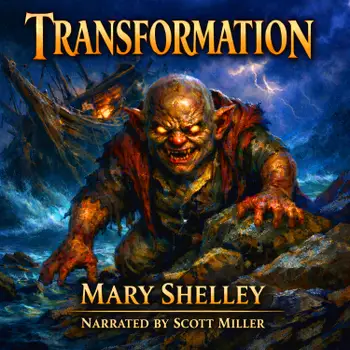
Transformation : A Monster Took His Skin — and His Life

Transformation is a Gothic short story by Mary Shelley that explores pride, temptation, and the dangerous bargains people make with themselves. It follows Guido, a young man undone by arrogance, who encounters a grotesque dwarf offering him a terrible trade — one that will give him power and revenge at the cost of his very identity. The tale blends moral fable with supernatural unease, showing how a single reckless choice can unmake a life. Shelley uses atmosphere, confession, and shifting identity rather than overt horror, creating a story that feels more like a warning whispered from experience.

Though brief, Transformation carries the same concerns that run through Shelley’s larger work: the fragility of the self, the consequences of unchecked impulses, and the thin line between the human and the monstrous. Its power comes not from shock but from recognition — the sense that Guido’s downfall begins inside him, long before the supernatural enters the room.

Mary Shelley (1797–1851) was an English novelist and essayist best known as the author of Frankenstein, a book that helped shape both science fiction and modern horror. The daughter of philosophers Mary Wollstonecraft and William Godwin, she grew up among writers and radicals, later traveling through Europe with the poet Percy Bysshe Shelley. Across her novels, short stories, and journals, she explored grief, ambition, invention, and moral responsibility. Works like The Last Man, Mathilda, and Transformation show the breadth of her voice beyond Frankenstein. Shelley wrote in a time when women authors were often dismissed, yet her ideas outlived the age that doubted her. Today she is regarded as one of the foundational figures of speculative literature.
À propos de ce livre

Transformation is a Gothic short story by Mary Shelley that explores pride, temptation, and the dangerous bargains people make with themselves. It follows Guido, a young man undone by arrogance, who encounters a grotesque dwarf offering him a terrible trade — one that will give him power and revenge at the cost of his very identity. The tale blends moral fable with supernatural unease, showing how a single reckless choice can unmake a life. Shelley uses atmosphere, confession, and shifting identity rather than overt horror, creating a story that feels more like a warning whispered from experience.

Though brief, Transformation carries the same concerns that run through Shelley’s larger work: the fragility of the self, the consequences of unchecked impulses, and the thin line between the human and the monstrous. Its power comes not from shock but from recognition — the sense that Guido’s downfall begins inside him, long before the supernatural enters the room.

Mary Shelley (1797–1851) was an English novelist and essayist best known as the author of Frankenstein, a book that helped shape both science fiction and modern horror. The daughter of philosophers Mary Wollstonecraft and William Godwin, she grew up among writers and radicals, later traveling through Europe with the poet Percy Bysshe Shelley. Across her novels, short stories, and journals, she explored grief, ambition, invention, and moral responsibility. Works like The Last Man, Mathilda, and Transformation show the breadth of her voice beyond Frankenstein. Shelley wrote in a time when women authors were often dismissed, yet her ideas outlived the age that doubted her. Today she is regarded as one of the foundational figures of speculative literature.
Commencez ce livre dès aujourd'hui pour 0 €

  • Accédez à tous les livres de l'app pendant la période d'essai
  • Sans engagement, annulez à tout moment
Essayer gratuitement
Plus de 52 000 personnes ont noté Nextory 5 étoiles sur l'App Store et Google Play.

  1. Nouveau

    100 obras maestras que debes leer antes de morir

    Francis Scott Fitzgerald, Mary Shelley, Lyman Frank Baum, Edith Nesbit, Dante Alighieri, Jane Austen, Ambrose Bierce, Emily Brontë, Edgar Rice Burroughs, Lewis Carroll, Wilkie Collins, René Descartes, Charles Dickens, Emily Dickinson, Alexandre Dumas, Gustave Flaubert, Benito Pérez Galdós, Johann Wolfgang Goethe, Thomas Hardy, E. T. Hoffmann, Washington Irving, Henry James, James Joyce, Franz Kafka, Gaston Leroux, Federico García Lorca, H.P. Lovecraft, Publio Virgilio Marón, Lucy Maud Montgomery, John William Polidori, Marco Polo, Antoine de Saint-Exupéry, Emilio Salgari, Walter Scott, Mark Twain, Jules Verne

  2. Nouveau

    30 Occult and Supernatural masterpieces in one book

    Washington Irving, Mary Shelley, Charles Dickens, Joseph Sheridan Fanu, Elizabeth Cleghorn Gaskell, Louisa May Alcott, Oscar Wilde, Rudyard Kipling, Edith Nesbit, John Meade Falkner, Henry James, H.G. Wells, Montague Rhodes James, Arnold Bennett, Henry Rider Haggard, William Hope Hodgson, Virginia Woolf, Master Hendrick Certain, Pastor Tappau's, Lefebvre, De Lacy

  3. Nouveau

    The Dawn of Science Fiction : The Visionaries Who Imagined Tomorrow First

    H.G. Wells, Mary Shelley, Voltaire, Jack London, Frank R. Stockton, Edgar Allan Poe

  4. Nouveau

    Tomorrow Belonged to Her : Classic Science Fiction Written by Women

    Leigh Brackett, Evelyn E. Smith, Mary Shelley, Andre Norton, Margaret St. Clair, Lynn Venable, Miriam Allen deFord, Francis Stevens, Katherine MacLean, Dorothy Quick, Mary Carlson, Gerda Rhoads

  5. Nouveau
    3.9

    Frankenstein

    Mary Shelley

  6. Nouveau
    3.9

    Frankenstein

    Mary Shelley

  7. Nouveau

    On Ghosts

    Mary Shelley

  8. Nouveau
    3.3

    The Mortal Immortal : The Tragic Romance of an Accidental Immortal by the Author of Frankenstein

    Mary Shelley

  9. Mondolfos arv

    Mary Shelley

  10. 3.0

    50 Masterpieces you have to read before you die vol: 2

    Lewis Carroll, Mark Twain, Jules Verne, Oscar Wilde, Arthur Conan Doyle, Louisa May Alcott, Jane Austen, G.K. Chesterton, Wilkie Collins, Charles Dickens, Fyodor Dostoyevsky, Alexandre Dumas, F. Scott Fitzgerald, E. M. Forster, Thomas Hardy, Hermann Hesse, James Joyce, Jack London, H.P. Lovecraft, Lucy Maud Montgomery, Edgar Allan Poe, Marcel Proust, William Shakespeare, Robert Louis Stevenson, H.G. Wells, Virginia Woolf, Rudyard Kipling, D. H. Lawrence, Thomas Mann, William Somerset Maugham, Herman Melville, George Sand, Mary Shelley, Walter Scott, Leo Tolstoy, Bram Stoker

  11. 3.9

    Frankenstein

    Mary Shelley

  12. 100 Clásicos de la Literatura Universal

    Francis Scott Fitzgerald, Mary Shelley, Lyman Frank Baum, Louisa May Alcott, Dante Alighieri, Jane Austen, Ambrose Bierce, Emily Brontë, Edgar Rice Burroughs, Lewis Carroll, Wilkie Collins, René Descartes, Charles Dickens, Emily Dickinson, Alexandre Dumas, Gustave Flaubert, Benito Pérez Galdós, Johann Wolfgang von Goethe, Thomas Hardy, E T A Hoffmann, Washington Irving, Henry James, James Joyce, Franz Kafka, Gaston Leroux, Federico García Lorca, H.P. Lovecraft, Publio Virgilio Marón, Lucy Maud Montgomery, John William Polidori, Marco Polo, Antoine de Saint-Exupéry, Emilio Salgari, Walter Scott, Mark Twain, Jules Verne, Julio Verne, H.G. Wells, Edith Wharton, Mary Wollstonecraft, Stefan Zweig, Sun Tzu, Bram Stoker, - Aristoteles, George Bernard Shaw, Henryk Sienkiewicz, Concepción Arenal, Charlotte Brontë, Miguel de Cervantes, G.K. Chesterton, Daniel Defoe, Fyodor Mikhailovich Dostoyevsky, Arthur Conan Doyle, Sigmund Freud, H. Rider Haggard, Homero, Immanuel Kant, Rudyard Kipling, Molière, Friedrich Nietzsche, Fernando de Rojas, Sófocles, William Makepeace Thackeray, León Tolstói, Voltaire, Ramón María del Valle-Inclán, Oscar Wilde, Virginia Woolf