Über dieses Buch

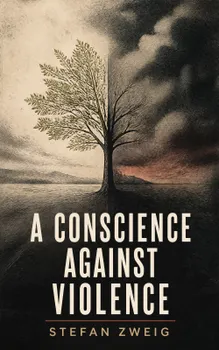
Stefan Zweig's 'A Conscience against Violence' delves into the profound moral quandaries faced by individuals grappling with the relentless tides of aggression and ethical compromise. Written with Zweig's characteristic eloquence and psychological insight, this book serves as both a critique of and a meditation on the human condition during times of conflict. Employing a narrative style imbued with empathy and introspection, Zweig crafts a compelling examination of how conscience can act as a beacon amid the shadows of tumultuous moral landscapes. Set against the backdrop of a world increasingly surrendering to the allure of brutality, Zweig's work remains a beacon of literary sophistication and timeless relevance. Stefan Zweig, one of the most prominent literary figures of the early 20th century, was deeply affected by the geopolitical upheavals of his time, particularly the two World Wars. His experiences as a European intellectual witnessing the disintegration of the old world order inform his poignant exploration of conscience and violence. Zweig's extensive travels and interactions with diverse cultures and philosophies further enriched his perspective, allowing him to write with a universal understanding of the human psyche. His personal commitment to pacifism and humanism imbues this narrative with its profound moral depth and timeless significance. This book is a must-read for those seeking a richer understanding of the struggle between ethical principles and the often corrosive context of societal violence. Zweig's masterful prose and insightful human portraits offer readers not only a reflective journey into the past but also enduring lessons applicable to contemporary society. Academics, historians, and literature enthusiasts alike will find in 'A Conscience against Violence' an invaluable addition to their literary repertoire, ensuring its place as a cornerstone in the study of conscience and moral conflict in literature.
Starte noch heute mit diesem Buch für CHF 0

  • Hole dir während der Testphase vollen Zugriff auf alle Bücher in der App
  • Keine Verpflichtungen, jederzeit kündbar
Jetzt kostenlos testen
Mehr als 52 000 Menschen haben Nextory im App Store und auf Google Play 5 Sterne gegeben.

Ähnliche Bücher

Mehr von Stefan Zweig

  1. 30. Okt.

    Der Amokläufer. Eine Novelle. : Hörbuchzeit: Klassiker der Weltliteratur

    Hörbuchzeit, Stefan Zweig

  2. 23. Okt.

    Brief einer Unbekannten. Eine Novelle. : Hörbuchzeit: Klassiker der Weltliteratur

    Hörbuchzeit, Stefan Zweig

  3. 16. Okt.

    Die Frau und die Landschaft. Eine Novelle. : Hörbuchzeit: Klassiker der Weltliteratur

    Hörbuchzeit, Stefan Zweig

  4. 13. Okt.

    Die gleich-ungleichen Schwestern. Eine Novelle. : Hörbuchzeit: Klassiker der Weltliteratur

    Hörbuchzeit, Stefan Zweig

  5. Neu

    Untergang eines Herzens. Eine Novelle. : Hörbuchzeit: Klassiker der Weltliteratur

    Hörbuchzeit, Stefan Zweig

  6. Neu

    Vierundzwanzig Stunden aus dem Leben einer Frau. Eine Novelle. : Hörbuchzeit: Klassiker der Weltliteratur

    Hörbuchzeit, Stefan Zweig

  7. Neu

    Die Welt von Gestern

    Stefan Zweig

  8. Dostojewski - Die Tragödie seines Lebens

    Stefan Zweig

  9. Nietzsche – Der Kampf mit dem Dämon. Versuch einer Typologie des Geistes. : Hörbuchzeit: Klassiker der Weltliteratur

    Hörbuchzeit, Stefan Zweig

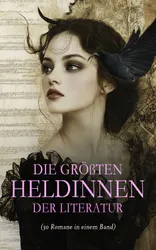
  10. Die größten Heldinnen der Literatur (50 Romane in einem Band) : 50 Romane über weibliche Selbstbehauptung, Bildung und gesellschaftliche Grenzen

    Charlotte Brontë, Jane Austen, Louisa May Alcott, Leo Tolstoi, Virginia Woolf, Thomas Hardy, Sinclair Lewis, Hedwig Dohm, Charlotte Perkins Gilman, Elizabeth Burgoyne Corbett, Daniel Defoe, Anne Brontë, L.M. Montgomery, Victor Hugo, Wilhelmine von Hillern, Adalbert Stifter, Luise Ahlborn, George Eliot, Lou Andreas-Salomé, Stefan Zweig, D. H. Lawrence, Henry James, Margaret Mitchell, Edith Wharton, Miles Franklin, Willa Cather, Elizabeth Gaskell, Nikolai Semjonowitsch Leskow, Theodore Dreiser, Elizabeth von Arnim, Colette, Honoré de Balzac, William Makepeace Thackeray, Gustave Flaubert, Emile Zola, Theodor Fontane, Ada Langworthy Collier, Joseph Sheridan Fanu, Johanna Schopenhauer, Nathaniel Hawthorne, Charles Dickens

  11. 4.5

    Magellan

    Stefan Zweig

  12. 4.5

    Stefan Zweig: Die gleich-ungleichen Schwestern : Eine Novelle. Ungekürzt gelesen

    Stefan Zweig