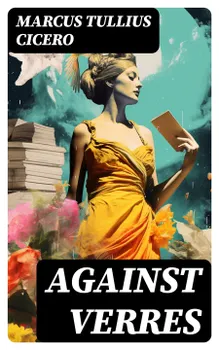
Über dieses Buch

In "Against Verres," Marcus Tullius Cicero delivers a masterful set of speeches that embody the principles of Roman rhetoric while deftly critiquing the corrupt provincial governor, Gaius Verres. Written in 70 BCE, this work is a pivotal example of Roman oratory, highlighting Cicero's skillful use of pathos, ethos, and logos to sway public opinion. Cicero meticulously chronicles the abuses of power Verres inflicted upon the citizens of Sicily, vividly illustrating themes of justice, corruption, and civic duty. Through eloquent prose and engaging narrative, he calls upon the Roman Senate to hold Verres accountable, effectively showcasing the intersection of law and morality in Roman society. Marcus Tullius Cicero, a philosopher, statesman, and lawyer, was profoundly influenced by the turbulent political climate of his time. Living amidst the decline of the Roman Republic and grappling with moral integrity, Cicero's experiences compelled him to advocate for justice and uphold the rule of law. His position as a consul and his participation in the political forum equipped him with a robust understanding of rhetoric and ethics, shaping his passionate defense against Verres. "Against Verres" is essential reading for anyone interested in Roman history, legal philosophy, and the art of persuasion. Cicero's ageless exploration of moral outrage and civic responsibility continues to resonate, making it a vital text for scholars and casual readers alike. Engage with this dramatic trial and witness the rhetorical brilliance that secured Cicero's legacy as one of history's foremost orators.

In this enriched edition, we have carefully created added value for your reading experience:

- A succinct Introduction situates the work's timeless appeal and themes.

- The Synopsis outlines the central plot, highlighting key developments without spoiling critical twists.

- A detailed Historical Context immerses you in the era's events and influences that shaped the writing.

- An Author Biography reveals milestones in the author's life, illuminating the personal insights behind the text.

- A thorough Analysis dissects symbols, motifs, and character arcs to unearth underlying meanings.

- Reflection questions prompt you to engage personally with the work's messages, connecting them to modern life.

- Hand‐picked Memorable Quotes shine a spotlight on moments of literary brilliance.

- Interactive footnotes clarify unusual references, historical allusions, and archaic phrases for an effortless, more informed read.

Starte noch heute mit diesem Buch für CHF 0

  • Hole dir während der Testphase vollen Zugriff auf alle Bücher in der App
  • Keine Verpflichtungen, jederzeit kündbar
Jetzt kostenlos testen
Mehr als 52 000 Menschen haben Nextory im App Store und auf Google Play 5 Sterne gegeben.

  1. Neu

    Harvard Classics : The Five-Foot Shelf of Books

    Aesop, Dante Alighieri, Hans Christian Andersen, Augustine of Hippo, Marcus Aurelius, Jane Austen, Francis Bacon, Honoré de Balzac, Francis Beaumont, Bjørnstjerne Bjørnson, Thomas Browne, Robert Browning, John Bunyan, EDMUND BURKE, Robert Burns, Lord Byron, Thomas Carlyle, Benvenuto Cellini, Miguel de Cervantes, Marcus Tullius Cicero, Richard Henry Jr., Charles Darwin, Alphonse Daudet, Thomas Dekker, Charles Dickens, Fyodor Dostoevsky, John Dryden, Charles W. Eliot, George Eliot, Ralph Waldo Emerson, Epictetus, John Fletcher, Theodor Fontane, Benjamin Franklin, Johann Wolfgang Goethe, Oliver Goldsmith, Jacob Grimm, Edward Everett Hale, Bret Harte, Nathaniel Hawthorne, Homer, Victor Hugo, Washington Irving, Henry James, Ben Jonson, Gottfried Keller, Thomas à Kempis, Alexander L. Kielland, Martin Luther, Niccolò Machiavelli, Alessandro Manzoni, Christopher Marlowe, Philip Massinger, Guy De Maupassant, John Stuart Mill, John Milton, Thomas More, William Morris, Alfred de Musset, William Allan Neilson, William Penn, Plato, Pliny the Younger, Plutarch, George Sand, Percy Bysshe Shelley, Richard Brinsley Sheridan, Adam Smith, Laurence Sterne, Theodor Storm, William Makepeace Thackeray, Leo Tolstoy, Ivan Turgenev, Mark Twain, Juan Valera, Virgil, Izaak Walton, John Webster, John Woolman

  2. 50 Römische Klassiker - Meisterwerke, die man kennen muss : Aeneis, Gallischer Krieg, Selbstbetrachtungen, Ab Urbe Condita, Vom glückseligen Leben, Der goldene Esel, Jüdischer Krieg, Metamorphosen...

    Marcus Aurelius, Seneca, Tacitus, Plutarch, Marcus Tullius Cicero, Gaius Iulius Caesar, Titus Livius, Polybios, Flavius Josephus, Vergil, Ovid, Petronius, Arrian, Sueton, Epiktet, Lukian, Apuleius, Longos von Lesbos, Epikur, Diogenes Laërtios, Eusebius, Kaiser Augustus, Ignatius von Antiochien, Tertullian, Origenes, Augustinus von Hippo

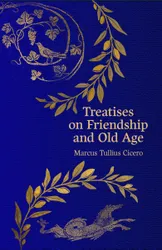
  3. Treatises on Friendship and Old Age (Hero Classics)

    Marcus Tullius Cicero

  4. 5.0

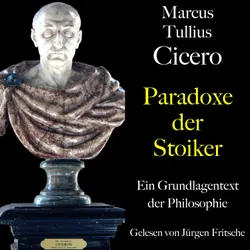
    Marcus Tullius Cicero: Paradoxe der Stoiker : Ein Grundlagentext der Philosophie

    Marcus Tullius Cicero

  5. Die Kunst der Staatsführung : Politische Philosophie, Realpolitik und strategische Führung von der Antike bis zur Moderne

    Niccolò Machiavelli, Platon, Marcus Aurelius, Marcus Tullius Cicero, Carl von Clausewitz, Friedrich der Große, Benjamin Franklin, Otto von Bismarck, Friedrich Christoph Dahlmann, Karel Čapek, Hans Delbrück

  6. Leitfaden für weise Herrscher : Staatskunst zwischen Macht, Ethik, Strategie und republikanischer Freiheit

    Carl von Clausewitz, Friedrich der Große, Benjamin Franklin, Otto von Bismarck, Niccolò Machiavelli, Platon, Marcus Aurelius, Marcus Tullius Cicero, Friedrich Christoph Dahlmann, Karel Čapek, Hans Delbrück

  7. 50 Meisterwerke der Philosophie : Metaphysik, Das Gastmahl, Bhagavadgita, Tractatus logico-philosophicus, Kritik der reinen Vernunft, Also sprach Zarathustra, Selbstbetrachtungen von Marcus Aurelius

    Ludwig Wittgenstein, Edmund Husserl, Karl Marx, Søren Kierkegaard, Friedrich Nietzsche, Ralph Waldo Emerson, John Stuart Mill, Georg Wilhelm Hegel, Friedrich Schelling, Johann Gottlieb Fichte, Immanuel Kant, John Locke, Montesquieu, Jean-Jacques Rousseau, David Hume, Gottfried Wilhelm Leibniz, Baruch Spinoza, - Konfuzius, Lao Tse, Platon, Xenophon, - Aristoteles, Marcus Tullius Cicero, Seneca, Epiktet, Marc Aurel, Plotin, Thomas von Aquin, Nicolaus von Cues, - Erasmus von Rotterdam, Niccolò Machiavelli, Tommaso Campanella, Martin Luther, Giordano Bruno, Samuel von Pufendorf, Abbé Castel Saint-Pierre, Michel de Montaigne, René Descartes, Francis Bacon, Blaise Pascal

  8. Grundwerke der politischen Philosophie : Texte zu Staat, Freiheit, Gerechtigkeit und Widerstand von der Antike bis zur Moderne

    Platon, - Aristoteles, Marcus Tullius Cicero, Niccolò Machiavelli, Tommaso Campanella, Thomas Morus, Samuel von Pufendorf, Abbé Castel Saint-Pierre, Jean-Jacques Rousseau, Montesquieu, Immanuel Kant, Friedrich der Große, Johann Gottlieb Fichte, Karl Marx, Friedrich Engels, Wilhelm von Humboldt, Friedrich Christoph Dahlmann, Franz Mehring, Johann Most, John Henry Mackay, Rosa Luxemburg, Erich Mühsam

  9. Essenzielle Klassiker der politischen Philosophie : Grundtexte zu Staatsphilosophie, Freiheit, Gewaltenteilung, Revolution und Anarchismus

    Niccolò Machiavelli, Montesquieu, Friedrich der Große, Platon, - Aristoteles, Marcus Tullius Cicero, Tommaso Campanella, Thomas Morus, Samuel von Pufendorf, Abbé Castel Saint-Pierre, Jean-Jacques Rousseau, Immanuel Kant, Johann Gottlieb Fichte, Karl Marx, Friedrich Engels, Wilhelm von Humboldt, Friedrich Christoph Dahlmann, Franz Mehring, Johann Most, John Henry Mackay, Rosa Luxemburg, Erich Mühsam

  10. Die Geschichte des Römischen Reiches : Erweiterte Ausgabe. Römische Geschichte von Theodor Mommsen; Kaiserbiographien; Klassiker der römischen Literatur

    Theodor Mommsen, Mark Aurel, Longos von Lesbos, Apuleius, Petronius, Lukian, Vergil, Marcus Tullius Cicero, Ovid, Titus Livius, Sueton, Tacitus, Epiktet, Seneca, Ludwig Preller

  11. Handbücher der Geschichte : Erweiterte Ausgabe. Vom Redner, Ab urbe condita libri, Der goldene Esel, Kaiserbiographien, Metamorphosen, Die Germania, Aeneis

    Marcus Tullius Cicero, Mark Aurel, Longos von Lesbos, Apuleius, Petronius, Lukian, Vergil, Ovid, Titus Livius, Sueton, Tacitus, Theodor Mommsen, Seneca, Epiktet, Ludwig Preller

  12. Paradoxe der Stoiker : Philosophie, Ethik und Selbstdisziplin der Stoiker

    Marcus Tullius Cicero