2.5(2)

An Answer to the Question: What is Enlightenment?

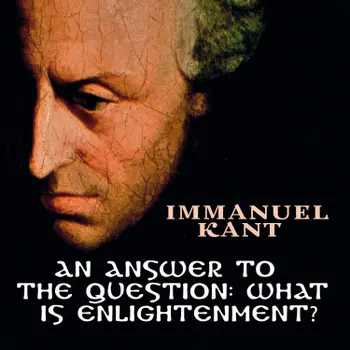
"Answering the Question: What Is Enlightenment?" is a 1784 essay by the philosopher Immanuel Kant. In the December 1784 publication of the Berlinische Monatsschrift (Berlin Monthly), edited by Friedrich Gedike and Johann Erich Biester, Kant replied to the question posed a year earlier by the Reverend Johann Friedrich Zöllner, who was also an official in the Prussian government. Zöllner's question was addressed to a broad intellectual public community, in reply to Biester's essay entitled: "Proposal, not to engage the clergy any longer when marriages are conducted" (April 1783) and a number of leading intellectuals replied with essays, of which Kant's is the most famous and has had the most impact. Kant's opening paragraph of the essay is a much-cited definition of a lack of enlightenment as people's inability to think for themselves due not to their lack of intellect, but lack of courage.

Kant's essay also addressed the causes of a lack of enlightenment and the preconditions necessary to make it possible for people to enlighten themselves. He held it necessary that all church and state paternalism be abolished and people be given the freedom to use their own intellect. Kant praised Frederick II of Prussia for creating these preconditions. Kant focused on religious issues, saying that "our rulers" had less interest in telling citizens what to think in regard to artistic and scientific issues.

Starte noch heute mit diesem Buch für CHF 0

  • Hole dir während der Testphase vollen Zugriff auf alle Bücher in der App
  • Keine Verpflichtungen, jederzeit kündbar
Jetzt kostenlos testen
Mehr als 52 000 Menschen haben Nextory im App Store und auf Google Play 5 Sterne gegeben.

  1. Meisterwerke der Weltphilosophie : Das Gastmahl, Nikomachische Ethik, Also sprach Zarathustra, Utopia, Phänomenologie des Geistes, Neues Organon, Selbstbetrachtungen

    Immanuel Kant, Søren Kierkegaard, Edmund Husserl, Ludwig Wittgenstein, Friedrich Nietzsche, - Konfuzius, Platon, Xenophon, - Aristoteles, Lao Tse, Marcus Tullius Cicero, Marcus Aurelius, Plotin, Thomas von Aquin, Niccolò Machiavelli, Thomas Morus, Giordano Bruno, Michel de Montaigne, René Descartes, Francis Bacon, Blaise Pascal, Baruch Spinoza, Gottfried Wilhelm Leibniz, David Hume, Jean-Jacques Rousseau, Friedrich Schelling, John Locke, Georg Wilhelm Friedrich Hegel, John Stuart Mill, Karl Marx

  2. Gekürzt

    Romankunst, Philosophie und Drama: Die Hörbuch Box, Teil 1 : Bibliothek der Klassiker

    - Sophokles, Immanuel Kant, William Shakespeare, Platon, Jonathan Swift

  3. Neu

    Hacia la paz perpetua

    Immanuel Kant

  4. Teoría y praxis : Estudio preliminar: Eduardo García Belsunce

    Immanuel Kant

  5. La paz perpetua : Octava edición

    Immanuel Kant

  6. Yaşam Felsefesi

    Immanuel Kant

  7. Was ist Aufklärung? Ein philosophischer Essay. : Hörbuchzeit: Klassiker der Weltliteratur

    Hörbuchzeit, Immanuel Kant

  8. Über Pädagogik oder Von der physischen und praktischen Erziehung des Menschen

    Immanuel Kant

  9. La Paz Perpetua :

    Immanuel Kant

  10. 12 Masterpieces You Have to Read Before You Die. Philosophy

    Niccolo Machiavelli, Tommaso Campanella, Francis Bacon, Thomas More, John Stuart Mill, Immanuel Kant, Kahlil Gibran, Leo Tolstoy, G.K. Chesterton, Henry David Thoreau

  11. Crítica de la Razón Pura

    Immanuel Kant