Über dieses Buch

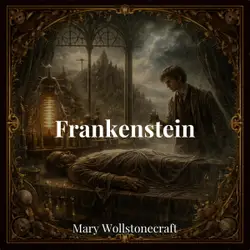
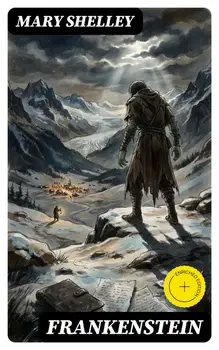
Mary Shelley's Frankenstein; or, The Modern Prometheus is a Gothic novel of scientific ambition, ethical responsibility, and social alienation. Framed through nested narratives—Walton's Arctic letters, Victor Frankenstein's confession, and the creature's eloquent account—the novel produces a shifting moral perspective in which no single voice possesses complete authority. Its atmospheric landscapes, dramatic rhetoric, and fusion of terror with philosophical speculation place it within Romantic literature while also anticipating modern science fiction. The book's central question is not merely whether knowledge should be pursued, but how creators must answer for the lives and consequences their pursuits bring into being. Shelley wrote the novel amid the intellectual ferment of early nineteenth-century Europe, when advances in anatomy, electricity, and theories of spontaneous generation unsettled conventional ideas about life. Her engagement with Romantic concerns—individual imagination, the sublime, revolutionary aspiration, and the dangers of unchecked power—was shaped by her parents, the philosopher William Godwin and feminist writer Mary Wollstonecraft, as well as by her relationship with Percy Bysshe Shelley and the literary circle surrounding Lord Byron. The famous 1816 ghost-story challenge provided the immediate imaginative stimulus. Frankenstein remains essential reading for anyone interested in the origins of the modern novel, the ethics of innovation, or the literary representation of the outsider. Its intellectual depth complements its suspense, inviting readers to reconsider monstrosity, responsibility, and the human desire to transcend natural limits.

This enriched edition has been carefully crafted to add value to your reading experience.

- A succinct Introduction situates the work's timeless appeal and themes.

- The Synopsis outlines the central plot, highlighting key developments without spoiling critical twists.

- A detailed Historical Context immerses you in the era's events and influences that shaped the writing.

- An Author Biography reveals milestones in the author's life, illuminating the personal insights behind the text.

- A thorough Analysis dissects symbols, motifs, and character arcs to unearth underlying meanings.

- Reflection questions prompt you to engage personally with the work's messages, connecting them to modern life.

- Hand‐picked Memorable Quotes shine a spotlight on moments of literary brilliance.

- Interactive footnotes clarify unusual references, historical allusions, and archaic phrases for an effortless, more informed read.

Starte noch heute mit diesem Buch für CHF 0

  • Hole dir während der Testphase vollen Zugriff auf alle Bücher in der App
  • Keine Verpflichtungen, jederzeit kündbar
Jetzt kostenlos testen
Mehr als 52 000 Menschen haben Nextory im App Store und auf Google Play 5 Sterne gegeben.

Ähnliche Bücher

Mehr von Mary Shelley

  1. Neu

    Frankenstein : oder Der moderne Prometheus — Roman — Neuübersetzung

    Mary Shelley

  2. 100 Meisterwerke des Horrors - Klassiker, die man kennen muss : Gothic-Klassiker, viktorianischer Spuk und kosmische Albträume in einer großen Anthologie

    H.P. Lovecraft, Richard Marsh, E. T. Hoffmann, Bram Stoker, Edgar Allan Poe, Mary Shelley, Fjodor M Dostojewski, Hugh Walpole, Franz Kafka, Horace Walpole, Henry James, R. R. Ryan, James Malcolm Rymer, Prosper Mérimée, Wladyslaw Stanislaw Reymont, Algernon Blackwood, Ann Radcliffe, Marjorie Bowen, Robert W. Chambers, Gaston Leroux, Honoré de Balzac, Robert Louis Stevenson, Charlotte Perkins Gilman, H.G. Wells, Stanislaw Przybyszewski, Arthur Conan Doyle, Oscar Wilde, Octave Mirbeau, Emily Brontë, August Strindberg, Edith Wharton, H. Rider Haggard, Jodocus Temme

  3. 100 Meisterwerke der englischen Literatur - Klassiker, die man kennen muss (Kommentiert) : Erweiterte Ausgabe. Hamlet, 1984, Ulysses...

    George Orwell, Charles Dickens, Jane Austen, Katherine Mansfield, H.P. Lovecraft, William Wordsworth, John Keats, Percy Bysshe Shelley, Robert Burns, John Milton, William Shakespeare, Christopher Marlowe, Geoffrey Chaucer, Laurence Sterne, Henry Fielding, Mary Shelley, Emily Brontë, Charlotte Brontë, Anne Brontë, William Makepeace Thackeray, George Eliot, D. H. Lawrence, Herman Melville, Thomas Wolfe, Virginia Woolf, Joseph Conrad, Sinclair Lewis, Walt Whitman, Edgar Allan Poe, Oscar Wilde, Jerome K Jerome, Washington Irving, Bram Stoker, H.G. Wells, Daniel Defoe, Lew Wallace, James Fenimore Cooper, Jonathan Swift, Robert Louis Stevenson, Mark Twain, Lewis Carrol, Edward Bulwer-Lytton, F. Scott Fitzgerald, Arthur Conan Doyle, Jack London, Henry David Thoreau, G.K. Chesterton, Edith Wharton, Henry James, Thomas Hardy, Margaret Mitchell, Kate Chopin, Willa Cather, Charlotte Perkins Gilman, James Joyce, John Galsworthy, Francis Hodgson Burnett, Lucy Maud Montgomery, Louisa May Alcott, Rudyard Kipling

  4. Die größten Klassiker der Regency-Ära : Europäische Romantik zwischen Gesellschaftsroman, Schauerromantik, Volksmärchen und politischer Lyrik

    Walter Scott, Mary Shelley, Jane Austen, Fanny Burney, Mary Wollstonecraft, Lord Byron, Percy Bysshe Shelley, Karoline von Günderrode, Jacob Grimm, Wilhelm Grimm, Washington Irving, Joseph von Eichendorff, E. T. Hoffmann, Friedrich Hölderlin, Heinrich Heine, Friedrich Schiller, Johann Wolfgang Goethe, Eliza Haywood, Maria Edgeworth, Johanna Schopenhauer, Marianne Ehrmann, Sophie Albrecht, Caroline von Wolzogen, Harriette Wilson, Benedikte Naubert, Sophie von Roche, Germaine de Staël, Christian August Vulpius, Johann David Wyse

  5. Die größten Schriftstellerinnen der Regency-Ära : Gesellschaftsroman, gotische Romantik und Frühfeminismus in der europäischen Moderne

    Jane Austen, Mary Shelley, Fanny Burney, Mary Wollstonecraft, Johanna Schopenhauer, Maria Edgeworth, Eliza Haywood, Marianne Ehrmann, Sophie Albrecht, Caroline von Wolzogen, Benedikte Naubert, Sophie von Roche, Germaine de Staël, Dorothea Schlegel, Harriette Wilson, Karoline von Günderrode, Susan Ferrier

  6. 100 Weibliche Meisterwerke - Klassiker, die man kennen muss : Eine Anthologie feministischer Klassikerinnen zwischen Weltliteratur, Essay und Roman

    Virginia Woolf, Jane Austen, Louisa May Alcott, George Sand, Mary Shelley, Colette, Charlotte Brontë, Emily Brontë, Anne Brontë, Sophie von Roche, Mary Wollstonecraft, Hedwig Dohm, Elizabeth Burgoyne Corbett, Ann Radcliffe, Charlotte Perkins Gilman, L.M. Montgomery, Frances Burney, Johanna Schopenhauer, George Eliot, Hedwig Courths-Mahler, Gabriele Reuter, Wilhelmine von Hillern, Luise Ahlborn, Lou Andreas-Salomé, Margaret Mitchell, Edith Wharton, Miles Franklin, Willa Cather, Elizabeth Gaskell, Elizabeth von Arnim, Franziska Gräfin Reventlow, Alice Berend, Germaine de Staël, Dorothea Schlegel, Emmuska Orczy, Eugenie Marlitt, Wilhelmine Heimburg, Lena Christ, Ida Boy-Ed, Nataly von Eschstruth, Marianne Ehrmann, Caroline von Wolzogen, Benedikte Naubert, Karoline von Günderrode, Annette von Droste-Hülshoff, Else Lasker-Schüler, Johanna Spyri, Elisabeth Langgässer, Marie-Madeleine de Fayette, Frances Hodgson Burnett, Harriet Beecher Stowe, Else Ury, Emmy von Rhoden, Beatrix Potter, Selma Lagerlöf, Anna Sewell, Ada Langworthy Collier, PrinzessinDer Ling, Margaret Oliphant, Katharina die Grosse, Malwida von Meysenbug, Louise Aston, Louise Otto, Rosa Luxemburg, Clara Zetkin, Ricarda Huch, Bertha von Suttner, Sappho -, Elizabeth Barrett Browning, Teresa von Ávila, Florence Scovel Shinn, Elizabeth Cady Stanton, Hildegard von Bingen, Edith Stein

  7. 100 Meisterwerke der Weltliteratur - Klassiker die man kennen muss

    Franz Kafka, Fjodor Michailowitsch Dostojewski, Rumi, Platon, Tacitus, Homer, Sigmund Freud, Friedrich Nietzsche, Oswald Spengler, Alfred Adler, Marcus Aurelius, Arthur Schopenhauer, Walt Whitman, Joseph Conrad, Robert Louis Stevenson, Karl May, Alexandre Dumas, James Fenimore Cooper, Arthur Conan Doyle, Edgar Allan Poe, Mary Shelley, O.Henry, Stefan Zweig, Charles Dickens, Jacob Grimm, Wilhelm Grimm, Hans Christian Andersen, Joseph von Eichendorff, Klaus Mann, Johann Wolfgang Goethe, Jane Austen, Emily Brontë, Charlotte Brontë, Else Lasker-Schüler, Heinrich Heine, Herman Melville, Iwan Sergejewitsch Turgenew, Gustav Freytag, Thomas Wolfe, Jonathan Swift, Walter Scott, Nathaniel Hawthorne, Gustave Flaubert, Rainer Maria Rilke, John Galsworthy, Iwan Alexandrowitsch Gontscharow, Oscar Wilde, Lew Wallace, Voltaire, Lewis Carroll, Johanna Spyri, Mark Twain, Selma Lagerlöf, Rudyard Kipling, Jules Verne, Jack London, Miguel de Cervantes, Honoré de Balzac, Emile Zola, Guy De Maupassant, Moliere, Theodor Fontane, Nikolai Gogol, Leo Tolstoi, Anton Pawlowitsch Tschechow, Dante Alighieri, Joseph Roth, Robert Musil, E. T. Hoffmann, Heinrich Mann, Kurt Tucholsky, Heinrich von Kleist, Annette von Droste-Hülshoff, Gottfried Keller, Sophie von Roche, Theodor Storm, William Shakespeare

  8. 1. Mai
    4.3

    Frankenstein

    Mary Shelley

  9. 1. Nov.

    Classic Gothic Fusion Dracula & Frankenstein

    Bram Stoker, Mary Shelley

  10. 1. Nov.
    3.9
    #1

    Frankenstein

    Mary Shelley

  11. Neu

    30 Occult and Supernatural Masterpieces

    Washington Irving, Mary Shelley, Charles Dickens, Joseph Sheridan Fanu, Elizabeth Cleghorn Gaskell, Louisa May Alcott, Oscar Wilde, Rudyard Kipling, Edith Nesbit, John Meade Falkner, Henry James, H.G. Wells, Montague Rhodes James, Arnold Bennett, Henry Rider Haggard, William Hope Hodgson, Virginia Woolf

  12. Neu

    50 Masterpieces you have to read before you die vol: 1

    Louisa May Alcott, Jane Austen, Honoré de Balzac, Henri Barbusse, Anne Brontë, Charlotte Brontë, Emily Brontë, Edgar Rice Burroughs, Samuel Butler, Lewis Carroll, Willa Cather, Miguel de Cervantes, Kate Chopin, John Cleland, Wilkie Collins, Joseph Conrad, Charles Dickens, Fyodor Dostoevsky, Alexandre Dumas, George Eliot, Ralph Waldo Emerson, Gustave Flaubert, E. M. Forster, H. Rider Haggard, Thomas Hardy, Nathaniel Hawthorne, Robert Heinlein, Victor Hugo, Aldous Huxley, Henry James, D. H. Lawrence, H.P. Lovecraft, Herman Melville, John Milton, Robert Musil, Vladimir Nabokov, George Orwell, Edgar Allan Poe, Marcel Proust, William Shakespeare, Mary Shelley, Leo Tolstoy