Hero and Leander

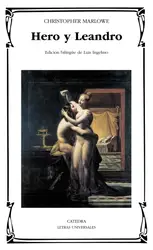
Christopher Marlowe's "Hero and Leander" is a masterful narrative poem that intricately weaves together themes of love, desire, and tragedy. Written in the late 16th century, this poem is characterized by its brilliant use of blank verse and rich imagery, showcasing Marlowe's command over the English language. Set against the backdrop of classical mythology, the narrative follows the passionate but doomed love affair between Hero, a priestess of Venus, and Leander, a young man who swims across the Hellespont to reach her. Marlowe's poetic style combines eloquence with emotional intensity, creating a poignant exploration of love and fate that resonates deeply with the human condition. Christopher Marlowe, a contemporary of Shakespeare, was renowned for his innovative approach to drama and poetry. His tumultuous life—marked by early brilliance and mysterious circumstances—often intertwined themes of ambition, desire, and betrayal. These experiences provided fertile ground for Marlowe's poetic expressions, reflecting the complexity of human relationships and the inexorable grip of destiny. His distinct explorations of character and emotion laid the groundwork for later English literature. This exquisite poem is recommended to readers who appreciate the rich tapestry of Renaissance literature and the exploration of timeless themes. "Hero and Leander" invites readers to reflect upon the beauty and tragedy of love, making it a compelling addition to any literary collection.
Starten Sie noch heute mit diesem Buch für CHF 0

  • Hol dir während der Probezeit vollen Zugriff auf alle Bücher in der App
  • Keine Verpflichtungen, du kannst jederzeit kündigen
Jetzt kostenlos testen
Mehr als 52 000 Menschen haben Nextory im App Store und auf Google Play 5 Sterne gegeben.

  1. 100 Meisterwerke der englischen Literatur - Klassiker, die man kennen muss

    George Orwell, Charles Dickens, Jane Austen, Katherine Mansfield, H.P. Lovecraft, William Wordsworth, John Keats, Percy Bysshe Shelley, Robert Burns, John Milton, William Shakespeare, Christopher Marlowe, Geoffrey Chaucer, Laurence Sterne, Henry Fielding, Mary Shelley, Emily Brontë, Charlotte Brontë, Anne Brontë, William Makepeace Thackeray, George Eliot, D. H. Lawrence, Herman Melville, Thomas Wolfe, Virginia Woolf, Joseph Conrad, Sinclair Lewis, Walt Whitman, Edgar Allan Poe, Oscar Wilde, Jerome K Jerome, Washington Irving, Bram Stoker, H.G. Wells, Daniel Defoe, Lew Wallace, James Fenimore Cooper, Jonathan Swift, Robert Louis Stevenson, Mark Twain, Lewis Carrol, Edward Bulwer-Lytton, F. Scott Fitzgerald, Arthur Conan Doyle, Jack London, Henry David Thoreau, G.K. Chesterton, Edith Wharton, Henry James, Thomas Hardy, Margaret Mitchell, Kate Chopin, Willa Cather, Charlotte Perkins Gilman, James Joyce, John Galsworthy, Francis Hodgson Burnett, Lucy Maud Montgomery, Louisa May Alcott, Rudyard Kipling

  2. Die besten Dramen aller Zeiten : Der eingebildete Kranke, Der Revisor, Drei Schwestern, Macbeth, Hamlet, Romeo und Juliette, Ein Puppenheim

    Anton Tschechow, William Shakespeare, Jean Baptiste Molière, Nikolai Gogol, Johann Wolfgang von Goethe, Friedrich Schiller, Pierre Corneille, Henrik Ibsen, Oskar Wilde, Christopher Marlowe, Aischylos, - Sophokles, Euripides, - Aristophanes

  3. Die großen Dramen der Geschichte: Meisterwerke der Bühne : Der eingebildete Kranke, Der Revisor, Drei Schwestern, Macbeth, Hamlet, Romeo und Juliette, Ein Puppenheim, Medea

    William Shakespeare, Euripides, Anton Tschechow, Jean Baptiste Molière, Nikolai Gogol, Johann Wolfgang von Goethe, Friedrich Schiller, Pierre Corneille, Henrik Ibsen, Oskar Wilde, Christopher Marlowe, Aischylos, - Sophokles, - Aristophanes, Percy Bysshe Shelley, Lord Byron

  4. Die größten Klassiker der englischen Literatur: Dramen : Doktor Faustus, König Lear, Macbeth, Hamlet, Romeo und Juliette, Salome, Die Bedeutung des Ernstseins

    Lord Byron, Oskar Wilde, William Shakespeare, Percy Bysshe Shelley, Christopher Marlowe

  5. Die größten Dramen der Weltliteratur : Der eingebildete Kranke, Der Revisor, Drei Schwestern, Macbeth, Hamlet, Romeo und Juliette, Ein Puppenheim, Antigone, Maria Stuart

    Anton Tschechow, William Shakespeare, Nikolai Gogol, Aischylos, - Sophokles, Euripides, - Aristophanes, Johann Wolfgang von Goethe, Friedrich Schiller, Jean Baptiste Molière, Pierre Corneille, Henrik Ibsen, Oskar Wilde, Christopher Marlowe

  6. Die besten Tragödien von Marlowe: Doktor Faustus + Eduard II. : Dramatische Spannung und moralische Dilemmata: Klassiker der elisabethanischen Tragödie

    Christopher Marlowe

  7. Edward II

    Christopher Marlowe

  8. Die besten Tragödien von Marlowe: Doktor Faustus + Eduard II. : Bereicherte Ausgabe.

    Christopher Marlowe

  9. Die größten englischen Theaterstücke : Doktor Faustus, König Lear, Macbeth, Hamlet, Romeo und Juliette, Die Bedeutung des Ernstseins

    William Shakespeare, Lord Byron, Percy Bysshe Shelley, Christopher Marlowe, Oscar Wilde

  10. Die besten Historiendramen : Don Karlos, Wallenstein, Die Jungfrau von Orleans, Maria Tudor, Lucretia Borgia, Julius Cäsar, Antonius und Cleopatra, Richard III.

    Victor Hugo, William Shakespeare, Friedrich Schiller, Oskar Wilde, Christopher Marlowe, Lord Byron, Gotthold Ephraim Lessing, Heinrich von Kleist, - Sophokles, Aischylos

  11. Die größten historischen Dramen : Agamemnon, Don Karlos, Wallenstein, Die Jungfrau von Orleans, Maria Tudor, Lucretia Borgia, Julius Cäsar, Antonius und Cleopatra, Richard III.

    William Shakespeare, Friedrich Schiller, Oskar Wilde, Victor Hugo, Christopher Marlowe, Lord Byron, Gotthold Ephraim Lessing, Heinrich von Kleist, - Sophokles, Aischylos

  12. Die größten Klassiker der englischen Literatur: Dramen : Die Bedeutung des Ernstseins, Doktor Faustus, König Lear, Macbeth, Hamlet, Romeo und Juliette

    William Shakespeare, Oskar Wilde, Lord Byron, Percy Bysshe Shelley, Christopher Marlowe