Über dieses Buch

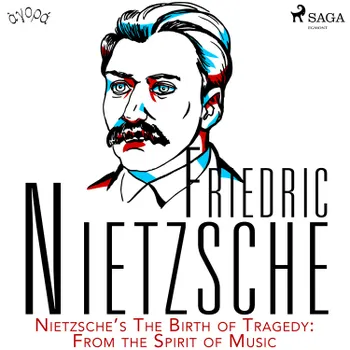
"The Birth of Tragedy" stands alongside Aristotle’s "Poetics" as essential works for all who seek to understand poetry and its relationship to human life. In this, his first book, Nietzsche developed a way of thinking about the arts that unites the Greek gods Apollo and Dionysus as the central symbol of human existence. Although tragedy serves as the focus of this work, music, visual art, dance, and the other arts can also be viewed using Nietzsche’s analysis and integration of the Apollonian and the Dionysian.Nietzsche opened the door to philosophy in the 20th century. He anticipated depth psychology, championed myth, attacked literalism in religion and the arts, placed humanity in an evolutionary perspective, and launched a critique of scientism that remains potent in the 21st century. Although he is often linked to the movement known as existentialism, Nietzsche’s overall work defies being placed in any single category.
Starte noch heute mit diesem Buch für CHF 0

  • Hole dir während der Testphase vollen Zugriff auf alle Bücher in der App
  • Keine Verpflichtungen, jederzeit kündbar
Jetzt kostenlos testen
Mehr als 52 000 Menschen haben Nextory im App Store und auf Google Play 5 Sterne gegeben.

Mehr von Friedrich Nietzsche

  1. The Antichrist: A Curse on Christianity - Audiobook

    Friedrich Nietzsche, Classic Audiobooks

  2. 100 Meisterwerke der Weltliteratur - Klassiker die man kennen muss

    Franz Kafka, Fjodor Michailowitsch Dostojewski, Rumi, Platon, Tacitus, Homer, Sigmund Freud, Friedrich Nietzsche, Oswald Spengler, Alfred Adler, Marcus Aurelius, Arthur Schopenhauer, Walt Whitman, Joseph Conrad, Robert Louis Stevenson, Karl May, Alexandre Dumas, James Fenimore Cooper, Arthur Conan Doyle, Edgar Allan Poe, Mary Shelley, O.Henry, Stefan Zweig, Charles Dickens, Jacob Grimm, Wilhelm Grimm, Hans Christian Andersen, Joseph von Eichendorff, Klaus Mann, Johann Wolfgang Goethe, Jane Austen, Emily Brontë, Charlotte Brontë, Else Lasker-Schüler, Heinrich Heine, Herman Melville, Iwan Sergejewitsch Turgenew, Gustav Freytag, Thomas Wolfe, Jonathan Swift, Walter Scott, Nathaniel Hawthorne, Gustave Flaubert, Rainer Maria Rilke, John Galsworthy, Iwan Alexandrowitsch Gontscharow, Oscar Wilde, Lew Wallace, Voltaire, Lewis Carroll, Johanna Spyri, Mark Twain, Selma Lagerlöf, Rudyard Kipling, Jules Verne, Jack London, Miguel de Cervantes, Honoré de Balzac, Emile Zola, Guy De Maupassant, Moliere, Theodor Fontane, Nikolai Gogol, Leo Tolstoi, Anton Pawlowitsch Tschechow, Dante Alighieri, Joseph Roth, Robert Musil, E. T. Hoffmann, Heinrich Mann, Kurt Tucholsky, Heinrich von Kleist, Annette von Droste-Hülshoff, Gottfried Keller, Sophie von Roche, Theodor Storm, William Shakespeare

  3. Jenseits von Gut und Böse : Zur Genealogie der Moral

    Friedrich Nietzsche

  4. 6. Dez.

    Ecce Homo : Wie man wird, was man ist

    Friedrich Nietzsche, Sam Rokbuhm

  5. 14. Nov.

    Die großen Werke der Philosophie – Weisheit aus drei Jahrtausenden : Von Lao Tse, Konfuzius und Platon bis Seneca, Nietzsche und Steiner – Die große Hörbuch Box über das gute Leben, Freiheit, Moral und den Menschen

    Lao Tse, Marc Aurel, Ètienne de Boétie, Rudolf Steiner, - Konfuzius, Epiktet, Voltaire, Lucius Annaeus Seneca, Ralph Waldo Emerson, Max Stirner, Platon, Friedrich Nietzsche, Francesco Petrarca, Henry David Thoreau, Blaise Pascal, - Aristoteles

  6. Neu

    Ecce Homo: How One Becomes What One Is - Audiobook

    Friedrich Nietzsche, Classic Audiobooks

  7. Neu

    Jenseits von Gut und Böse : Vorspiel einer Philosophie der Zukunft

    Friedrich Nietzsche

  8. 3.8

    Así habló Zaratustra

    Friedrich Nietzsche

  9. Neu

    Zur Genealogie der Moral : Eine Streitschrift

    Friedrich Nietzsche

  10. Neu

    Also sprach Zarathustra : Ein Buch für Alle und Keinen

    Friedrich Nietzsche

  11. Neu

    Beyond Good and Evil - Audiobook

    Friedrich Nietzsche, Classic Audiobooks

  12. Thus Spoke Zarathustra - Audiobook

    Friedrich Nietzsche, Classic Audiobooks