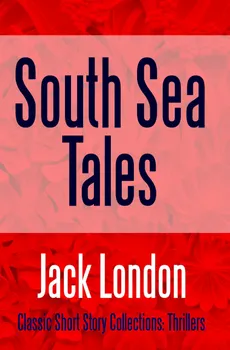
South Sea Tales

South Sea Tales (1911) is a collection of short stories written by Jack London. Most stories are set in island communities, like those of Hawaii, or are set aboard a ship. These are darker Pacific tales, including "Mauki" and "The Terrible Solomans."

MAUKI (excerpt)

He weighed one hundred and ten pounds. His hair

was kinky and negroid, and he was black. He was peculiarly black. He

was neither blue-black nor purple-black, but plum-black. His name was

Mauki, and he was the son of a chief. He had three tambos. Tambo is

Melanesian for taboo, and is first cousin to that Polynesian word.

Mauki's three tambos were as follows: First, he must never shake

hands with a woman, nor have a woman's hand touch him or any of his

personal belongings; secondly, he must never eat clams nor any food

from a fire in which clams had been cooked; thirdly, he must never

touch a crocodile, nor travel in a canoe that carried any part of a

crocodile even if as large as a tooth.

Of a different black were his teeeth, which were

deep black, or, perhaps better, LAMP-black. They had been made so in

a single night, by his mother, who had compressed about them a

powdered mineral which was dug from the landslide back of Port Adams.

Port Adams is a salt-water village on Malaita, and Malaita is the

most savage island in the Solomons--so savage that no traders or

planters have yet gained a foothold on it; while, from the time of

the earliest bache-de-mer fishers and sandalwood traders down to the

latest labor recruiters equipped with automatic rifles and gasolene

engines, scores of white adventurers have been passed out by

tomahawks and soft-nosed Snider bullets. So Malaita remains today, in

the twentieth century, the stamping ground of the labor recruiters,

who farm its coasts for laborers who engage and contract themselves

to toil on the plantations of the neighboring and more civilized

islands for a wage of thirty dollars a year. The natives of those

neighboring and more civilized islands have themselves become too

civilized to work on plantations.

Mauki's ears were pierced, not in one place, nor

two places, but in a couple of dozen places. In one of the smaller

holes he carried a clay pipe. The larger holes were too large for

such use. The bowl of the pipe would have fallen through. In fact, in

the largest hole in each ear he habitually wore round wooden plugs

that were an even four inches in diameter. Roughly speaking, the

circumference of said holes was twelve and one-half inches. Mauki was

catholic in his tastes. In the various smaller holes he carried such

things as empty rifle cartridges, horseshoe nails, copper screws,

pieces of string, braids of sennit, strips of green leaf, and, in the

cool of the day, scarlet hibiscus flowers...

About Jack London:

Jack London (1876-1916), was an American author and a pioneer in the then-burgeoning world of commercial magazine fiction. He was one of the first Americans to make a lucrative career exclusively from writing. London was self-educated. He taught himself in the public library, mainly just by reading books. In 1898, he began struggling seriously to break into print, a struggle memorably described in his novel, Martin Eden (1909). Jack London was fortunate in the timing of his writing career. He started just as new printing technologies enabled lower-cost production of magazines. This resulted in a boom in popular magazines aimed at a wide public, and a strong market for short fiction. In 1900, he made $2,500 in writing, the equivalent of about $75,000 today. His career was well under way. Among his famous works are: Children of the Frost (1902), The Call of the Wild (1903), The Sea Wolf (1904), The Game (1905), White Fang (1906), The Road (1907), Before Adam (1907), Adventure (1911), and The Scarlet Plague (1912).


Über dieses Buch

South Sea Tales (1911) is a collection of short stories written by Jack London. Most stories are set in island communities, like those of Hawaii, or are set aboard a ship. These are darker Pacific tales, including "Mauki" and "The Terrible Solomans."

MAUKI (excerpt)

He weighed one hundred and ten pounds. His hair

was kinky and negroid, and he was black. He was peculiarly black. He

was neither blue-black nor purple-black, but plum-black. His name was

Mauki, and he was the son of a chief. He had three tambos. Tambo is

Melanesian for taboo, and is first cousin to that Polynesian word.

Mauki's three tambos were as follows: First, he must never shake

hands with a woman, nor have a woman's hand touch him or any of his

personal belongings; secondly, he must never eat clams nor any food

from a fire in which clams had been cooked; thirdly, he must never

touch a crocodile, nor travel in a canoe that carried any part of a

crocodile even if as large as a tooth.

Of a different black were his teeeth, which were

deep black, or, perhaps better, LAMP-black. They had been made so in

a single night, by his mother, who had compressed about them a

powdered mineral which was dug from the landslide back of Port Adams.

Port Adams is a salt-water village on Malaita, and Malaita is the

most savage island in the Solomons--so savage that no traders or

planters have yet gained a foothold on it; while, from the time of

the earliest bache-de-mer fishers and sandalwood traders down to the

latest labor recruiters equipped with automatic rifles and gasolene

engines, scores of white adventurers have been passed out by

tomahawks and soft-nosed Snider bullets. So Malaita remains today, in

the twentieth century, the stamping ground of the labor recruiters,

who farm its coasts for laborers who engage and contract themselves

to toil on the plantations of the neighboring and more civilized

islands for a wage of thirty dollars a year. The natives of those

neighboring and more civilized islands have themselves become too

civilized to work on plantations.

Mauki's ears were pierced, not in one place, nor

two places, but in a couple of dozen places. In one of the smaller

holes he carried a clay pipe. The larger holes were too large for

such use. The bowl of the pipe would have fallen through. In fact, in

the largest hole in each ear he habitually wore round wooden plugs

that were an even four inches in diameter. Roughly speaking, the

circumference of said holes was twelve and one-half inches. Mauki was

catholic in his tastes. In the various smaller holes he carried such

things as empty rifle cartridges, horseshoe nails, copper screws,

pieces of string, braids of sennit, strips of green leaf, and, in the

cool of the day, scarlet hibiscus flowers...

About Jack London:

Jack London (1876-1916), was an American author and a pioneer in the then-burgeoning world of commercial magazine fiction. He was one of the first Americans to make a lucrative career exclusively from writing. London was self-educated. He taught himself in the public library, mainly just by reading books. In 1898, he began struggling seriously to break into print, a struggle memorably described in his novel, Martin Eden (1909). Jack London was fortunate in the timing of his writing career. He started just as new printing technologies enabled lower-cost production of magazines. This resulted in a boom in popular magazines aimed at a wide public, and a strong market for short fiction. In 1900, he made $2,500 in writing, the equivalent of about $75,000 today. His career was well under way. Among his famous works are: Children of the Frost (1902), The Call of the Wild (1903), The Sea Wolf (1904), The Game (1905), White Fang (1906), The Road (1907), Before Adam (1907), Adventure (1911), and The Scarlet Plague (1912).

Starte noch heute mit diesem Buch für CHF 0

  • Hole dir während der Testphase vollen Zugriff auf alle Bücher in der App
  • Keine Verpflichtungen, jederzeit kündbar
Jetzt kostenlos testen
Mehr als 52 000 Menschen haben Nextory im App Store und auf Google Play 5 Sterne gegeben.

  1. Die Meister der klassischen Kriminalliteratur : Mord, Mysterium und Meisterdetektive: Spannende Klassiker von Poe, Doyle, Chesterton & Co.

    Edgar Allan Poe, Jack London, Frédéric Boutet, Richard Harding Davis, Arthur Conan Doyle, Maurice Leblanc, Robert Louis Stevenson, Friedrich Glauser, G.K. Chesterton

  2. Gekürzt

    Kurzgeschichten: Zehn Meisterwerke der Weltliteratur : Grüne Edition

    Kurt Tucholsky, Franz Kafka, Arthur Conan Doyle, Giovanni Boccaccio, Edgar Allan Poe, Guy De Maupassant, Mark Twain, Jack London, Friedrich Glauser, Bret Harte

  3. 24. Juli

    Wie man ein Feuer macht. Eine Abenteuergeschichte. : Hörbuchzeit: Klassiker der Weltliteratur

    Hörbuchzeit, Jack London

  4. 25. Juni
    4.0

    Call of the Wild

    Jack London

  5. 1.0

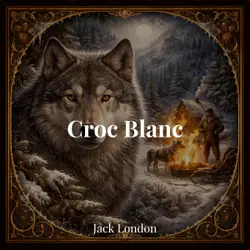
    Croc-Blanc

    Jack London

  6. Neu

    50 Clásicos que Debes Leer Antes de Morir : Un viaje literario por los tesoros de la literatura universal

    Dante Alighieri, Aristóteles, Jane Austen, Charles Baudelaire, Giovanni Boccaccio, Anne Brontë, C. Collodi, James Fenimore Cooper, Fedor Mikhaïlovitch Dostoïevski, Arthur Conan Doyle, Alexandre Dumas, José de Espronceda, Gustave Flaubert, Sigmund Freud, Benito Pérez Galdós, Kahlil Gibran, Johann Wolfgang Goethe, Johann Wolfgang von Goethe, Victor Hugo, Thomas Hardy, Nathaniel Hawthorne, Vicente Blasco Ibáñez, Washington Irving, James Joyce, Mariano José de Larra, Jack London, Federico García Lorca, H.P. Lovecraft, Antonio Machado, Gustav Meyrink, John Stuart Mill, Amado Nervo, Friedrich Nietzsche, Solomon Northup, Alexander Sergeyevich Pushkin, Francisco de Quevedo, Walter Scott, William Shakespeare, Robert Louis Stevenson, Harriet Beecher Stowe, Jonathan Swift, Mark Twain, Miguel De Unamuno, Ramón María del Valle-Inclán, Julio Verne, Virginia Woolf

  7. Neu

    La llamada de la selva

    Jack London

  8. Neu

    Apocalypse Then : 6 Early Tales of Humanities End

    E. M. Forster, Jack London, Arthur Conan Doyle, M.P. Shiel, H.P. Lovecraft, Mary Shelley

  9. Neu

    La legge della vita

    Jack London

  10. Neu

    Abenteurer des Schienenstranges

    Jack London

  11. Neu

    The Sea Wolf

    Jack London

  12. Neu

    The Complete Novels of Jack London

    Jack London