4.0(1)

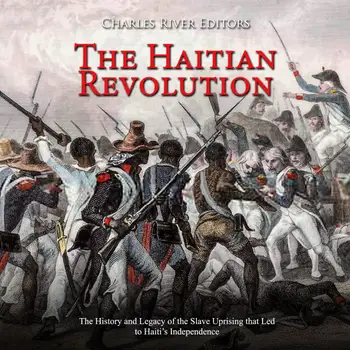
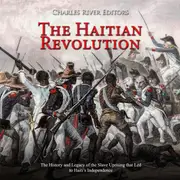
The Haitian Revolution: The History and Legacy of the Slave Uprising that Led to Haiti’s Independence

Hispaniola entered the European record in 1492 when Christopher Columbus made landfall on its southern shore during his first trans-Atlantic voyage, and he named his discovery in honor of the Spanish Crown that had funded and sponsored the voyage. Leaving the crew of the wrecked Santa Maria on the island, he returned to Europe, leaving his men to establish the foundations of the settlement of La Navidad and the first beachhead of the European seizure of the Caribbean and the New World. Columbus would revisit the island three times, leading a vanguard of pioneer colonists to commence the exploitation of the New World.

The indigenous people of Hispaniola, the Tainos and Arawak, initially greeted the landing with ambivalence, but as more and more of them were enslaved, and as their country was occupied, they entered a period of precipitous decline. Through a combination of disease, the violence associated with enslavement and general assimilation, they had virtually disappeared from the landscape within a century. Meanwhile, as the Spanish colonists looked around them, searching for a means to exploit this great discovery, and as the occupation spread to the mainland and the interior of South America, the early search for minerals yielded to the establishment of a plantation economy, with an emphasis initially on sugar, and later cotton, coffee, indigo and other crops.

Thus, even by the 16th century, slaves were being imported to Hispaniola, and over the next few centuries, the population of African slaves came to represent a sizable majority of the population there. This would set the stage for one of history’s most unique revolutions.

Starten Sie noch heute mit diesem Buch für CHF 0

  • Hol dir während der Probezeit vollen Zugriff auf alle Bücher in der App
  • Keine Verpflichtungen, du kannst jederzeit kündigen
Jetzt kostenlos testen
Mehr als 52 000 Menschen haben Nextory im App Store und auf Google Play 5 Sterne gegeben.

  1. Neu
    4.0

    The Cumans and Magyars: The History and Legacy of the Steppe Nomads Who Raided Europe Throughout the Late Middle Ages

    Charles River Editors

  2. Neu

    The World’s Most Famous Physicists: The Lives and Legacies of the Scientists Who Pioneered Physics

    Charles River Editors

  3. Neu

    John Snow and the Cholera Epidemic of 1854: The History of the Outbreak and Its Impact on Public Health Measures

    Charles River Editors

  4. Neu

    Rome’s Best Emperors: The History and Legacy of the Roman Empire’s Most Able Leaders

    Charles River Editors

  5. Neu
    4.0

    Cochise: The Life and Legacy of the Famous Apache Chief

    Charles River Editors

  6. Neu

    Joseph Meek: The Life and Legacy of the Oregon Territory’s Most Influential Politician during the 19th Century

    Charles River Editors

  7. Neu
    4.0

    The Dreyfus Affair: The History and Legacy of France's Most Notorious Antisemitic Political Scandal

    Charles River Editors

  8. Neu

    The Chisholm Trail: The History and Legacy of 19th Century America's Most Famous Cattle Drive Route

    Charles River Editors

  9. Neu

    Weird Radio and Television: A Collection of Spy Transmissions, Unidentified Stations, Paranormal Activities, and other Mysteries across the Media

    Charles River Editors

  10. Neu

    The Pacific Theater in 1942: The History of the Decisive Campaigns and Battles that Helped America Turn the Tide of World War II

    Charles River Editors

  11. Neu
    4.0

    The Albigensian Crusade: The History and Legacy of the Catholic Campaign against the Cathars in France

    Charles River Editors

  12. Neu

    Byzantium: The History of the Ancient Greek City Before It Became Constantinople

    Charles River Editors