The Philosophy of Mind

Georg Wilhelm Friedrich Hegel's 'The Philosophy of Mind' is a profound exploration of the human mind and its relationship to reality. Written in Hegel's unique dialectical style, the book delves into the nature of consciousness, self-awareness, and the interconnectedness of individual thought with universal spirit. Drawing on a wide range of philosophical traditions, including Idealism and German Romanticism, Hegel presents a comprehensive analysis of the mind as the mediator between the physical world and the realm of ideas. With its intricate arguments and systematic approach, 'The Philosophy of Mind' is a challenging but rewarding read for those interested in the complexities of human cognition. Georg Wilhelm Friedrich Hegel, a seminal figure in 19th-century philosophy, was deeply influenced by the intellectual currents of his time. His work reflects his engagement with the philosophical dilemmas of his era, such as the tension between individual subjectivity and social reality. Hegel's commitment to dialectical reasoning and historical consciousness is evident throughout 'The Philosophy of Mind', showcasing his belief in the importance of understanding the development of human thought over time. I highly recommend 'The Philosophy of Mind' to readers seeking a rigorous examination of consciousness and the mind-body relationship. Hegel's insights continue to be relevant today, offering valuable perspectives on the nature of knowledge, perception, and human experience.
Starte noch heute mit diesem Buch für CHF 0

  • Hole dir während der Testphase vollen Zugriff auf alle Bücher in der App
  • Keine Verpflichtungen, jederzeit kündbar
Jetzt kostenlos testen
Mehr als 52 000 Menschen haben Nextory im App Store und auf Google Play 5 Sterne gegeben.

  1. Meisterwerke der Weltphilosophie : Das Gastmahl, Nikomachische Ethik, Also sprach Zarathustra, Utopia, Phänomenologie des Geistes, Neues Organon, Selbstbetrachtungen

    Immanuel Kant, Søren Kierkegaard, Edmund Husserl, Ludwig Wittgenstein, Friedrich Nietzsche, - Konfuzius, Platon, Xenophon, - Aristoteles, Lao Tse, Marcus Tullius Cicero, Marcus Aurelius, Plotin, Thomas von Aquin, Niccolò Machiavelli, Thomas Morus, Giordano Bruno, Michel de Montaigne, René Descartes, Francis Bacon, Blaise Pascal, Baruch Spinoza, Gottfried Wilhelm Leibniz, David Hume, Jean-Jacques Rousseau, Friedrich Schelling, John Locke, Georg Wilhelm Friedrich Hegel, John Stuart Mill, Karl Marx

  2. Fenomenología del espíritu

    Georg Wilhelm Friedrich Hegel

  3. 1800 Citations de philosophes

    Aristote, Épicure, Platon, Thalès de Milet, – Socrate, Protagoras, Anaximandre, Épictète, Héraclite, Marc Aurèle, René Descartes, Michel de Montaigne, Alexis de Tocqueville, Voltaire, Charles De Montesquieu, Jean-Jacques Rousseau, Emmanuel Kant, Hannah Arendt, Gottfried Wilhelm Leibniz, Georg Wilhelm Friedrich Hegel, Friedrich Nietzsche, Arthur Schopenhauer, David Hume, John Locke, Francis Bacon, Thomas Hobbes, Thomas More, Confucius, Érasme, Lao Tseu, Baruch Spinoza, Søren Kierkegaard, Nicolas Machiavel, Thomas d'Aquin, Henry David Thoreau

  4. Comprendre Hegel

    Georg Wilhelm Friedrich Hegel

  5. 300 citations de philosophes allemands

    Emmanuel Kant, Hannah Arendt, Gottfried Wilhelm Leibniz, Georg Wilhelm Friedrich Hegel, Friedrich Nietzsche, Arthur Schopenhauer

  6. 2.0

    50 citations de Hegel

    Georg Wilhelm Friedrich Hegel

  7. Líneas fundamentales de la filosofía del derecho : o compendio de derecho natural y ciencia del Estado

    Georg Wilhelm Friedrich Hegel

  8. Wissenschaft der Logik

    Georg Wilhelm Friedrich Hegel

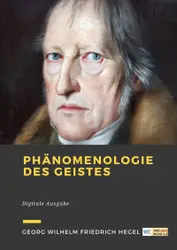
  9. #414

    Phänomenologie des Geistes

    Georg Wilhelm Friedrich Hegel

  10. 50 Meisterwerke der Philosophie : Metaphysik, Das Gastmahl, Bhagavadgita, Tractatus logico-philosophicus, Kritik der reinen Vernunft, Also sprach Zarathustra, Selbstbetrachtungen von Marcus Aurelius

    Ludwig Wittgenstein, Edmund Husserl, Karl Marx, Søren Kierkegaard, Friedrich Nietzsche, Ralph Waldo Emerson, John Stuart Mill, Georg Wilhelm Friedrich Hegel, Friedrich Schelling, Johann Gottlieb Fichte, Immanuel Kant, John Locke, Montesquieu, Jean-Jacques Rousseau, David Hume, Gottfried Wilhelm Leibniz, Baruch Spinoza, - Konfuzius, Lao Tse, Platon, Xenophon, - Aristoteles, Marcus Tullius Cicero, Seneca, Epiktet, Marc Aurel, Plotin, Thomas von Aquin, Nicolaus von Cues, - Erasmus von Rotterdam, Niccolò Machiavelli, Tommaso Campanella, Martin Luther, Giordano Bruno, Samuel von Pufendorf, Abbé Castel de Saint-Pierre, Michel de Montaigne, René Descartes, Francis Bacon, Blaise Pascal

  11. Philosophie des Deutschen Idealismus : Die Quelle der ewigen Wahrheiten, Kritik der reinen Vernunft, Wissenschaft der Logik, Grundlage der gesamten Wissenschaftslehre

    Georg Wilhelm Friedrich Hegel, Johann Gottlieb Fichte, Immanuel Kant, Friedrich Schelling, Friedrich Schleiermacher

  12. Die größten Philosophen des Deutschen Idealismus : Die wichtigsten Werke von Kant, Hegel, Schelling, Jacobi, Fichte und Schleiermacher

    Immanuel Kant, Johann Gottlieb Fichte, Georg Wilhelm Friedrich Hegel, Friedrich Schelling, Friedrich Schleiermacher