Über dieses Buch

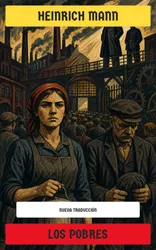
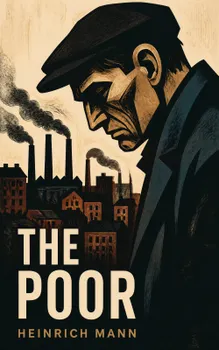
The Poor by Heinrich Mann is a powerful social novel that examines the tensions between wealth, privilege, and human dignity in Wilhelmine Germany. With incisive irony and a keen eye for social detail, Mann portrays a world in which economic power determines social standing and personal relationships, while those who lack wealth are forced to confront humiliation, dependence, and exclusion.

At the center of the novel is Claude Marehn, a young man whose modest circumstances place him in direct opposition to the powerful social forces surrounding him. His experiences reveal the precarious position of those who attempt to preserve their independence in a society dominated by money and status. His relationship with Barbara, whose background and circumstances connect her to the privileged world he struggles against, further complicates his efforts to reconcile personal affection with social reality. Around them, Mann constructs a broad portrait of a society divided by class, in which businessmen, officials, intellectuals, and members of the upper classes reveal different forms of ambition, self-interest, and moral compromise.

Rather than treating poverty merely as an economic condition, Mann explores its psychological and social consequences. The novel demonstrates how dependence can undermine dignity and how wealth can become a source of authority over the lives of others. Personal conflicts therefore acquire a wider significance, reflecting the tensions of an entire social order approaching a period of profound political and cultural change.

The Poor forms the concluding part of Heinrich Mann's so-called Empire Trilogy, following The Goddess and The Loyal Subject. Like the earlier novels, it uses individual lives to expose the weaknesses and contradictions of the German Empire, combining social observation with political criticism. Mann's portrayal of class inequality and the corrosive influence of privilege established the novel as an important contribution to his broader critique of pre-war German society.

Its enduring importance lies in its refusal to separate personal suffering from the structures that produce it. Through its characters and their struggles, The Poor offers a penetrating examination of class, power, dignity, and social injustice, while demonstrating Heinrich Mann's distinctive ability to transform contemporary society into compelling political and literary satire.
Starte noch heute mit diesem Buch für CHF 0

  • Hole dir während der Testphase vollen Zugriff auf alle Bücher in der App
  • Keine Verpflichtungen, jederzeit kündbar
Jetzt kostenlos testen
Mehr als 52 000 Menschen haben Nextory im App Store und auf Google Play 5 Sterne gegeben.

Ähnliche Bücher

Mehr von Heinrich Mann

  1. 100 Meisterwerke der Weltliteratur - Klassiker die man kennen muss

    Franz Kafka, Fjodor Michailowitsch Dostojewski, Rumi, Platon, Tacitus, Homer, Sigmund Freud, Friedrich Nietzsche, Oswald Spengler, Alfred Adler, Marcus Aurelius, Arthur Schopenhauer, Walt Whitman, Joseph Conrad, Robert Louis Stevenson, Karl May, Alexandre Dumas, James Fenimore Cooper, Arthur Conan Doyle, Edgar Allan Poe, Mary Shelley, O.Henry, Stefan Zweig, Charles Dickens, Jacob Grimm, Wilhelm Grimm, Hans Christian Andersen, Joseph von Eichendorff, Klaus Mann, Johann Wolfgang Goethe, Jane Austen, Emily Brontë, Charlotte Brontë, Else Lasker-Schüler, Heinrich Heine, Herman Melville, Iwan Sergejewitsch Turgenew, Gustav Freytag, Thomas Wolfe, Jonathan Swift, Walter Scott, Nathaniel Hawthorne, Gustave Flaubert, Rainer Maria Rilke, John Galsworthy, Iwan Alexandrowitsch Gontscharow, Oscar Wilde, Lew Wallace, Voltaire, Lewis Carroll, Johanna Spyri, Mark Twain, Selma Lagerlöf, Rudyard Kipling, Jules Verne, Jack London, Miguel de Cervantes, Honoré de Balzac, Emile Zola, Guy De Maupassant, Moliere, Theodor Fontane, Nikolai Gogol, Leo Tolstoi, Anton Pawlowitsch Tschechow, Dante Alighieri, Joseph Roth, Robert Musil, E. T. Hoffmann, Heinrich Mann, Kurt Tucholsky, Heinrich von Kleist, Annette von Droste-Hülshoff, Gottfried Keller, Sophie von Roche, Theodor Storm, William Shakespeare

  2. Der Atem

    Heinrich Mann

  3. Niemals vergessen! - Deutsche Schriftsteller im Widerstand gegen den Faschismus : Literatur im NS-Regime: Antifaschistische Essays, Reden, Romane & Gedichte

    Thomas Mann, Klaus Mann, Sophie Scholl, Fritz Gerlich, Stefan Zweig, Carl von Ossietzky, Joseph Roth, Kurt Tucholsky, Egon Erwin Kisch, Ricarda Huch, Heinrich Mann

  4. Die Manns - Widerstand gegen den Nationalsozialismus : Antifaschistische Werke von Thomas Mann, Klaus Mann & Heinrich Mann

    Thomas Mann, Klaus Mann, Heinrich Mann

  5. Heinrich Mann : Szenen aus dem Nazileben, Das Gesicht des Dritten Reiches, Im Reich der Verkrachten, Die erniedrigte Intelligenz, Der Untertan

    Heinrich Mann

  6. El súbdito : Novela política de la Alemania imperial y la obediencia burguesa al poder

    Heinrich Mann

  7. El jefe : Sátira política de la Alemania imperial

    Heinrich Mann

  8. Professor Unrat : Small Town Tyrant

    Heinrich Mann

  9. The Loyal Subject : A Satirical Portrait of Power, Obedience, and Wilhelmine Germany

    Heinrich Mann

  10. Los pobres

    Heinrich Mann

  11. The Chief : A Critical Portrait of a German Novelist, Social Satirist, and Voice of Exile

    Heinrich Mann