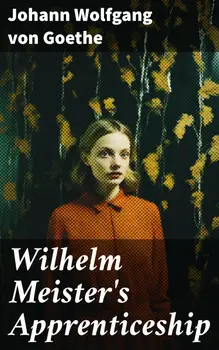
Wilhelm Meister's Apprenticeship : German Literature Classic

In "Wilhelm Meister's Apprenticeship," Johann Wolfgang von Goethe embarks on a profound exploration of self-discovery and societal roles through the journey of its titular character, Wilhelm. Written in the early 18th century, this seminal work encapsulates elements of the Bildungsroman genre, elucidating the intricacies of personal and artistic development as Wilhelm navigates love, ambition, and morality against the backdrop of Enlightenment ideals. Goethe's rich narrative style intertwines philosophical reflections with vibrant descriptions, creating a tapestry that reflects the complexities of human experience while addressing the tensions between individual aspirations and societal expectations. Goethe, a leading figure of the Sturm und Drang literary movement, was influenced by his own experiences in the realms of art, theater, and politics. His deep appreciation for the transformative power of art and intellectual pursuit is palpable in the novel, which mirrors his quest for a harmonious balance between passion and rationality. This journey reflects Goethe's own struggles to reconcile personal desires with the demands of his time, offering insight into the universal search for identity. "Wilhelm Meister's Apprenticeship" is an essential read for anyone seeking to understand the intricacies of personal growth and the philosophical currents of the late Enlightenment. Its timeless themes resonate with contemporary readers, making it a vital addition to the library of any admirer of literary mastery and self-exploration.
Über dieses Buch

In "Wilhelm Meister's Apprenticeship," Johann Wolfgang von Goethe embarks on a profound exploration of self-discovery and societal roles through the journey of its titular character, Wilhelm. Written in the early 18th century, this seminal work encapsulates elements of the Bildungsroman genre, elucidating the intricacies of personal and artistic development as Wilhelm navigates love, ambition, and morality against the backdrop of Enlightenment ideals. Goethe's rich narrative style intertwines philosophical reflections with vibrant descriptions, creating a tapestry that reflects the complexities of human experience while addressing the tensions between individual aspirations and societal expectations. Goethe, a leading figure of the Sturm und Drang literary movement, was influenced by his own experiences in the realms of art, theater, and politics. His deep appreciation for the transformative power of art and intellectual pursuit is palpable in the novel, which mirrors his quest for a harmonious balance between passion and rationality. This journey reflects Goethe's own struggles to reconcile personal desires with the demands of his time, offering insight into the universal search for identity. "Wilhelm Meister's Apprenticeship" is an essential read for anyone seeking to understand the intricacies of personal growth and the philosophical currents of the late Enlightenment. Its timeless themes resonate with contemporary readers, making it a vital addition to the library of any admirer of literary mastery and self-exploration.

Starte noch heute mit diesem Buch für CHF 0

  • Hole dir während der Testphase vollen Zugriff auf alle Bücher in der App
  • Keine Verpflichtungen, jederzeit kündbar
Jetzt kostenlos testen
Mehr als 52 000 Menschen haben Nextory im App Store und auf Google Play 5 Sterne gegeben.

  1. 100 Klassiker der Romantik - Meisterwerke, die man kennen muss : Epische Liebesdramen und große Erwartungen in zeitlosen Geschichten

    Jane Austen, Louisa May Alcott, D. H. Lawrence, Fjodor Dostojewski, William Shakespeare, Hedwig Courths-Mahler, Frances Burney, Charlotte Brontë, Alexandre Dumas, Margaret Mitchell, Charles Dickens, L.M. Montgomery, Eugenie Marlitt, Wilhelmine Heimburg, Elisabeth Bürstenbinder, Stendhal, Johann Wolfgang von Goethe, Walter Scott, Guy De Maupassant, Victor Hugo, George Sand, Leo Tolstoi, Gabriele D’Annunzio, Rudyard Kipling, Gustave Flaubert, Nathaniel Hawthorne, Jean-Jacques Rousseau, Bernardin de Saint-Pierre, F. Scott Fitzgerald, Prosper Mérimée, Edith Wharton, Lena Christ, François-René de Chateaubriand, Stefan Zweig, Alexander Sergejewitsch Puschkin, Ida Boy-Ed, Arthur Schnitzler, Anatole France, Johanna Spyri, George Eliot, Gaston Leroux, Nataly von Eschstruth, Gottfried von Straßburg, Sophie Mereau, Caroline von Wolzogen, Benedikte Naubert, Henry De Vere Stacpoole, Levin Schücking

  2. 5.0

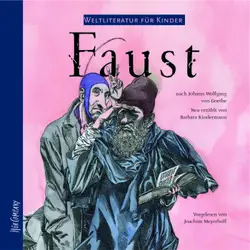
    Faust von J. W. von Goethe - Weltliteratur für Kinder (ungekürzt)

    Johann Wolfgang von Goethe, Barbara Kindermann

  3. Iphigenie auf Tauris : Ein Schauspiel

    Johann Wolfgang von Goethe

  4. Gekürzt
    3.5

    Iphigenie auf Tauris

    Johann Wolfgang von Goethe

  5. Iphigenie auf Tauris

    Johann Wolfgang von Goethe

  6. 3.5

    Iphigenie auf Tauris

    Johann Wolfgang von Goethe

  7. 14. Feb.

    Die neue Melusine. Eine Novelle. : Hörbuchzeit: Klassiker der Weltliteratur

    Hörbuchzeit, Johann Wolfgang von Goethe

  8. 9. Aug.

    Zum Schäkespears Tag. Eine Rede auf William Shakespeare. : Hörbuchzeit: Klassiker der Weltliteratur

    Hörbuchzeit, Johann Wolfgang von Goethe

  9. Neu

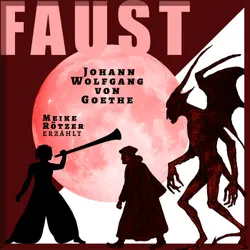
    Faust I - live! Aus Studio 14 - Erzählbuch (Ungekürzt)

    Meike Rötzer, Johann Wolfgang von Goethe

  10. Faust

    Johann Wolfgang von Goethe

  11. Lyrikalische Bibliothek

    Heinrich Heine, Annette von Droste-Hülshoff, Charles Baudelaire, John Keats, Rainer Maria Rilke, Georg Heym, Wilhelm Busch, Arno Holz, Johann Wolfgang von Goethe, Christian Morgenstern, Joachim Ringelnatz, Georg Trakl, Ludwig Tieck, Stefan Zweig, Hugo von Hoffmannsthal, Edgar Allan Poe, Frank Wedekind, Franz Werfel, Wolfgang Borchert, Karl Kraus, Kurt Tucholsky, Friedrich Nietzsche, Else Lasker-Schüler, Ludwig Kalisch, Jakob van Hoddis, Joseph von Eichendorff, Gotthold Ephraim Lessing

  12. Novelle. Eine Novelle. : Hörbuchzeit: Klassiker der Weltliteratur

    Hörbuchzeit, Johann Wolfgang von Goethe