Über dieses Buch

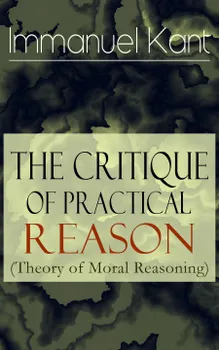
In The Critique of Practical Reason, Immanuel Kant develops the foundation of moral philosophy by asking how reason can determine the will independently of inclination, advantage, or empirical desire. Written in the rigorous, architectonic style characteristic of critical philosophy, the work clarifies the authority of the moral law, the categorical imperative, freedom, duty, and the postulates of God and immortality. It stands as the ethical counterpart to the Critique of Pure Reason, shifting Kant's critical project from the limits of knowledge to the demands of action. Kant, the Königsberg philosopher of the Enlightenment, wrote this text after establishing his revolutionary account of human cognition. His concern with autonomy, rational agency, and universal law reflects both the intellectual climate of eighteenth-century Europe and his resistance to moral systems grounded merely in sentiment, theology, or consequences. The book expresses his conviction that human dignity depends upon the capacity to legislate moral law through reason. This work is indispensable for readers of philosophy, ethics, theology, political theory, and intellectual history. Though demanding, it rewards careful study with one of the most powerful accounts of moral freedom ever written.

This enriched edition has been carefully crafted to add value to your reading experience.

- A succinct Introduction situates the work's timeless appeal and themes.

- The Synopsis outlines the central plot, highlighting key developments without spoiling critical twists.

- A detailed Historical Context immerses you in the era's events and influences that shaped the writing.

- An Author Biography reveals milestones in the author's life, illuminating the personal insights behind the text.

- A thorough Analysis dissects symbols, motifs, and character arcs to unearth underlying meanings.

- Reflection questions prompt you to engage personally with the work's messages, connecting them to modern life.

- Hand‐picked Memorable Quotes shine a spotlight on moments of literary brilliance.

- Interactive footnotes clarify unusual references, historical allusions, and archaic phrases for an effortless, more informed read.

Starte noch heute mit diesem Buch für 0 €

  • Hole dir während der Testphase vollen Zugriff auf alle Bücher in der App
  • Keine Verpflichtungen, jederzeit kündbar
Jetzt kostenlos testen
Mehr als 52 000 Menschen haben Nextory im App Store und auf Google Play 5 Sterne gegeben.

  1. 50 Meisterwerke Musst Du Lesen, Bevor Du Stirbst: Vol. 2

    Jakob Christoph Heer, Immanuel Kant, Ernst Weiß, Stefan Zweig, Franz Kafka, Theodor Fontane, Fyodor Dostoyevsky, Emile Zola, Karl May, Antoine François Prévos, Hugo von Hofmannsthal, E. T. Hoffmann, Lev Tolstoy, Charles Baudelaire, Heinrich von Kleist, Edgar Allan Poe, Rainer Maria Rilke, Hermann Hesse, Jules Verne, Joseph Conrad, Gustave Flaubert, Jacques-Henri Bernardin, Joseph Roth, Anton Pavlovich Chekhov, Ludwig Ganghofer, Thomas Morus, Leopold von Sacher-Masoch, BookTime

  2. 50 Meisterwerke der Philosophie : Metaphysik, Das Gastmahl, Bhagavadgita, Tractatus logico-philosophicus, Kritik der reinen Vernunft, Also sprach Zarathustra, Selbstbetrachtungen von Marcus Aurelius

    Ludwig Wittgenstein, Edmund Husserl, Karl Marx, Søren Kierkegaard, Friedrich Nietzsche, Ralph Waldo Emerson, John Stuart Mill, Georg Wilhelm Hegel, Friedrich Schelling, Johann Gottlieb Fichte, Immanuel Kant, John Locke, Montesquieu, Jean-Jacques Rousseau, David Hume, Gottfried Wilhelm Leibniz, Baruch Spinoza, - Konfuzius, Lao Tse, Platon, Xenophon, - Aristoteles, Marcus Tullius Cicero, Seneca, Epiktet, Marc Aurel, Plotin, Thomas von Aquin, Nicolaus von Cues, - Erasmus von Rotterdam, Niccolò Machiavelli, Tommaso Campanella, Martin Luther, Giordano Bruno, Samuel von Pufendorf, Abbé Castel Saint-Pierre, Michel de Montaigne, René Descartes, Francis Bacon, Blaise Pascal

  3. Die Kritik der reinen Vernunft : Die transzendentale Ästhetik

    Immanuel Kant

  4. Philosophie der Aufklärung : Die wichtigsten Werke von Immanuel Kant, John Locke, Rousseau, Voltaire, Denis Diderot, David Hume, Leibniz, Johann Gottfried Herder

    Johann Gottfried Herder, Montesquieu, David Hume, Denis Diderot, Jean-Jacques Rousseau, John Locke, Thomas Hobbes, Benjamin Franklin, Francis Bacon, Immanuel Kant, Baruch Spinoza, Isaac Newton, Freiherr von Leibniz, Voltaire, René Descartes

  5. Meisterwerke der Weltphilosophie (Kommentiert) : Erweiterte Ausgabe. Das Gastmahl, Nikomachische Ethik, Also sprach Zarathustra, Utopia, Phänomenologie des Geistes, Neues Organon, Selbstbetrachtungen

    Immanuel Kant, Søren Kierkegaard, Edmund Husserl, Ludwig Wittgenstein, Friedrich Nietzsche, - Konfuzius, Platon, Xenophon, - Aristoteles, Lao Tse, Marcus Tullius Cicero, Marcus Aurelius, Plotin, Thomas von Aquin, Niccolò Machiavelli, Thomas Morus, Giordano Bruno, Michel de Montaigne, René Descartes, Francis Bacon, Blaise Pascal, Baruch Spinoza, Gottfried Wilhelm Leibniz, David Hume, Jean-Jacques Rousseau, Friedrich Schelling, John Locke, Georg Wilhelm Hegel, John Stuart Mill, Karl Marx

  6. Die größten Klassiker der Philosophie (Kommentiert) : Erweiterte Ausgabe. Also sprach Zarathustra, Utopia, Phänomenologie des Geistes, Neues Organon, Selbstbetrachtungen, Das Gastmahl, Nikomachische Ethik

    Immanuel Kant, Søren Kierkegaard, Edmund Husserl, Ludwig Wittgenstein, Friedrich Nietzsche, - Konfuzius, Platon, Xenophon, - Aristoteles, Lao Tse, Marcus Tullius Cicero, Marcus Aurelius, Plotin, Thomas von Aquin, Niccolò Machiavelli, Thomas Morus, Giordano Bruno, Michel de Montaigne, René Descartes, Francis Bacon, Blaise Pascal, Baruch Spinoza, Gottfried Wilhelm Leibniz, David Hume, Jean-Jacques Rousseau, Friedrich Schelling, John Locke, Georg Wilhelm Hegel, John Stuart Mill, Karl Marx

  7. Kant : Bereicherte Ausgabe. Grenzen der Erkenntnis, Moral und Ästhetik

    Immanuel Kant

  8. Gekürzt

    Romankunst, Philosophie und Drama: Die Hörbuch Box, Teil 1 : Bibliothek der Klassiker

    - Sophokles, Immanuel Kant, William Shakespeare, Platon, Jonathan Swift

  9. Klassiker des politischen Denkens: Die große Hörbuch Box : Ein Grundlagenwerk der Politik

    Karl Marx, Sun Tzu, Immanuel Kant, Max Weber, Benjamin Franklin, Platon, Niccolò Machiavelli, Georg Büchner

  10. Erkenne Dich selbst: Die große Hörbuch Box der philosophischen Anregungen : Kant, Montaigne, Seneca, Nietzsche, Konfuzius

    - Konfuzius, Lucius Annaeus Seneca, Immanuel Kant, Michel de Montaigne, Friedrich Nietzsche

  11. 4.0

    3500 Final Quotes

    Marcus Aurelius, Jane Austen, Beaumarchais, Napoleon Bonaparte, Buddha, Winston Churchill, Cicero, Confucius, Nicolas de Chamfort, Charles de Gaulle, Antoine de Saint-Exupéry, Denis Diderot, Fyodor Dostoevsky, Albert Einstein, Ralph Waldo Emerson, Anne Frank, Mahatma Gandhi, Immanuel Kant, Søren Kierkegaard, Martin Luther King, Georg Christoph Lichtenberg, Abraham Lincoln, Montesquieu, Friedrich Nietzsche, Plato, Marcel Proust, Arthur Schopenhauer, William Shakespeare, Socrates, Baruch Spinoza, Henry David Thoreau, Leonardo da Vinci, Voltaire, Oscar Wilde, Laozi

  12. Kritik der reinen Vernunft

    Immanuel Kant