Über dieses Buch

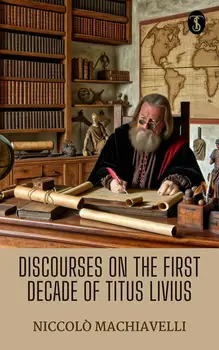
"Discourses on the First Decade of Titus Livius" is a seminal work by Niccolò Machiavelli, a key figure in political philosophy and Renaissance thought. Published posthumously in the early 16th century, this comprehensive text offers a profound analysis of the first ten books of Roman historian Livy's work, which chronicles the history of Rome. Machiavelli's "Discourses" is divided into three books, each addressing different aspects of Roman history and political theory. In this work, Machiavelli explores the principles of republican government, the nature of political power, and the dynamics of civic virtue and corruption. Unlike his more famous work "The Prince," which focuses on monarchical rule, "Discourses" extols the virtues of republicanism and collective governance. Through detailed commentary on Livy's narratives, Machiavelli draws lessons on leadership, the importance of military organization, the role of laws and institutions, and the interplay between fortune and human agency in political affairs. His analysis extends beyond historical commentary, providing timeless insights into the functioning of political systems and the behavior of political actors. "Discourses on the First Decade of Titus Livius" is a foundational text in Western political thought, reflecting Machiavelli's deep engagement with classical sources and his innovative ideas on statecraft. It remains essential reading for anyone interested in the principles of governance, the history of political thought, and the enduring relevance of Machiavelli's ideas.
Starte noch heute mit diesem Buch für 0 €

  • Hole dir während der Testphase vollen Zugriff auf alle Bücher in der App
  • Keine Verpflichtungen, jederzeit kündbar
Jetzt kostenlos testen
Mehr als 52 000 Menschen haben Nextory im App Store und auf Google Play 5 Sterne gegeben.

Ähnliche Bücher

  1. 4.0

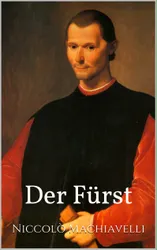
    Der Fürst

    Niccolò Machiavelli

  2. 50 Meisterwerke der Philosophie : Metaphysik, Das Gastmahl, Bhagavadgita, Tractatus logico-philosophicus, Kritik der reinen Vernunft, Also sprach Zarathustra, Selbstbetrachtungen von Marcus Aurelius

    Ludwig Wittgenstein, Edmund Husserl, Karl Marx, Søren Kierkegaard, Friedrich Nietzsche, Ralph Waldo Emerson, John Stuart Mill, Georg Wilhelm Hegel, Friedrich Schelling, Johann Gottlieb Fichte, Immanuel Kant, John Locke, Montesquieu, Jean-Jacques Rousseau, David Hume, Gottfried Wilhelm Leibniz, Baruch Spinoza, - Konfuzius, Lao Tse, Platon, Xenophon, - Aristoteles, Marcus Tullius Cicero, Seneca, Epiktet, Marc Aurel, Plotin, Thomas von Aquin, Nicolaus von Cues, - Erasmus von Rotterdam, Niccolò Machiavelli, Tommaso Campanella, Martin Luther, Giordano Bruno, Samuel von Pufendorf, Abbé Castel Saint-Pierre, Michel de Montaigne, René Descartes, Francis Bacon, Blaise Pascal

  3. Neu

    The Essential Ancient Wisdom Library : 10 Classics of Philosophy, Strategy and Self-Mastery

    Marcus Aurelius, Seneca, Epictetus, Laozi, Plato, Sun Tzu, Musashi Miyamoto, Niccolò Machiavelli, Friedrich Wilhelm Nietzsche, James Allen

  4. 50 Meisterwerke des Mittelalters - Klassiker, die man kennen muss : Beowulf, Rolandslied, 1001 Nacht, Das Gedicht von der Rose, Nibelungenlied, Tristan, Die Edda, Die Göttliche Komödie, Decamerone...

    Marco Polo, Omar Chayyām, Gregor von Tours, Einhard, Anicius Manlius Boethius, Benedikt von Nursia, Gregor der Große, Prokop von Cäsarea, Hildegard von Bingen, Wolfram von Eschenbach, Walther von Vogelweide, Heinrich von Morungen, Gottfried von Straßburg, Heinrich Wittenwiler, Franz von Assisi, Thomas von Aquin, Guillaume de Lorris, Konrad von Würzburg, Dante Alighieri, Giovanni Boccaccio, Geoffrey Chaucer, Johannes von Tepl, Nicolaus von Cues, Sebastian Brant, Hermann Bote, Niccolò Machiavelli, Ludovico Ariosto, Giorgio Vasari, Eusebius, Hieronymus, Agathias, Michael Psellos, Anna Komnena, Abaelard, Augustinus von Hippo

  5. Die Kunst der Staatsführung : Politische Philosophie, Realpolitik und strategische Führung von der Antike bis zur Moderne

    Niccolò Machiavelli, Platon, Marcus Aurelius, Marcus Tullius Cicero, Carl von Clausewitz, Friedrich der Große, Benjamin Franklin, Otto von Bismarck, Friedrich Christoph Dahlmann, Karel Čapek, Hans Delbrück

  6. Essenzielle Klassiker der politischen Philosophie : Grundtexte zu Staatsphilosophie, Freiheit, Gewaltenteilung, Revolution und Anarchismus

    Niccolò Machiavelli, Montesquieu, Friedrich der Große, Platon, - Aristoteles, Marcus Tullius Cicero, Tommaso Campanella, Thomas Morus, Samuel von Pufendorf, Abbé Castel Saint-Pierre, Jean-Jacques Rousseau, Immanuel Kant, Johann Gottlieb Fichte, Karl Marx, Friedrich Engels, Wilhelm von Humboldt, Friedrich Christoph Dahlmann, Franz Mehring, Johann Most, John Henry Mackay, Rosa Luxemburg, Erich Mühsam

  7. Die größten Klassiker der Philosophie (Kommentiert) : Erweiterte Ausgabe. Also sprach Zarathustra, Utopia, Phänomenologie des Geistes, Neues Organon, Selbstbetrachtungen, Das Gastmahl, Nikomachische Ethik

    Immanuel Kant, Søren Kierkegaard, Edmund Husserl, Ludwig Wittgenstein, Friedrich Nietzsche, - Konfuzius, Platon, Xenophon, - Aristoteles, Lao Tse, Marcus Tullius Cicero, Marcus Aurelius, Plotin, Thomas von Aquin, Niccolò Machiavelli, Thomas Morus, Giordano Bruno, Michel de Montaigne, René Descartes, Francis Bacon, Blaise Pascal, Baruch Spinoza, Gottfried Wilhelm Leibniz, David Hume, Jean-Jacques Rousseau, Friedrich Schelling, John Locke, Georg Wilhelm Hegel, John Stuart Mill, Karl Marx

  8. 4.7

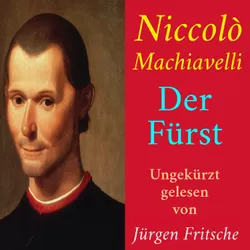
    Niccolò Machiavelli: Der Fürst : Ungekürzte Lesung

    Niccolò Machiavelli

  9. Neu
    3.1

    The Prince

    Niccolò Machiavelli

  10. Neu
    3.1

    The Prince

    Niccolò Machiavelli

  11. The Essential Ancient Wisdom Library : 10 Classics of Philosophy, Strategy and Self-Mastery

    Marcus Aurelius, Seneca, Epictetus, Laozi, Plato, Sun Tzu, Musashi Miyamoto, Niccolò Machiavelli, Friedrich Wilhelm Nietzsche, James Allen

  12. Der Fürst : Das Buch vom Fürsten

    Niccolò Machiavelli