Über dieses Buch

The Enlightenment thinker asserts that mental tranquility is achieved through knowledge of God in this brief philosophical treatise.

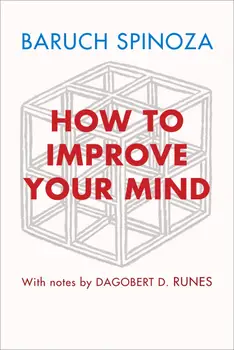
Seventeenth-century philosopher Baruch Spinoza was one of the most original and important thinkers of his time. His magnum opus, Ethics, influenced generations of great minds from Karl Marx to Ludwig Wittgenstein and George Santayana. In this earlier work, Spinoza articulates his view that life is best lived with the supreme happiness of knowing God's infinite love. By extension, all earthly pursuits—including money, fame, and sex—are mere distractions from the greater joy of the soul's quietude.

This edition of How to Improve Your Mind is translated by the philosopher and founder of the Philosophical Library, Dagobert D. Runes. Runes also provides exclusive commentary and biographical notes.

Starte noch heute mit diesem Buch für 0 €

  • Hole dir während der Testphase vollen Zugriff auf alle Bücher in der App
  • Keine Verpflichtungen, jederzeit kündbar
Jetzt kostenlos testen
Mehr als 52 000 Menschen haben Nextory im App Store und auf Google Play 5 Sterne gegeben.

Ähnliche Bücher

Mehr von Baruch Spinoza

  1. 50 Meisterwerke der Philosophie : Metaphysik, Das Gastmahl, Bhagavadgita, Tractatus logico-philosophicus, Kritik der reinen Vernunft, Also sprach Zarathustra, Selbstbetrachtungen von Marcus Aurelius

    Ludwig Wittgenstein, Edmund Husserl, Karl Marx, Søren Kierkegaard, Friedrich Nietzsche, Ralph Waldo Emerson, John Stuart Mill, Georg Wilhelm Hegel, Friedrich Schelling, Johann Gottlieb Fichte, Immanuel Kant, John Locke, Montesquieu, Jean-Jacques Rousseau, David Hume, Gottfried Wilhelm Leibniz, Baruch Spinoza, - Konfuzius, Lao Tse, Platon, Xenophon, - Aristoteles, Marcus Tullius Cicero, Seneca, Epiktet, Marc Aurel, Plotin, Thomas von Aquin, Nicolaus von Cues, - Erasmus von Rotterdam, Niccolò Machiavelli, Tommaso Campanella, Martin Luther, Giordano Bruno, Samuel von Pufendorf, Abbé Castel Saint-Pierre, Michel de Montaigne, René Descartes, Francis Bacon, Blaise Pascal

  2. Die größten Klassiker der Philosophie (Kommentiert) : Erweiterte Ausgabe. Also sprach Zarathustra, Utopia, Phänomenologie des Geistes, Neues Organon, Selbstbetrachtungen, Das Gastmahl, Nikomachische Ethik

    Immanuel Kant, Søren Kierkegaard, Edmund Husserl, Ludwig Wittgenstein, Friedrich Nietzsche, - Konfuzius, Platon, Xenophon, - Aristoteles, Lao Tse, Marcus Tullius Cicero, Marcus Aurelius, Plotin, Thomas von Aquin, Niccolò Machiavelli, Thomas Morus, Giordano Bruno, Michel de Montaigne, René Descartes, Francis Bacon, Blaise Pascal, Baruch Spinoza, Gottfried Wilhelm Leibniz, David Hume, Jean-Jacques Rousseau, Friedrich Schelling, John Locke, Georg Wilhelm Hegel, John Stuart Mill, Karl Marx

  3. ETHIK : Bereicherte Ausgabe. Deduktive Folgerungen aus dem Gedanken des Ineinsfalls von Gott und Natur

    Baruch Spinoza

  4. The Book of God

    Baruch Spinoza

  5. Teologis-poliittinen tutkielma

    Baruch Spinoza

  6. Ética demostrada según el orden geométrico

    Baruch Spinoza

  7. Spinoza : Tratado de la reforma del entendimiento

    Baruch Spinoza

  8. 1800 Citations de philosophes

    Aristote, Épicure, Platon, Thalès de Milet, – Socrate, Protagoras, Anaximandre, Épictète, Héraclite, Marc Aurèle, René Descartes, Michel de Montaigne, Alexis de Tocqueville, Voltaire, Charles De Montesquieu, Jean-Jacques Rousseau, Emmanuel Kant, Hannah Arendt, Gottfried Wilhelm Leibniz, Georg Wilhelm Friedrich Hegel, Friedrich Nietzsche, Arthur Schopenhauer, David Hume, John Locke, Francis Bacon, Thomas Hobbes, Thomas More, Confucius, Érasme, Lao Tseu, Baruch Spinoza, Søren Kierkegaard, Nicolas Machiavel, Thomas d'Aquin, Henry David Thoreau

  9. 50 citations de Spinoza

    Baruch Spinoza

  10. 4.6

    Comprendre Spinoza

    Baruch Spinoza

  11. 400 citations de philosophes essentiels

    Confucius, Érasme, Lao Tseu, Baruch Spinoza, Søren Kierkegaard, Nicolas Machiavel, Thomas d'Aquin, Henry David Thoreau

  12. Traité théologico-politique : Aux origines de la laïcité moderne : comment Spinoza a révolutionné notre conception de la religion, de l'État, et de liberté de conscience

    Baruch Spinoza, Émile Saisset