Über dieses Buch

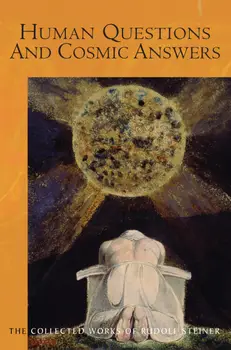
'In the case of a solar eclipse, the evil that has spread over the earth can be carried out into the cosmos to wreak more havoc there, whereas in the case of a lunar eclipse, people who absolutely want to be possessed by evil thoughts can receive them from the cosmos.'In the first full translation of this lecture course, Rudolf Steiner implores his audience to recognize the connections between the material and spiritual worlds. Eclipses of the sun and moon, for example, are 'forces at work in the universe, just like those we study today in the clinic or in the chemistry or physics laboratory'. Even everyday thinking can have a strong impact on the outer world. Materialistic thought, he says, can quite literally atomize our surroundings: 'if all human beings start to think that everything has to be explained in terms of atoms… then the earth will actually turn into atoms… these false ideas create false realities…'Steiner speaks of the 'world of will' as being three-dimensional, the 'world of feeling' as two-dimensional, and the 'world of thinking' as one-dimensional. The ego itself is dimensionless, and only inner, living thinking can grasp the spiritual-mental. He discusses key cultural figures such as Friedrich Nietzsche, Herman Grimm and Julian the Apostate, and introduces multiple additional topics, including the effect of planetary forces on humans; the healing impacts of metals and other substances; the revitalization of thinking through meditation and concentration; the effects of the separation of science, art and religion; and the necessary transition from philosophy to anthroposophy.Thirteen lectures, Dornach, Jun.–Jul. 1922, GA 213
Starte noch heute mit diesem Buch für 0 €

  • Hole dir während der Testphase vollen Zugriff auf alle Bücher in der App
  • Keine Verpflichtungen, jederzeit kündbar
Jetzt kostenlos testen
Mehr als 52 000 Menschen haben Nextory im App Store und auf Google Play 5 Sterne gegeben.

  1. Neu

    Rudolf Steiner : Ausgesprochenes und Unausgesprochenes im Denken, Schauen, Sinnen einer Reihe deutscher und österreichischer Persönlichkeiten. Ein Grundlagenwerk der Anthroposophie

    Rudolf Steiner

  2. #21

    Die geistige Führung des Menschen und der Menschheit : Geisteswissenschaftliche Ergebnisse über die Menschheits-Entwicklung

    Rudolf Steiner

  3. #31

    Grundlegendes für eine Erweiterung der Heilkunst : nach geisteswissenschaftlichen Erkenntnissen

    Rudolf Steiner, Ita Wegman

  4. #4

    Die Philosophie der Freiheit : Grundzüge einer modernen Weltanschauung

    Rudolf Steiner

  5. Die vergängliche Wahrheit in der Metaphysik : Erweiterte Ausgabe. Metaphysische Anfangsgründe der Naturwissenschaft, Träume eines Geistersehers, Grundzüge der Philosophie, Götzen-Dämmerung

    Platon, - Aristoteles, Plotin, Thomas von Aquin, René Descartes, Baruch Spinoza, Thomas Hobbes, Immanuel Kant, Gottfried Wilhelm Leibniz, Friedrich Wilhelm Schelling, Georg Wilhelm Hegel, Arthur Schopenhauer, Moses Mendelssohn, Friedrich Nietzsche, Rudolf Steiner

  6. Die Philosophie der Freiheit : Bereicherte Ausgabe. Grundzüge einer modernen Weltanschauung - seelische Beobachtungsresultate nach naturwissenschaftlicher Methode: die Vorbereitung der Anthroposophie

    Rudolf Steiner

  7. Der Seelen Erwachen : Bereicherte Ausgabe. Seelische und geistige Vorgänge in szenischen Bildern

    Rudolf Steiner

  8. Klassiker des philosophischen Denkens: Die große Hörbuch Box : Ein Grundlagenwerk der Philosophie

    Francesco Petrarca, Rudolf Steiner, - Konfuzius, Marc Aurel, Lao Tse, - Aristoteles, Platon, Lucius Annaeus Seneca, Voltaire, Max Stirner, Henry David Thoreau, Friedrich Nietzsche, Étienne de La Boétie, Epiktet, Blaise Pascal

  9. 5.0

    Rudolf Steiner: Philosophie der Freiheit : Grundzüge einer modernen Weltanschauung

    Rudolf Steiner

  10. Die Philosophie der Freiheit: Grundzüge einer modernen Weltanschauung - Seelische Beobachtungsresultate nach naturwissenschaftlicher Methode

    Rudolf Steiner

  11. Die Nebenübungen: Sechs Schritte zur Selbsterziehung

    Rudolf Steiner

  12. Stichwort Karma

    Rudolf Steiner