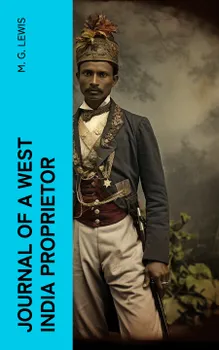
Journal of a West India Proprietor records Matthew Gregory Lewis's visits to his Jamaican estates in 1815–16 and 1817, offering a revealing mixture of travel narrative, plantation diary, social observation, and moral unease. Written in a lively, anecdotal style, it moves between vivid descriptions of landscape, Creole society, estate management, and the enslaved people whose labor sustained the colonial economy. In literary context, the work stands at the intersection of Romantic travel writing, abolition-era testimony, and imperial self-examination, though its humane impulses remain constrained by the assumptions of proprietorship. M. G. Lewis is best remembered as the author of The Monk, a sensational Gothic novel that made him famous in the 1790s. Yet he was also an absentee West India planter, having inherited estates in Jamaica. His journal reflects the tension between his cultivated sensibility, theatrical imagination, and inherited dependence on slavery. Lewis attempted reforms and often presents himself as benevolent, but the text inadvertently exposes the structural violence that benevolence could not redeem. This book is recommended to readers interested in slavery, empire, Romantic-era literature, and the contradictions of liberal feeling within colonial power. It is an indispensable, troubling primary document: engaging, uncomfortable, and historically illuminating.
This enriched edition has been carefully crafted to add value to your reading experience.
- A succinct Introduction situates the work's timeless appeal and themes.
- The Synopsis outlines the central plot, highlighting key developments without spoiling critical twists.
- A detailed Historical Context immerses you in the era's events and influences that shaped the writing.
- A thorough Analysis dissects symbols, motifs, and character arcs to unearth underlying meanings.
- Reflection questions prompt you to engage personally with the work's messages, connecting them to modern life.
- Hand‐picked Memorable Quotes shine a spotlight on moments of literary brilliance.
- Interactive footnotes clarify unusual references, historical allusions, and archaic phrases for an effortless, more informed read.