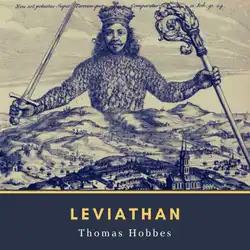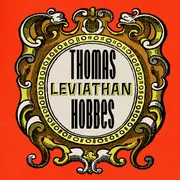
Leviathan

'The life of man, solitary, poore, nasty, brutish, and short.'

Originally published in 1651, Leviathan is a hugely influential work of political philosophy, and is still widely read and studied to this day.

Written during the English Civil War, of which Hobbes had first-hand experience, Leviathan argues for political rule by an absolute authority. Hobbes claimed that human nature was, at its core, ruthless and brutal: people were selfish, self-interested and likely to cause conflict for one another. In order to combat this chaos, individuals ought to submit to a sovereign – a 'Leviathan' – in exchange for order, security and peace. A powerful argument which lay the groundwork for modern social contract theory, Leviathan has influenced government structure across the world.

Thomas Hobbes (1588 – 1679) was an English philosopher, scientist and historian. He is best known for his book, Leviathan, in which he pioneers a new interpretation of social contract theory. Although a controversial figure during his life, his work has profoundly influenced our understanding of political philosophy and, more broadly, human nature.
Über dieses Buch

'The life of man, solitary, poore, nasty, brutish, and short.'

Originally published in 1651, Leviathan is a hugely influential work of political philosophy, and is still widely read and studied to this day.

Written during the English Civil War, of which Hobbes had first-hand experience, Leviathan argues for political rule by an absolute authority. Hobbes claimed that human nature was, at its core, ruthless and brutal: people were selfish, self-interested and likely to cause conflict for one another. In order to combat this chaos, individuals ought to submit to a sovereign – a 'Leviathan' – in exchange for order, security and peace. A powerful argument which lay the groundwork for modern social contract theory, Leviathan has influenced government structure across the world.

Thomas Hobbes (1588 – 1679) was an English philosopher, scientist and historian. He is best known for his book, Leviathan, in which he pioneers a new interpretation of social contract theory. Although a controversial figure during his life, his work has profoundly influenced our understanding of political philosophy and, more broadly, human nature.

Starte noch heute mit diesem Buch für 0 €

  • Hole dir während der Testphase vollen Zugriff auf alle Bücher in der App
  • Keine Verpflichtungen, jederzeit kündbar
Jetzt kostenlos testen
Mehr als 52 000 Menschen haben Nextory im App Store und auf Google Play 5 Sterne gegeben.

  1. Leviathan | Deutsche Übersetzung der Original-Ausgabe von 1651 : Leviathan oder Stoff, Form und Gewalt eines kirchlichen und staatlichen Gemeinwesens | Teil 1 und 2

    Thomas Hobbes

  2. Neu
    5.0

    Leviatán : o La Materia, Forma y Poder de una República Eclesiástica y Civil

    Thomas Hobbes

  3. Del ciudadano y Leviatán : Antología de textos políticos

    Thomas Hobbes

  4. Leviathan

    Thomas Hobbes

  5. 250 citations de philosophes anglais

    David Hume, John Locke, Francis Bacon, Thomas Hobbes, Thomas More

  6. 1800 Citations de philosophes

    Aristote, Épicure, Platon, Thalès de Milet, – Socrate, Protagoras, Anaximandre, Épictète, Héraclite, Marc Aurèle, René Descartes, Michel de Montaigne, Alexis de Tocqueville, Voltaire, Charles De Montesquieu, Jean-Jacques Rousseau, Emmanuel Kant, Hannah Arendt, Gottfried Wilhelm Leibniz, Georg Wilhelm Friedrich Hegel, Friedrich Nietzsche, Arthur Schopenhauer, David Hume, John Locke, Francis Bacon, Thomas Hobbes, Thomas More, Confucius, Érasme, Lao Tseu, Baruch Spinoza, Søren Kierkegaard, Nicolas Machiavel, Thomas d'Aquin, Henry David Thoreau

  7. Comprendre Thomas Hobbes

    Thomas Hobbes

  8. 50 citations de Thomas Hobbes

    Thomas Hobbes

  9. Leviathan : Band 1-4: Politische Philosophie über Staat und Macht (Ausgabe in neuer Übersetzung und Rechtschreibung)

    Thomas Hobbes

  10. Behemoth or The Long Parliament

    Thomas Hobbes

  11. Philosophie der Aufklärung : Die wichtigsten Werke von Immanuel Kant, John Locke, Rousseau, Voltaire, Denis Diderot, David Hume, Leibniz, Johann Gottfried Herder

    Johann Gottfried Herder, Montesquieu, David Hume, Denis Diderot, Jean-Jacques Rousseau, John Locke, Thomas Hobbes, Benjamin Franklin, Francis Bacon, Immanuel Kant, Baruch Spinoza, Isaac Newton, Freiherr von Gottfried Wilhelm Leibniz, Voltaire, René Descartes