Über dieses Buch

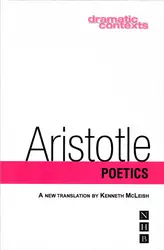
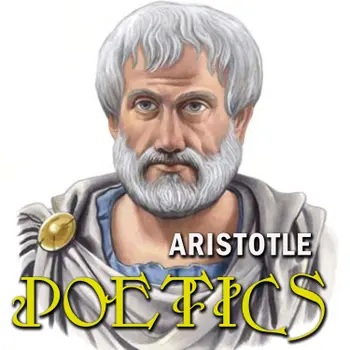
Aristotle's Poetics (Greek: Περὶ ποιητικῆς; Latin: De Poetica) is the earliest surviving work of dramatic theory and first extant philosophical treatise to focus on literary theory. In it, Aristotle offers an account of what he calls "poetry" (a term that derives from a classical Greek term, ποιητής, that means "poet; author; maker" and in this context includes verse drama – comedy, tragedy, and the satyr play – as well as lyric poetry and epic poetry). They are similar in the fact that they are all imitations but different in the three ways that Aristotle describes: Differences in music rhythm, harmony, meter and melody. Difference of goodness in the characters.

Difference in how the narrative is presented: telling a story or acting it out. In examining its "first principles", Aristotle finds two: 1) imitation and 2) genres and other concepts by which that of truth is applied/revealed in the poesis. His analysis of tragedy constitutes the core of the discussion. Although Aristotle's Poetics is universally acknowledged in the Western critical tradition, "almost every detail about his seminal work has aroused divergent opinions". The work was lost to the Western world for a long time. It was available in the Middle Ages and early Renaissance only through a Latin translation of an Arabic version written by Averroes.

Aristotle's work on aesthetics consists of the Poetics, Politics and Rhetoric. The Poetics is specifically concerned with drama. At some point, Aristotle's original work was divided in two, each "book" written on a separate roll of papyrus.


Starte noch heute mit diesem Buch für 0 €

  • Hole dir während der Testphase vollen Zugriff auf alle Bücher in der App
  • Keine Verpflichtungen, jederzeit kündbar
Jetzt kostenlos testen
Mehr als 52 000 Menschen haben Nextory im App Store und auf Google Play 5 Sterne gegeben.

  1. 10 Masterpieces You Have to Read Before You Die, Vol.5 : The Odyssey, The Republic, Meditations, The Divine Comedy, Faust and others

    Homer, Plato, Aristotle, Marcus Aurelius, Niccolo Machiavelli, Dante Alighieri, Johann Wolfgang von Goethe, Leo Tolstoy

  2. Yale Classics (Vol. 1) : Enriched edition.

    Herodotus, Sappho -, Homer, Hesiod, Alcaeus, Archilochus, Anacreon, Theognis of Megara, Simonides of Ceos, Bacchylides, Pindar, Aeschylus, Sophocles, Euripides, - Aristophanes, Thucydides, Plato, Aristotle, Lysias, Demosthenes, Apollonius, Callimachus, Theocritus, Plutarch, Epictetus, Gilbert Murray

  3. Yale Required Reading - Collected Works (Vol. 1) (Annotated) : Enriched Edition. Ancient Greek Classics in Epic, Lyric, Drama, History, Philosophy, and Myth

    Herodotus, Sappho -, Homer, Hesiod, Alcaeus, Archilochus, Anacreon, Theognis of Megara, Simonides of Ceos, Bacchylides, Pindar, Aeschylus, Sophocles, Euripides, - Aristophanes, Thucydides, Plato, Aristotle, Lysias, Demosthenes, Apollonius, Callimachus, Theocritus, Plutarch, Epictetus, Gilbert Murray

  4. 33 Human Science Masterpieces You Must Read Before You Die. Illustrated : The Art of Public Speaking, The Meditations, The Kama Sutra and other masterpieces

    Edwin A. Abbott, Aristotle, Dale Carnegie, Gilbert Chesterton, René Descartes, Epictetus, Marcus Aurelius Antoninus, Sigmund Freud, Hermann Hesse, David Hume, Lao Tzu, Confucius, Swami Abhedananda, Anonimous, David Herbert Lawrence, Niccolò Machiavelli, Benedictus de Spinoza, John Mill, Prentice Mulford, Thomas More, Friedrich Nietzsche, J. Allanson Picton, Plato, Sun Tzu, Vatsyayana, Voltaire, H.G. Wells, Frances Bacon

  5. Neu

    The Complete Aristotle

    Aristotle

  6. Neu

    The Complete Works of Aristotle

    Aristotle

  7. Aristotle's Nicomachean Ethics : The Complete Virtue Ethics: Plato's Student and Alexander the Great's Teacher on Happiness, Friendship and the Good Life

    Aristotle

  8. Nicomachean Ethics - Audiobook

    Aristotle, Classic Audiobooks

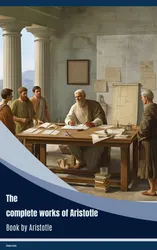
  9. The complete works of Aristotle

    Aristotle

  10. Nicomachean Ethics

    Aristotle

  11. The complete works of Aristotle

    Aristotle

  12. Physics

    Aristotle