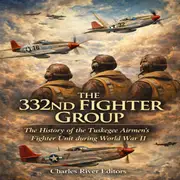
The 332nd Fighter Group: The History of the Tuskegee Airmen’s Fighter Unit during World War II

The United States has no shortage of famous military units, from the Civil War’s Iron Brigade to the 101st Airborne, but one would be hard pressed to find one that had to go through as many hardships off the field as the Tuskegee Airmen, a group of African American pilots who overcame Jim Crow at home and official segregation in the military to serve their country in the final years of World War II. In fact, it required a concerted effort by groups such as the National Association for the Advancement of Colored People (NAACP) and the extreme circumstances brought about by World War II that the military eventually decided to establish the “Tuskegee Experiment.”

The Black crews trained at Tuskegee before being sent overseas, and even then, they faced discrimination from those who didn’t trust them to do more than escort bombers flown by white pilots. However, as the men proved their worth in the heat of battle, some of the squadrons’ red markings helped them earn the nickname “Red Tails,” and their track record was so good that eventually the white pilots of American bombers wanted to fly with them. As Tuskegee airman Roscoe Brown eloquently put it, “They have a saying that excellence is the antidote to prejudice; so, once you show you can do it, some of the barriers will come down.”

In time, the Tuskegee Airmen would be romanticized and mythologized to the extent that it was claimed that some escort squadrons didn’t lose a bomber to the enemy, which led Tuskegee airman Grant Williams to note in jest, “Back then, nobody realized the significance of what we were doing. Now, they seem to think we could walk on water." However, even though the suggestion that the escorts lost no bombers on their missions was inaccurate, there is no question that the Tuskegee Airmen’s record was elite and some of the fighter pilots were among the best to serve.
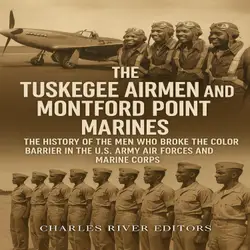
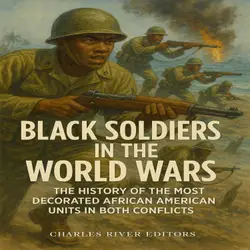
Über dieses Buch

The United States has no shortage of famous military units, from the Civil War’s Iron Brigade to the 101st Airborne, but one would be hard pressed to find one that had to go through as many hardships off the field as the Tuskegee Airmen, a group of African American pilots who overcame Jim Crow at home and official segregation in the military to serve their country in the final years of World War II. In fact, it required a concerted effort by groups such as the National Association for the Advancement of Colored People (NAACP) and the extreme circumstances brought about by World War II that the military eventually decided to establish the “Tuskegee Experiment.”

The Black crews trained at Tuskegee before being sent overseas, and even then, they faced discrimination from those who didn’t trust them to do more than escort bombers flown by white pilots. However, as the men proved their worth in the heat of battle, some of the squadrons’ red markings helped them earn the nickname “Red Tails,” and their track record was so good that eventually the white pilots of American bombers wanted to fly with them. As Tuskegee airman Roscoe Brown eloquently put it, “They have a saying that excellence is the antidote to prejudice; so, once you show you can do it, some of the barriers will come down.”

In time, the Tuskegee Airmen would be romanticized and mythologized to the extent that it was claimed that some escort squadrons didn’t lose a bomber to the enemy, which led Tuskegee airman Grant Williams to note in jest, “Back then, nobody realized the significance of what we were doing. Now, they seem to think we could walk on water." However, even though the suggestion that the escorts lost no bombers on their missions was inaccurate, there is no question that the Tuskegee Airmen’s record was elite and some of the fighter pilots were among the best to serve.

Starte noch heute mit diesem Buch für 0 €

  • Hole dir während der Testphase vollen Zugriff auf alle Bücher in der App
  • Keine Verpflichtungen, jederzeit kündbar
Jetzt kostenlos testen
Mehr als 52 000 Menschen haben Nextory im App Store und auf Google Play 5 Sterne gegeben.

  1. 2.0

    Die Panzer: Die Geschichte und das Vermächtnis von Nazideutschlands berühmtesten Panzern des Zweiten Weltkriegs

    Charles River Editors

  2. 3.8

    Hans-Ulrich Rudel: The Life and Legacy of the Luftwaffe’s Deadliest Stuka Pilot

    Charles River Editors

  3. The Colonization of South Africa: The History and Legacy of the European Subjugation of South Africa

    Charles River Editors

  4. 4.5

    The Great Schism: The History and Legacy of the Split Between the Catholic and Eastern Orthodox Churches in 1054

    Charles River Editors

  5. The Biggest Tank Battles of the World Wars: Tank Warfare in History’s Deadliest Conflicts

    Charles River Editors

  6. Ada Lovelace: The Life and Legacy of the Math Prodigy Who Pioneered Computer Science

    Charles River Editors

  7. Imperial Germany’s Colonization in Africa: The History of the German Efforts and Conflicts to Colonize Parts of Africa

    Charles River Editors

  8. Eleanor of Aquitaine and Richard the Lionheart: The History of the Mother and Son Who Shaped Medieval Europe

    Charles River Editors

  9. The Texas Revolution and Mexican-American War: The History and Legacy of the Conflicts that Led to Mexico’s Cession of the American Southwest

    Charles River Editors

  10. Das mittelalterliche Russland: Die Geschichte und das Erbe der Gruppen, die den russischen Staat im Mittelalter entwickelten

    Charles River Editors

  11. The Colonies of British South Africa: The History and Legacy of British Imperialism in Modern South Africa and Zimbabwe

    Charles River Editors

  12. The Iranian Revolution and Iran Hostage Crisis: The History of the Events that Broke American Relations with Iran

    Charles River Editors