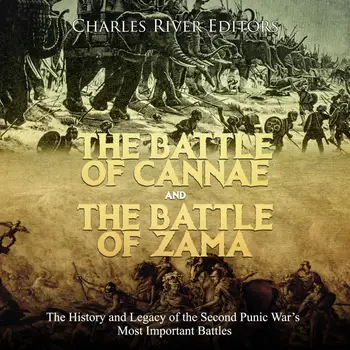
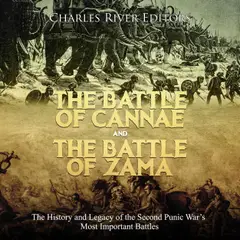
The Battle of Cannae and the Battle of Zama: The History and Legacy of the Second Punic War’s Most Important Battles

Certain foreign policy decisions led to continuing enmity between Carthage and the burgeoning power of Rome, and what followed was a series of wars which turned from a battle for Mediterranean hegemony into an all-out struggle for survival. Although the Romans gained the upper hand in the wake of the First Punic War, Hannibal brought the Romans to their knees for over a decade during the Second Punic War. While military historians are still amazed that he was able to maintain his army in Italy near Rome for nearly 15 years, scholars are still puzzled over some of his decisions, including why he never attempted to march on Rome in the first place.

Cannae is still considered one of the greatest tactical victories in the history of warfare, and the fact the battle was a complete victory resulting in the wholesale annihilation of the enemy army made it the textbook example for military commanders to try to duplicate. Of course, others usually were unsuccessful. Cannae was the kind of complete victory that every commander from Caesar to Frederick the Great to Napoleon to Robert E. Lee sought, and that few generals save Caesar and Napoleon bagged whole armies is a testament to the near impossibility of achieving a victory like Cannae.

On October 19, 202 BCE, on the plain of Zama in modern Tunisia, battle was joined, and for the first time in one of the battles of the Second Punic War, Hannibal had the infantry advantage and Rome had the cavalry advantage. The result would decide the fate of the Second Punic War and the course of history.

Not surprisingly, after the serious threat Hannibal posed during the Second Punic War, the Romans didn’t wait much longer to take the fight to the Carthaginians in the Third Punic War, which ended with Roman legions smashing Carthage to rubble. As legend has it, the Romans literally salted the ground upon which Carthage stood to ensure its destruction once and for all.

Über dieses Buch

Certain foreign policy decisions led to continuing enmity between Carthage and the burgeoning power of Rome, and what followed was a series of wars which turned from a battle for Mediterranean hegemony into an all-out struggle for survival. Although the Romans gained the upper hand in the wake of the First Punic War, Hannibal brought the Romans to their knees for over a decade during the Second Punic War. While military historians are still amazed that he was able to maintain his army in Italy near Rome for nearly 15 years, scholars are still puzzled over some of his decisions, including why he never attempted to march on Rome in the first place.

Cannae is still considered one of the greatest tactical victories in the history of warfare, and the fact the battle was a complete victory resulting in the wholesale annihilation of the enemy army made it the textbook example for military commanders to try to duplicate. Of course, others usually were unsuccessful. Cannae was the kind of complete victory that every commander from Caesar to Frederick the Great to Napoleon to Robert E. Lee sought, and that few generals save Caesar and Napoleon bagged whole armies is a testament to the near impossibility of achieving a victory like Cannae.

On October 19, 202 BCE, on the plain of Zama in modern Tunisia, battle was joined, and for the first time in one of the battles of the Second Punic War, Hannibal had the infantry advantage and Rome had the cavalry advantage. The result would decide the fate of the Second Punic War and the course of history.

Not surprisingly, after the serious threat Hannibal posed during the Second Punic War, the Romans didn’t wait much longer to take the fight to the Carthaginians in the Third Punic War, which ended with Roman legions smashing Carthage to rubble. As legend has it, the Romans literally salted the ground upon which Carthage stood to ensure its destruction once and for all.
Starte noch heute mit diesem Buch für 0 €

  • Hole dir während der Testphase vollen Zugriff auf alle Bücher in der App
  • Keine Verpflichtungen, jederzeit kündbar
Jetzt kostenlos testen
Mehr als 52 000 Menschen haben Nextory im App Store und auf Google Play 5 Sterne gegeben.

  1. 2.0

    Die Panzer: Die Geschichte und das Vermächtnis von Nazideutschlands berühmtesten Panzern des Zweiten Weltkriegs

    Charles River Editors

  2. The Iranian Revolution and Iran Hostage Crisis: The History of the Events that Broke American Relations with Iran

    Charles River Editors

  3. 3.9

    Hans-Ulrich Rudel: The Life and Legacy of the Luftwaffe’s Deadliest Stuka Pilot

    Charles River Editors

  4. The Ancient Kingdoms of Africa: The History and Legacy of the African Continent’s Most Prominent Kingdoms in Antiquity

    Charles River Editors

  5. The Spanish Empire in the Americas: The History of Spain’s Colonization across Central America and South America

    Charles River Editors

  6. The Biggest Tank Battles of the World Wars: Tank Warfare in History’s Deadliest Conflicts

    Charles River Editors

  7. The Carlist Wars and the Spanish Civil War: The History of the Conflicts that Divided Spain in the Last 200 Years

    Charles River Editors

  8. The Texas Revolution and Mexican-American War: The History and Legacy of the Conflicts that Led to Mexico’s Cession of the American Southwest

    Charles River Editors

  9. Das mittelalterliche Russland: Die Geschichte und das Erbe der Gruppen, die den russischen Staat im Mittelalter entwickelten

    Charles River Editors

  10. Eleanor of Aquitaine and Richard the Lionheart: The History of the Mother and Son Who Shaped Medieval Europe

    Charles River Editors

  11. The Byzantines and Ottomans: The History of the Medieval Middle East’s Most Influential Empires

    Charles River Editors

  12. Ada Lovelace: The Life and Legacy of the Math Prodigy Who Pioneered Computer Science

    Charles River Editors