Über dieses Buch

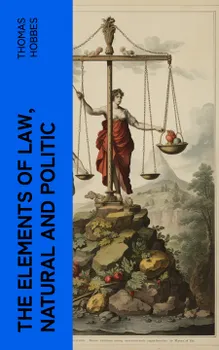
The Elements of Law, Natural and Politic is Thomas Hobbes's first systematic statement of the philosophical anthropology and political theory later expanded in Leviathan. Composed in a lucid, compressed, and argumentative prose, the work moves from sense, imagination, appetite, fear, and reason to natural law, covenant, sovereignty, and the necessity of civil authority. Written on the eve of the English Civil War and circulated in manuscript in 1640, it belongs to the urgent literature of political crisis, yet its method is strikingly modern: politics is grounded not in inherited scholastic abstractions but in an analysis of human motion, desire, and insecurity. Hobbes, born in 1588 and educated at Oxford, served the Cavendish family, travelled on the Continent, and absorbed both classical historiography and the new mathematical-scientific spirit of the seventeenth century. His experience of parliamentary conflict, religious division, and aristocratic politics sharpened his conviction that peace requires an undivided sovereign power capable of restraining destructive competition. This book is indispensable for readers seeking the origins of modern political philosophy. It rewards students of Hobbes, early modern thought, legal theory, and political realism with a concise but profound account of why order, authority, and obligation matter.

This enriched edition has been carefully crafted to add value to your reading experience.

- A succinct Introduction situates the work's timeless appeal and themes.

- The Synopsis outlines the central plot, highlighting key developments without spoiling critical twists.

- A detailed Historical Context immerses you in the era's events and influences that shaped the writing.

- An Author Biography reveals milestones in the author's life, illuminating the personal insights behind the text.

- A thorough Analysis dissects symbols, motifs, and character arcs to unearth underlying meanings.

- Reflection questions prompt you to engage personally with the work's messages, connecting them to modern life.

- Hand‐picked Memorable Quotes shine a spotlight on moments of literary brilliance.

- Interactive footnotes clarify unusual references, historical allusions, and archaic phrases for an effortless, more informed read.

Starte noch heute mit diesem Buch für 0 €

  • Hole dir während der Testphase vollen Zugriff auf alle Bücher in der App
  • Keine Verpflichtungen, jederzeit kündbar
Jetzt kostenlos testen
Mehr als 52 000 Menschen haben Nextory im App Store und auf Google Play 5 Sterne gegeben.

  1. Philosophie der Aufklärung : Die wichtigsten Werke von Immanuel Kant, John Locke, Rousseau, Voltaire, Denis Diderot, David Hume, Leibniz, Johann Gottfried Herder

    Johann Gottfried Herder, Montesquieu, David Hume, Denis Diderot, Jean-Jacques Rousseau, John Locke, Thomas Hobbes, Benjamin Franklin, Francis Bacon, Immanuel Kant, Baruch Spinoza, Isaac Newton, Freiherr von Leibniz, Voltaire, René Descartes

  2. Die vergängliche Wahrheit in der Metaphysik : Erweiterte Ausgabe. Metaphysische Anfangsgründe der Naturwissenschaft, Träume eines Geistersehers, Grundzüge der Philosophie, Götzen-Dämmerung

    Platon, - Aristoteles, Plotin, Thomas von Aquin, René Descartes, Baruch Spinoza, Thomas Hobbes, Immanuel Kant, Gottfried Wilhelm Leibniz, Friedrich Wilhelm Schelling, Georg Wilhelm Hegel, Arthur Schopenhauer, Moses Mendelssohn, Friedrich Nietzsche, Rudolf Steiner

  3. 5.0

    Leviatán : o La Materia, Forma y Poder de una República Eclesiástica y Civil

    Thomas Hobbes

  4. 3.0

    Leviathan

    Thomas Hobbes

  5. 3.0

    Leviathan

    Thomas Hobbes

  6. Del ciudadano y Leviatán : Antología de textos políticos

    Thomas Hobbes

  7. Leviathan

    Thomas Hobbes

  8. Leviathan

    Thomas Hobbes

  9. Comprendre Thomas Hobbes

    Thomas Hobbes

  10. 1800 Citations de philosophes

    Aristote, Épicure, Platon, Thalès de Milet, – Socrate, Protagoras, Anaximandre, Épictète, Héraclite, Marc Aurèle, René Descartes, Michel de Montaigne, Alexis de Tocqueville, Voltaire, Charles De Montesquieu, Jean-Jacques Rousseau, Emmanuel Kant, Hannah Arendt, Gottfried Wilhelm Leibniz, Georg Wilhelm Friedrich Hegel, Friedrich Nietzsche, Arthur Schopenhauer, David Hume, John Locke, Francis Bacon, Thomas Hobbes, Thomas More, Confucius, Érasme, Lao Tseu, Baruch Spinoza, Søren Kierkegaard, Nicolas Machiavel, Thomas d'Aquin, Henry David Thoreau

  11. 50 citations de Thomas Hobbes

    Thomas Hobbes

  12. 250 citations de philosophes anglais

    David Hume, John Locke, Francis Bacon, Thomas Hobbes, Thomas More