The House of the Dead

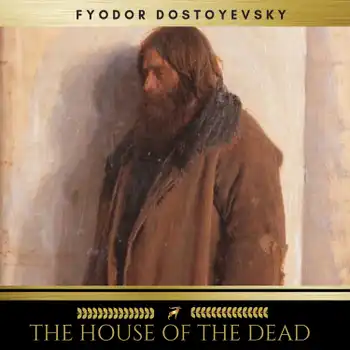
The House of the Dead is a novel published in 1861 by Russian author Fyodor Dostoyevsky, which portrays the life of convicts in a Siberian prison camp. Dostoyevsky himself spent four years in exile in such a camp following his conviction for involvement in the Petrashevsky Circle. This experience allowed him to describe with great authenticity the conditions of prison life and the characters of the convicts. The narrator, Aleksandr Petrovich Goryanchikov, has been sentenced to penalty deportation to Siberia and ten years of hard labour. Life in prison is particularly hard for Aleksandr Petrovich, since he is a "gentleman" and suffers the malice of the other prisoners, nearly all of whom belong to the peasantry. Gradually Goryanchikov overcomes his revulsion at his situation and his fellow convicts, undergoing a spiritual re-awakening that culminates with his release from the camp. It is a work of great humanity; Dostoyevsky portrays the inmates of the prison with sympathy for their plight, and also expresses admiration for their energy, ingenuity and talent. He concludes that the existence of the prison, with its absurd practices and savage corporal punishments is a tragic fact, both for the prisoners and for Russia itself.
Über dieses Buch

The House of the Dead is a novel published in 1861 by Russian author Fyodor Dostoyevsky, which portrays the life of convicts in a Siberian prison camp. Dostoyevsky himself spent four years in exile in such a camp following his conviction for involvement in the Petrashevsky Circle. This experience allowed him to describe with great authenticity the conditions of prison life and the characters of the convicts. The narrator, Aleksandr Petrovich Goryanchikov, has been sentenced to penalty deportation to Siberia and ten years of hard labour. Life in prison is particularly hard for Aleksandr Petrovich, since he is a "gentleman" and suffers the malice of the other prisoners, nearly all of whom belong to the peasantry. Gradually Goryanchikov overcomes his revulsion at his situation and his fellow convicts, undergoing a spiritual re-awakening that culminates with his release from the camp. It is a work of great humanity; Dostoyevsky portrays the inmates of the prison with sympathy for their plight, and also expresses admiration for their energy, ingenuity and talent. He concludes that the existence of the prison, with its absurd practices and savage corporal punishments is a tragic fact, both for the prisoners and for Russia itself.

Starte noch heute mit diesem Buch für 0 €

  • Hole dir während der Testphase vollen Zugriff auf alle Bücher in der App
  • Keine Verpflichtungen, jederzeit kündbar
Jetzt kostenlos testen
Mehr als 52 000 Menschen haben Nextory im App Store und auf Google Play 5 Sterne gegeben.

  1. 5.0

    Crime and Punishment

    Fyodor Dostoyevsky

  2. The Essential Classics: Volume 6 : Boyhood, Childhood, Youth, Demons, Dombey and Son, Shirley, and The Tenant of Wildfell Hall

    Leo Tolstoy, Fyodor Dostoyevsky, Charles Dickens, Charlotte Brontë, Anne Brontë

  3. Short Stories

    Fyodor Dostoyevsky, Constance Garnett

  4. The Brothers Karamazov

    Fyodor Dostoyevsky

  5. The Idiot

    Fyodor Dostoyevsky

  6. 50 Masterpieces you need to read

    Louisa May Alcott, Jane Austen, Joseph Conrad, D. H. Lawrence, George Eliot, Leo Tolstoy, James Joyce, Charles Dickens, Bram Stoker, Oscar Wilde, Honoré de Balzac, Edgar Rice Burroughs, Anne Brontë, Charlotte Brontë, Emily Brontë, Lewis Carroll, Willa Cather, Miguel de Cervantes, E. Cummings, Fyodor Dostoyevsky, Daniel Defoe, Arthur Conan Doyle, Alexandre Dumas, Gustave Flaubert, Henry James, Victor Hugo

  7. 50 Masterpieces you have to read

    Louisa May Alcott, Jane Austen, Joseph Conrad, D. H. Lawrence, George Eliot, Leo Tolstoy, James Joyce, Charles Dickens, Bram Stoker, Oscar Wilde, Honoré de Balzac, Edgar Rice Burroughs, Anne Brontë, Charlotte Brontë, Emily Brontë, Lewis Carroll, Willa Cather, Miguel de Cervantes, E. Cummings, Fyodor Dostoyevsky, Daniel Defoe, Arthur Conan Doyle, Alexandre Dumas, Gustave Flaubert, Henry James, Victor Hugo

  8. 50 Meisterwerke Musst Du Lesen, Bevor Du Stirbst: Vol. 2

    Jakob Christoph Heer, Immanuel Kant, Ernst Weiß, Stefan Zweig, Franz Kafka, Theodor Fontane, Fyodor Dostoyevsky, Emile Zola, Karl May, Antoine François Prévos, Hugo von Hofmannsthal, E. T. Hoffmann, Lev Tolstoy, Charles Baudelaire, Heinrich von Kleist, Edgar Allan Poe, Rainer Maria Rilke, Hermann Hesse, Jules Verne, Joseph Conrad, Gustave Flaubert, Jacques-Henri Bernardin, Joseph Roth, Anton Pavlovich Chekhov, Ludwig Ganghofer, Thomas Morus, Leopold von Sacher-Masoch, BookTime

  9. 50 Masterpieces you have to read

    Louisa May Alcott, Jane Austen, Joseph Conrad, D. H. Lawrence, George Eliot, Leo Tolstoy, James Joyce, Charles Dickens, Bram Stoker, Oscar Wilde, Honoré de Balzac, Edgar Rice Burroughs, Anne Brontë, Charlotte Brontë, Emily Brontë, Lewis Carroll, Willa Cather, Miguel de Cervantes, E. Cummings, Fyodor Dostoyevsky, Daniel Defoe, Arthur Conan Doyle, Alexandre Dumas, Gustave Flaubert, Henry James, Victor Hugo

  10. 3.4

    The Idiot

    Fyodor Dostoyevsky

  11. The Idiot

    Fyodor Dostoyevsky

  12. 4.0

    Crime and Punishment

    Fyodor Dostoyevsky