The International Space Station: The History and Legacy of the Multinational Space Research Lab

Much has been written about the Space Race, which is still taught across America today, but the story of human space exploration is mostly one of cooperation. Even in the summer of 1969, the Soviets had given the United States the flight plan for its Luna 15 mission, allowing Apollo 11 to avoid it.

That was the first of many examples of cooperation in space between the United States and the Soviet Union during the Cold War, and ultimately, their research and cooperation helped lead to the construction of the International Space Station (ISS), a large space station assembled in Earth’s orbit that represents the most ambitious international space project in history.

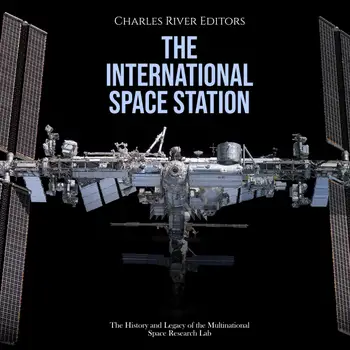
Thanks to the various components that have been put together, the International Space Station is bigger and brighter than all other artificial satellites. With relatively low power magnification, people can see the solar panels radiating outward from the numerous international modules which make up the ISS. The reality of that platform, at the edge of the ocean of space, is pretty astounding when looked at from the perspective of history. Only 120 years ago, mankind did not know if it was possible to fly in a heavier-than-air vehicle. Constructed with over 30 different modules and pieces that were carried into orbit by dozens of different launches, the ISS is already over 150 feet long, 300 feet wide and 60 feet tall. Astronauts from 10 nations have spent time on the space station as long-term crew.

In addition, the International Space Station can truly be held as a sign that the Space Age is maturing quite nicely, at least on a social and personal level. A total of 34 women have visited the space station, eight tourists have paid for the privilege of taking the trip to the station, and there have been many who have made multiple trips to the ISS.


Über dieses Buch

Much has been written about the Space Race, which is still taught across America today, but the story of human space exploration is mostly one of cooperation. Even in the summer of 1969, the Soviets had given the United States the flight plan for its Luna 15 mission, allowing Apollo 11 to avoid it.

That was the first of many examples of cooperation in space between the United States and the Soviet Union during the Cold War, and ultimately, their research and cooperation helped lead to the construction of the International Space Station (ISS), a large space station assembled in Earth’s orbit that represents the most ambitious international space project in history.

Thanks to the various components that have been put together, the International Space Station is bigger and brighter than all other artificial satellites. With relatively low power magnification, people can see the solar panels radiating outward from the numerous international modules which make up the ISS. The reality of that platform, at the edge of the ocean of space, is pretty astounding when looked at from the perspective of history. Only 120 years ago, mankind did not know if it was possible to fly in a heavier-than-air vehicle. Constructed with over 30 different modules and pieces that were carried into orbit by dozens of different launches, the ISS is already over 150 feet long, 300 feet wide and 60 feet tall. Astronauts from 10 nations have spent time on the space station as long-term crew.

In addition, the International Space Station can truly be held as a sign that the Space Age is maturing quite nicely, at least on a social and personal level. A total of 34 women have visited the space station, eight tourists have paid for the privilege of taking the trip to the station, and there have been many who have made multiple trips to the ISS.
Starte noch heute mit diesem Buch für 0 €

  • Hole dir während der Testphase vollen Zugriff auf alle Bücher in der App
  • Keine Verpflichtungen, jederzeit kündbar
Jetzt kostenlos testen
Mehr als 52 000 Menschen haben Nextory im App Store und auf Google Play 5 Sterne gegeben.

  1. 2.0

    Die Panzer: Die Geschichte und das Vermächtnis von Nazideutschlands berühmtesten Panzern des Zweiten Weltkriegs

    Charles River Editors

  2. The Iranian Revolution and Iran Hostage Crisis: The History of the Events that Broke American Relations with Iran

    Charles River Editors

  3. The Byzantines and Ottomans: The History of the Medieval Middle East’s Most Influential Empires

    Charles River Editors

  4. Imperial Germany’s Colonization in Africa: The History of the German Efforts and Conflicts to Colonize Parts of Africa

    Charles River Editors

  5. The Carlist Wars and the Spanish Civil War: The History of the Conflicts that Divided Spain in the Last 200 Years

    Charles River Editors

  6. The Biggest Tank Battles of the World Wars: Tank Warfare in History’s Deadliest Conflicts

    Charles River Editors

  7. The Texas Revolution and Mexican-American War: The History and Legacy of the Conflicts that Led to Mexico’s Cession of the American Southwest

    Charles River Editors

  8. Das mittelalterliche Russland: Die Geschichte und das Erbe der Gruppen, die den russischen Staat im Mittelalter entwickelten

    Charles River Editors

  9. 3.9

    Hans-Ulrich Rudel: The Life and Legacy of the Luftwaffe’s Deadliest Stuka Pilot

    Charles River Editors

  10. The Colonization of South Africa: The History and Legacy of the European Subjugation of South Africa

    Charles River Editors

  11. The Ancient Kingdoms of Africa: The History and Legacy of the African Continent’s Most Prominent Kingdoms in Antiquity

    Charles River Editors

  12. The Spanish Empire in the Americas: The History of Spain’s Colonization across Central America and South America

    Charles River Editors