Über dieses Buch

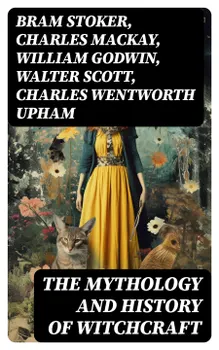
The Mythology and History of Witchcraft is a captivating anthology that traverses the complex tapestry of witchcraft through a literary lens, presenting a diverse assembly of writings that delve into myth, history, and cultural representation. This carefully curated collection showcases a range of literary styles, from vivid narrative accounts to contemplative essays, each chosen for its ability to illuminate the multifaceted nature of witchcraft. Through its broad selection, the anthology includes standout pieces that traverse the shadowy realms of historical witch trials, revealing the societal and individual fears that have long fueled the witchcraft narrative. The contributing authors, including luminaries such as Bram Stoker and M. V. B. Perley, are lauded for their insightful explorations into witchcraft's lore and legacy. With connections to historical periods and literary movements such as Romanticism and the Gothic, the anthology unites voices that collectively examine witchcraft's role in shaping cultural identity and its enduring intrigue in popular imagination. The combined perspectives of these scholarly and literary figures offer readers a profound understanding of witchcraft's enduring presence across continents and centuries. This anthology is an indispensable resource for readers seeking to explore the intricate worlds of witchcraft from various vantages. Offering an unparalleled opportunity to engage with a wealth of viewpoints and styles, the collection's educational value lies in its thematic depth and historical breadth. By weaving together insights from different eras and ideologies, The Mythology and History of Witchcraft invites readers to immerse themselves in the ongoing dialogue surrounding these enigmatic and often misunderstood practices, rendering it a must-read for both scholars and literary enthusiasts alike.
Starte noch heute mit diesem Buch für 0 €

  • Hole dir während der Testphase vollen Zugriff auf alle Bücher in der App
  • Keine Verpflichtungen, jederzeit kündbar
Jetzt kostenlos testen
Mehr als 52 000 Menschen haben Nextory im App Store und auf Google Play 5 Sterne gegeben.

Mehr von Bram Stoker

  1. 4.1

    Dracula

    Bram Stoker

  2. 4.2

    Dracula Hörbuch

    Bram Stoker

  3. 3.0

    200 Meisterwerke der Literaturgeschichte (Kommentiert) : Erweiterte Ausgabe. Die größten Klassiker der Weltliteratur

    Franz Kafka, Victor Hugo, Fjodor Michailowitsch Dostojewski, Lord Byron, Giacomo Leopardi, Marcel Proust, Henrik Ibsen, Percy Bysshe Shelley, Charles Dickens, Jane Austen, Mary Shelley, Emily Brontë, Charlotte Brontë, Anne Brontë, William Makepeace Thackeray, Bram Stoker, Henry Fielding, George Eliot, William Shakespeare, D. H. Lawrence, Walt Whitman, Herman Melville, Thomas Wolfe, Virginia Woolf, Joseph Conrad, Sinclair Lewis, Lewis Carrol, Edgar Allan Poe, Edward Bulwer-Lytton, Oscar Wilde, H.G. Wells, Daniel Defoe, James Fenimore Cooper, Lew Wallace, Jonathan Swift, Mark Twain, Walter Scott, Nathaniel Hawthorne, Harriet Beecher Stowe, Laurence Sterne, Frances Hodgson Burnett, Arthur Conan Doyle, Wilkie Collins, Edgar Wallace, Robert Louis Stevenson, Jack London, Henry David Thoreau, John Galsworthy, F. Scott Fitzgerald, Rudyard Kipling, G.K. Chesterton, Washington Irvin, O.Henry, Ambrose Bierce, Alexander Sergejewitsch Puschkin, Michail Lermontow, Iwan Sergejewitsch Turgenew, Leo Tolstoi, Nikolai Gogol, Iwan Gontscharow, Nikolai Leskow, Anton Pawlowitsch Tschechow, Maxim Gorki, François Rabelais, Jean De Fontaine, Blaise Pascal, Pierre Corneille, Moliere, Jean Baptiste Racine, Charles Perrault, Voltaire, Denis Diderot, Jean-Jacques Rousseau, Pierre Ambroise Laclos, Antoine-François Prévost, Marquis De Sade, François René Chateaubriand, Stendhal, Honoré de Balzac, Alexandre Dumas, Alphonse de Lamartine, George Sand, Gustave Flaubert, Emile Zola, Guy De Maupassant, Alphonse Daudet, Jules Verne, Joris-Karl Huysmans, Prosper Mérimée, Charles Baudelaire, Stéphane Mallarmé, Arthur Rimbaud, André Gide, Arthur Schopenhauer, Heinrich Heine, Friedrich Schiller, Johann Wolfgang Goethe, Jacob Grimm, Gottfried von Straßburg, Wolfram von Eschenbach, E. T. Hoffmann, Annette von Droste-Hülshoff, Heinrich von Kleist, Friedrich Hölderlin, Theodor Fontane, Gustav Freytag, Gottfried Keller, Theodor Storm, Stefan Zweig, Joseph von Eichendorff, Klaus Mann, Rainer Maria Rilke, Johanna Spyri, Joseph Roth, Karl May, Robert Musil, Heinrich Mann, Sigmund Freud, Friedrich Nietzsche, Dante Alighieri, Giovanni Boccaccio, Giacomo Casanova, Luigi Pirandello, Giosuè Carducci, Gabriele D’Annunzio, Niccolo Machiavelli, Miguel Cervantes Saavedra, Pedro Calderón Barca, Vicente Blasco Ibañez, Knut Hamsun, Homer, Äsop, Herodot, Thukydides, Xenophon, Platon, - Aristoteles, - Sophokles, Euripides, - Aristophanes, Lao Tse, - Konfuzius, Siddhartha Gautama Buddha, Titus Livius, Tacitus, Marcus Tullius Cicero, Vergil, Ovid, Lukian, Petronius, Apuleius, Longos von Lesbos, Mark Aurel, Aurelius Augustinus

  4. 100 Meisterwerke des Horrors - Klassiker, die man kennen muss : Gothic-Klassiker, viktorianischer Spuk und kosmische Albträume in einer großen Anthologie

    H.P. Lovecraft, Richard Marsh, E. T. Hoffmann, Bram Stoker, Edgar Allan Poe, Mary Shelley, Fjodor M Dostojewski, Hugh Walpole, Franz Kafka, Horace Walpole, Henry James, R. R. Ryan, James Malcolm Rymer, Prosper Mérimée, Wladyslaw Stanislaw Reymont, Algernon Blackwood, Ann Radcliffe, Marjorie Bowen, Robert W. Chambers, Gaston Leroux, Honoré de Balzac, Robert Louis Stevenson, Charlotte Perkins Gilman, H.G. Wells, Stanislaw Przybyszewski, Arthur Conan Doyle, Oscar Wilde, Octave Mirbeau, Emily Brontë, August Strindberg, Edith Wharton, H. Rider Haggard, Jodocus Temme

  5. 4.4

    Dracula

    Bram Stoker

  6. Neu

    Dracula : Der große Vampirroman über Liebe, Vertrauen und den gemeinsamen Widerstand gegen das Böse

    Bram Stoker

  7. 4.4

    Dracula

    Bram Stoker

  8. Dracula : Roman

    Bram Stoker

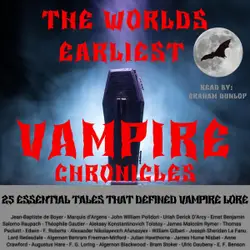
  9. The Worlds Earliest Vampire Chronicles : 25 Essential Tales That Defined Vampire Lore

    Jean-Baptiste de Boyer, Marquis d' Argens, John William Polidori, Uriah Derick D'Arcy, Ernst Benjamin Salomo Raupach, Théophile Gautier, Aleksey Konstantinovich Tolstoy, James Malcolm Rymer, Thomas Peckett, Edwin F. Roberts, Alexander Nikolayevich Afanasyev, William Gilbert, Joseph Sheridan Le Fanu, Lord Redesdale, Algernon Bertram Freeman-Mitford, Julian Hawthorne, James Hume Nisbet, Anne Crawford, Augustus Hare, F.G. Loring, Algernon Blackwood, Bram Stoker, Ulric Daubeny, E F Benson

  10. 4.4
    #7

    Dracula

    Bram Stoker

  11. 5.0

    100 Klassiker des Horrors : Gotischer Schrecken, Vampirgeschichten und kosmisches Grauen in unheimlichen Erzählungen

    Bram Stoker, H.P. Lovecraft, Mary Shelley, Edgar Allan Poe, Ann Radcliffe, Richard Marsh, Algernon Blackwood, Hugh Walpole, H.G. Wells, Emily Brontë, August Strindberg, Heinrich Seidel, Jodocus Temme, Stanislaw Przybyszewski, Felix Salten, H. Rider Haggard, Jane C. Loudon, Edith Wharton, Fjodor M Dostojewski, Wladyslaw Stanislaw Reymont, Marjorie Bowen, Robert W. Chambers, Gaston Leroux, Honoré de Balzac, Robert Louis Stevenson, Charlotte Perkins Gilman, Prosper Mérimée, Henry James

  12. 100 Meisterwerke der englischen Literatur - Klassiker, die man kennen muss (Kommentiert) : Erweiterte Ausgabe. Hamlet, 1984, Ulysses...

    George Orwell, Charles Dickens, Jane Austen, Katherine Mansfield, H.P. Lovecraft, William Wordsworth, John Keats, Percy Bysshe Shelley, Robert Burns, John Milton, William Shakespeare, Christopher Marlowe, Geoffrey Chaucer, Laurence Sterne, Henry Fielding, Mary Shelley, Emily Brontë, Charlotte Brontë, Anne Brontë, William Makepeace Thackeray, George Eliot, D. H. Lawrence, Herman Melville, Thomas Wolfe, Virginia Woolf, Joseph Conrad, Sinclair Lewis, Walt Whitman, Edgar Allan Poe, Oscar Wilde, Jerome K Jerome, Washington Irving, Bram Stoker, H.G. Wells, Daniel Defoe, Lew Wallace, James Fenimore Cooper, Jonathan Swift, Robert Louis Stevenson, Mark Twain, Lewis Carrol, Edward Bulwer-Lytton, F. Scott Fitzgerald, Arthur Conan Doyle, Jack London, Henry David Thoreau, G.K. Chesterton, Edith Wharton, Henry James, Thomas Hardy, Margaret Mitchell, Kate Chopin, Willa Cather, Charlotte Perkins Gilman, James Joyce, John Galsworthy, Francis Hodgson Burnett, Lucy Maud Montgomery, Louisa May Alcott, Rudyard Kipling