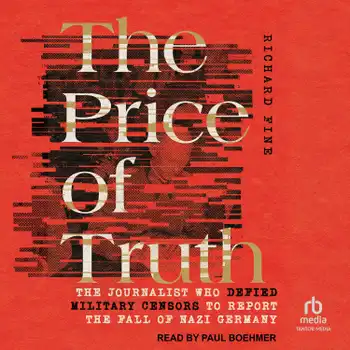
The Price of Truth : The Journalist Who Defied Military Censors to Report the Fall of Nazi Germany

On May 7, 1945, journalist Edward Kennedy bypassed military censorship to be the first to break the news of the Nazi surrender executed in Reims, France. While, at the behest of Soviet leaders, Allied authorities prohibited release of the story, Kennedy stuck to his journalistic principles and refused to manage information he believed the world had a right to know. No action by an American correspondent during the war proved more controversial.

The Paris press corps was furious at what it took to be Kennedy's unethical betrayal; military authorities threatened court-martial before expelling him from Europe. Kennedy defended himself, insisting the news was being withheld for suspect political reasons unrelated to military security. After prolonged national debate, Kennedy's career was in ruins.

This story of Kennedy's surrender dispatch and the meddling by Allied Command, which was already being called a fiasco in May 1945, revises what we know about media-military relations. Discarding "Good War" nostalgia, Fine challenges the accepted view that relations between the media and the military were amicable during World War II and only later ran off the rails during the Vietnam War. This book reveals one of the earliest chapters of tension between reporters committed to informing the public and generals tasked with managing a war.

Über dieses Buch

On May 7, 1945, journalist Edward Kennedy bypassed military censorship to be the first to break the news of the Nazi surrender executed in Reims, France. While, at the behest of Soviet leaders, Allied authorities prohibited release of the story, Kennedy stuck to his journalistic principles and refused to manage information he believed the world had a right to know. No action by an American correspondent during the war proved more controversial.

The Paris press corps was furious at what it took to be Kennedy's unethical betrayal; military authorities threatened court-martial before expelling him from Europe. Kennedy defended himself, insisting the news was being withheld for suspect political reasons unrelated to military security. After prolonged national debate, Kennedy's career was in ruins.

This story of Kennedy's surrender dispatch and the meddling by Allied Command, which was already being called a fiasco in May 1945, revises what we know about media-military relations. Discarding "Good War" nostalgia, Fine challenges the accepted view that relations between the media and the military were amicable during World War II and only later ran off the rails during the Vietnam War. This book reveals one of the earliest chapters of tension between reporters committed to informing the public and generals tasked with managing a war.

Starten Sie noch heute mit diesem Buch für 0 €

  • Hole dir während der Testphase vollen Zugriff auf alle Bücher in der App
  • Keine Verpflichtungen, jederzeit kündbar
Jetzt kostenlos testen
Mehr als 52 000 Menschen haben Nextory im App Store und auf Google Play 5 Sterne gegeben.