Über dieses Buch

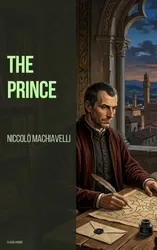
"The Prince" (Italian: "Il Principe") is a 16th-century political treatise by the Italian diplomat and political theorist Niccolò Machiavelli. From correspondence a version appears to have been distributed in 1513, using a Latin title, "De Principatibus" ("About Principalities"). However, the printed version was not published until 1532, five years after Machiavelli's death. This was done with the permission of the Medici pope Clement VII, but "long before then, in fact since the first appearance of the 'Prince' in manuscript, controversy had swirled about his writings".

Although it was written as if it were a traditional work in the "mirrors for princes" style, it is generally agreed that it was especially innovative. This is only partly because it was written in the vernacular Italian rather than Latin, a practice which had become increasingly popular since the publication of Dante's "Divine Comedy" and other works of Renaissance literature.

"The Prince" is sometimes claimed to be one of the first works of modern philosophy, especially modern political philosophy, in which the effective truth is taken to be more important than any abstract ideal. It was also in direct conflict with the dominant Catholic and scholastic doctrines of the time concerning how to consider politics and ethics.

Although it is relatively short, the treatise is the most remembered of Machiavelli's works and the one most responsible for bringing the word "Machiavellian" into usage as a pejorative. It also helped make "Old Nick" an English term for the devil, and even contributed to the modern negative connotations of the words "politics" and "politician" in western countries. In terms of subject matter it overlaps with the much longer "Discourses on Livy", which was written a few years later. In its use of near-contemporary Italians as examples of people who perpetrated criminal deeds for politics, another lesser-known work by Machiavelli which "The Prince" has been compared to is the "Life of Castruccio Castracani".

Starte noch heute mit diesem Buch für 0 €

  • Hole dir während der Testphase vollen Zugriff auf alle Bücher in der App
  • Keine Verpflichtungen, jederzeit kündbar
Jetzt kostenlos testen
Mehr als 52 000 Menschen haben Nextory im App Store und auf Google Play 5 Sterne gegeben.

  1. 50 Meisterwerke der Philosophie : Metaphysik, Das Gastmahl, Bhagavadgita, Tractatus logico-philosophicus, Kritik der reinen Vernunft, Also sprach Zarathustra, Selbstbetrachtungen von Marcus Aurelius

    Ludwig Wittgenstein, Edmund Husserl, Karl Marx, Søren Kierkegaard, Friedrich Nietzsche, Ralph Waldo Emerson, John Stuart Mill, Georg Wilhelm Hegel, Friedrich Schelling, Johann Gottlieb Fichte, Immanuel Kant, John Locke, Montesquieu, Jean-Jacques Rousseau, David Hume, Gottfried Wilhelm Leibniz, Baruch Spinoza, - Konfuzius, Lao Tse, Platon, Xenophon, - Aristoteles, Marcus Tullius Cicero, Seneca, Epiktet, Marc Aurel, Plotin, Thomas von Aquin, Nicolaus von Cues, - Erasmus von Rotterdam, Niccolò Machiavelli, Tommaso Campanella, Martin Luther, Giordano Bruno, Samuel von Pufendorf, Abbé Castel Saint-Pierre, Michel de Montaigne, René Descartes, Francis Bacon, Blaise Pascal

  2. Neu

    The Essential Ancient Wisdom Library : 10 Classics of Philosophy, Strategy and Self-Mastery

    Marcus Aurelius, Seneca, Epictetus, Laozi, Plato, Sun Tzu, Musashi Miyamoto, Niccolò Machiavelli, Friedrich Wilhelm Nietzsche, James Allen

  3. 50 Meisterwerke des Mittelalters - Klassiker, die man kennen muss : Beowulf, Rolandslied, 1001 Nacht, Das Gedicht von der Rose, Nibelungenlied, Tristan, Die Edda, Die Göttliche Komödie, Decamerone...

    Marco Polo, Omar Chayyām, Gregor von Tours, Einhard, Anicius Manlius Boethius, Benedikt von Nursia, Gregor der Große, Prokop von Cäsarea, Hildegard von Bingen, Wolfram von Eschenbach, Walther von Vogelweide, Heinrich von Morungen, Gottfried von Straßburg, Heinrich Wittenwiler, Franz von Assisi, Thomas von Aquin, Guillaume de Lorris, Konrad von Würzburg, Dante Alighieri, Giovanni Boccaccio, Geoffrey Chaucer, Johannes von Tepl, Nicolaus von Cues, Sebastian Brant, Hermann Bote, Niccolò Machiavelli, Ludovico Ariosto, Giorgio Vasari, Eusebius, Hieronymus, Agathias, Michael Psellos, Anna Komnena, Abaelard, Augustinus von Hippo

  4. 100 Große Geschichtsbücher - Klassiker, die man kennen muss : Der Peloponnesische Krieg, Der Alexanderzug, Ab Urbe Condita, Napoleonische Kriege, Geschichte des Ersten und Zweiten Weltkriegs

    Tacitus, Thukydides, Plutarch, Theodor Mommsen, Edward Gibbon, Leopold von Ranke, Ricarda Huch, Helmuth von Moltke, Xenophon, Arrian, Titus Livius, Gaius Iulius Caesar, Sueton, Polybios, Ammianus Marcellinus, Diogenes Laërtios, Eusebius, Prokop von Cäsarea, Anna Komnena, Agathias, Marc Bloch, George Rawlinson, Edward Bulwer-Lytton, Jacob Burckhardt, Joseph François Michaud, Johan Huizinga, Niccolò Machiavelli, G.K. Chesterton, Voltaire, Friedrich Schiller, Thomas Carlyle, Charles Downer Hazen, Egon Friedell, Walter Benjamin

  5. Die Kunst der Staatsführung : Politische Philosophie, Realpolitik und strategische Führung von der Antike bis zur Moderne

    Niccolò Machiavelli, Platon, Marcus Aurelius, Marcus Tullius Cicero, Carl von Clausewitz, Friedrich der Große, Benjamin Franklin, Otto von Bismarck, Friedrich Christoph Dahlmann, Karel Čapek, Hans Delbrück

  6. Essenzielle Klassiker der politischen Philosophie : Grundtexte zu Staatsphilosophie, Freiheit, Gewaltenteilung, Revolution und Anarchismus

    Niccolò Machiavelli, Montesquieu, Friedrich der Große, Platon, - Aristoteles, Marcus Tullius Cicero, Tommaso Campanella, Thomas Morus, Samuel von Pufendorf, Abbé Castel Saint-Pierre, Jean-Jacques Rousseau, Immanuel Kant, Johann Gottlieb Fichte, Karl Marx, Friedrich Engels, Wilhelm von Humboldt, Friedrich Christoph Dahlmann, Franz Mehring, Johann Most, John Henry Mackay, Rosa Luxemburg, Erich Mühsam

  7. 33 Human Science Masterpieces You Must Read Before You Die. Illustrated : The Art of Public Speaking, The Meditations, The Kama Sutra and other masterpieces

    Edwin A. Abbott, Aristotle, Dale Carnegie, Gilbert Chesterton, René Descartes, Epictetus, Marcus Aurelius Antoninus, Sigmund Freud, Hermann Hesse, David Hume, Lao Tzu, Confucius, Swami Abhedananda, Anonimous, David Herbert Lawrence, Niccolò Machiavelli, Benedictus de Spinoza, John Mill, Prentice Mulford, Thomas More, Friedrich Nietzsche, J. Allanson Picton, Plato, Sun Tzu, Vatsyayana, Voltaire, H.G. Wells, Frances Bacon

  8. 4.7

    Niccolò Machiavelli: Der Fürst : Ungekürzte Lesung

    Niccolò Machiavelli

  9. Neu
    3.1

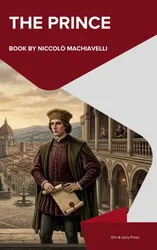
    The Prince

    Niccolò Machiavelli

  10. Neu
    3.1

    The Prince

    Niccolò Machiavelli

  11. The Essential Ancient Wisdom Library : 10 Classics of Philosophy, Strategy and Self-Mastery

    Marcus Aurelius, Seneca, Epictetus, Laozi, Plato, Sun Tzu, Musashi Miyamoto, Niccolò Machiavelli, Friedrich Wilhelm Nietzsche, James Allen

  12. Der Fürst : Das Buch vom Fürsten

    Niccolò Machiavelli