Über dieses Buch

The Pupil is a short story by Henry James, first published in Longman's Magazine in 1891.It is the emotional story of a precocious young boy growing up in a mendacious and dishonourable family. He befriends his tutor, who is the only adult in his life that he can trust. James presents their relationship with sympathy and insight, and the story reaches what some would consider the status of classical tragedy.Pemberton, a young American with an Oxford education and out of money, takes a job tutoring Morgan Moreen, the 12-year old son of an American couple living in Europe in a style not quite matched by their income. Mr. and Mrs. Moreen's main purpose in life, it appears, is to win acceptance in the higher circles of French and Italian society, partly in the hope that Morgan's two elder sisters will be taken off their hands.Morgan, who is highly intelligent, is also precocious and perceptive enough to come to understand his parents' ambitious aimlessness. Something of a crisis develops when the Moreens fail to make good on the salary they've promised Pemberton, and he leaves, needing a steady income. By then, however, the tutor has become sufficiently interested in and attached to his charge to be unwilling to leave Morgan for long, and comes back to join the family when Morgan's mother tells him the boy has fallen ill. There, however, he finds the family shipwreck that he has feared is now taking place, and he is in time to witness it.Henry James, OM (Order of Merit) (1843-1916) was an American-born writer, regarded as one of the key figures of 19th-century literary realism.He is best known for a number of novels showing Americans encountering Europe and Europeans. His method of writing from a character's point of view allowed him to explore issues related to consciousness and perception, and his style in later works has been compared to impressionist painting. His imaginative use of point of view, interior monologue and unreliable narrators brought a new depth to narrative fiction.Henry James was nominated for the Nobel Prize in Literature in 1911, 1912, and 1916.

Starte noch heute mit diesem Buch für 0 €

  • Hole dir während der Testphase vollen Zugriff auf alle Bücher in der App
  • Keine Verpflichtungen, jederzeit kündbar
Jetzt kostenlos testen
Mehr als 52 000 Menschen haben Nextory im App Store und auf Google Play 5 Sterne gegeben.

Ähnliche Bücher

Mehr von Henry James

  1. Die größten Heldinnen der Literatur (50 Romane in einem Band) : 50 Romane über weibliche Selbstbehauptung, Bildung und gesellschaftliche Grenzen

    Charlotte Brontë, Jane Austen, Louisa May Alcott, Leo Tolstoi, Virginia Woolf, Thomas Hardy, Sinclair Lewis, Hedwig Dohm, Charlotte Perkins Gilman, Elizabeth Burgoyne Corbett, Daniel Defoe, Anne Brontë, L.M. Montgomery, Victor Hugo, Wilhelmine von Hillern, Adalbert Stifter, Luise Ahlborn, George Eliot, Lou Andreas-Salomé, Stefan Zweig, D. H. Lawrence, Henry James, Margaret Mitchell, Edith Wharton, Miles Franklin, Willa Cather, Elizabeth Gaskell, Nikolai Semjonowitsch Leskow, Theodore Dreiser, Elizabeth von Arnim, Colette, Honoré de Balzac, William Makepeace Thackeray, Gustave Flaubert, Emile Zola, Theodor Fontane, Ada Langworthy Collier, Joseph Sheridan Fanu, Johanna Schopenhauer, Nathaniel Hawthorne, Charles Dickens

  2. 50 Klassiker des Feminismus - Bücher, die man kennen muss : Schlüsseltexte zu Frauenbildung, Ehekritik und Selbstbestimmung

    Kate Chopin, Charlotte Perkins Gilman, Virginia Woolf, Charlotte Brontë, George Sand, Louisa May Alcott, Jane Austen, L.M. Montgomery, Victor Hugo, Daniel Defoe, Nathaniel Hawthorne, Wilhelmine von Hillern, Adalbert Stifter, Luise Ahlborn, George Eliot, Lou Andreas-Salomé, D. H. Lawrence, Henry James, Margaret Mitchell, Edith Wharton, Miles Franklin, Willa Cather, Leo Tolstoi, Henrik Ibsen, Elizabeth Gaskell, Nikolai Semjonowitsch Leskow, Theodore Dreiser, Elizabeth von Arnim, Colette, Emmeline Pankhurst, Louise Aston, Bertha von Suttner, Hedwig Dohm, Mary Wollstonecraft, Elizabeth Cady Stanton, Matilda Joslyn Gage, John Stuart Mill, Thomas Hardy, Sinclair Lewis, Elizabeth Burgoyne Corbett, Anne Brontë

  3. 100 Meisterwerke der englischen Literatur - Klassiker, die man kennen muss (Kommentiert) : Erweiterte Ausgabe. Hamlet, 1984, Ulysses...

    George Orwell, Charles Dickens, Jane Austen, Katherine Mansfield, H.P. Lovecraft, William Wordsworth, John Keats, Percy Bysshe Shelley, Robert Burns, John Milton, William Shakespeare, Christopher Marlowe, Geoffrey Chaucer, Laurence Sterne, Henry Fielding, Mary Shelley, Emily Brontë, Charlotte Brontë, Anne Brontë, William Makepeace Thackeray, George Eliot, D. H. Lawrence, Herman Melville, Thomas Wolfe, Virginia Woolf, Joseph Conrad, Sinclair Lewis, Walt Whitman, Edgar Allan Poe, Oscar Wilde, Jerome K Jerome, Washington Irving, Bram Stoker, H.G. Wells, Daniel Defoe, Lew Wallace, James Fenimore Cooper, Jonathan Swift, Robert Louis Stevenson, Mark Twain, Lewis Carrol, Edward Bulwer-Lytton, F. Scott Fitzgerald, Arthur Conan Doyle, Jack London, Henry David Thoreau, G.K. Chesterton, Edith Wharton, Henry James, Thomas Hardy, Margaret Mitchell, Kate Chopin, Willa Cather, Charlotte Perkins Gilman, James Joyce, John Galsworthy, Francis Hodgson Burnett, Lucy Maud Montgomery, Louisa May Alcott, Rudyard Kipling

  4. 2.0

    Schaurige Halloween-Klassiker

    Nikolai Wassiljewitsch Gogol, Henry James, Edgar Allan Poe, Oscar Wilde

  5. 100 Meisterwerke des Horrors - Klassiker, die man kennen muss : Gothic-Klassiker, viktorianischer Spuk und kosmische Albträume in einer großen Anthologie

    H.P. Lovecraft, Richard Marsh, E. T. Hoffmann, Bram Stoker, Edgar Allan Poe, Mary Shelley, Fjodor M Dostojewski, Hugh Walpole, Franz Kafka, Horace Walpole, Henry James, R. R. Ryan, James Malcolm Rymer, Prosper Mérimée, Wladyslaw Stanislaw Reymont, Algernon Blackwood, Ann Radcliffe, Marjorie Bowen, Robert W. Chambers, Gaston Leroux, Honoré de Balzac, Robert Louis Stevenson, Charlotte Perkins Gilman, H.G. Wells, Stanislaw Przybyszewski, Arthur Conan Doyle, Oscar Wilde, Octave Mirbeau, Emily Brontë, August Strindberg, Edith Wharton, H. Rider Haggard, Jodocus Temme

  6. 5.0

    100 Klassiker des Horrors : Gotischer Schrecken, Vampirgeschichten und kosmisches Grauen in unheimlichen Erzählungen

    Bram Stoker, H.P. Lovecraft, Mary Shelley, Edgar Allan Poe, Ann Radcliffe, Richard Marsh, Algernon Blackwood, Hugh Walpole, H.G. Wells, Emily Brontë, August Strindberg, Heinrich Seidel, Jodocus Temme, Stanislaw Przybyszewski, Felix Salten, H. Rider Haggard, Jane C. Loudon, Edith Wharton, Fjodor M Dostojewski, Wladyslaw Stanislaw Reymont, Marjorie Bowen, Robert W. Chambers, Gaston Leroux, Honoré de Balzac, Robert Louis Stevenson, Charlotte Perkins Gilman, Prosper Mérimée, Henry James

  7. 5.0

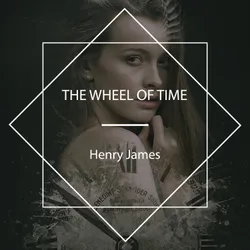
    The Wheel of Time

    Henry James

  8. 3.8

    Daisy Miller

    Henry James

  9. 2.8

    Spuk in Bly Manor - Schraubendrehungen

    Henry James

  10. Die Drehung der Schraube

    Henry James

  11. The Essential Feminist Collection – 60 Powerful Classics in One Volume : Sixty Classics of Women's Rights, Intellectual Freedom, and Social Change

    Jane Austen, Charlotte Brontë, Fanny Burney, Mary Wollstonecraft, Nathaniel Hawthorne, Rebecca Harding Davis, Louisa May Alcott, Henry James, Leo Tolstoy, Thomas Hardy, Elizabeth Gaskell, Charlotte Perkins Gilman, Henrik Ibsen, Kate Chopin, Grant Allen, Elizabeth Burgoyne Corbett, H.G. Wells, Gene Stratton-Porter, Willa Cather, Edith Wharton, Theodore Dreiser, Ada Cambridge, Mary Johnston, Marietta Holley, Elia Wilkinson Peattie, Virginia Woolf, Zona Gale, Elizabeth von Arnim, D. H. Lawrence, Margaret Oliphant, Lucy Maud Montgomery, Margaret Mitchell, Harriet Martineau, Nikolai Leskov, Margaret Deland, Sojourner Truth, Mary Ware Dennett, John Stuart Mill, Sarah H. Bradford, Julia Ward Howe, Elizabeth Cady Stanton, Margaret Fuller

  12. The Power of Darkness : The Legend of Sleepy Hollow, Sweeney Todd, Frankenstein, Dracula, The Haunted House, Dead Souls…

    Théophile Gautier, Richard Marsh, H.P. Lovecraft, H.G. Wells, Edgar Allan Poe, Henry James, Hugh Walpole, M. R. James, Wilkie Collins, E F Benson, Nathaniel Hawthorne, Ambrose Bierce, Arthur Machen, William Hope Hodgson, Arthur Conan Doyle, Grant Allen, Mary Shelley, Bram Stoker, Joseph Sheridan Fanu, Thomas Hardy, Charles Dickens, Rudyard Kipling, Guy De Maupassant, Elizabeth Gaskell, Mark Twain, Daniel Defoe, Jerome K Jerome, Fitz-James O’Brien, Catherine Crowe, Émile Erckmann, Alexandre Chatrian, Pedro De Alarçon, Amelia B. Edwards, Washington Irving, John Meade Falkner, Harriet Beecher Stowe, Mary E. Freeman, Louisa M. Alcott, Edith Nesbit, Mary Louisa Molesworth, Francis Marion Crawford, John Kendrick Bangs, John Buchan, Sabine Baring-Gould, Cleveland Moffett, Louis Tracy, Nikolai Gogol, James Malcolm Rymer, Thomas Peckett Prest, Frederick Marryat, Oscar Wilde, Robert Louis Stevenson, Charlotte Perkins Gilman, W. W. Jacobs, H. H. (Saki), Wilhelm Hauff, Mary Elizabeth Braddon, Robert W. Chambers, Edward Bulwer-Lytton, Thomas De Quincey, William Makepeace Thackeray, E. T. Hoffmann, Robert E. Howard, David Lindsay, Marie Belloc Lowndes, Edward Bellamy, Jack London, Pliny the Younger, Helena Blavatsky, Fergus Hume, Florence Marryat, Villiers de Adam, William Archer, William F. Harvey, Katherine Rickford, Ralph Adams Cram, Leopold Kompert, Brander Matthews, Vincent O'Sullivan, Ellis Parker Butler, A. T. Quiller-Couch, Fiona Macleod, Lafcadio Hearn, William T. Stead, Gambier Bolton, Andrew Jackson Davis, Nizida, Walter F. Prince, Chester Bailey Fernando, Leonard Kip, Frank R. Stockton, Bithia Mary Croker, Catherine L. Pirkis, Leonid Andreyev, Anatole France, Richard Le Gallienne, Lucy Maud Montgomery, Stanley G. Weinbaum, Horace Walpole, William Thomas Beckford, Matthew Gregory Lewis, Ann Radcliffe, Jane Austen, John William Polidori, Charlotte Brontë, Emily Brontë, Walter Hubbell, George W. Reynolds, M.P. Shiel, Adelbert von Chamisso