4.3(3)

The Sentinelese: The History of the Uncontacted People on North Sentinel Island

There is no record of Marco Polo ever visiting the Andaman Islands, so his brief description of the islanders must have been drawn from a secondary source. They were, he wrote, “a most brutish and savage race, having heads, eyes, and teeth like those of dogs. They are very cruel, and kill and eat every foreigner whom they can lay their hands upon.”

Most subsequent travelers and travelogues have tended to agree, although in an age of inclusion and diversity, the modern understanding and appreciation of the indigenous Andamanese is somewhat more sympathetic. Nonetheless, that one common theme has persisted, in particular in the many colonial-era chronicles, which were all written at a time when Darwin and his contemporaries were rationalizing evolution, and evolutionary divergence. How could it be, they ask, that a small pocket of the human race could be content to linger so far behind in the journey of human development?

The Andaman and Nicobar Islands comprise a tiny archipelago of some 200 islands in the Indian Ocean. They are located in a seemingly insignificant spot in the Bay of Bengal, comprising a combined area of only 3,500 square miles, but the islands are a tropical idyll, populated by dark Indians drawn mainly from the east coast, with a curious aboriginal people who appear more African than Asian. The islands have been within sight of international shipping routes since the very birth of ocean travel, and yet, until the arrival of the great European trading enterprises, the archipelago remained virtually unvisited, and absolutely unsettled by any other than its indigenous inhabitants.

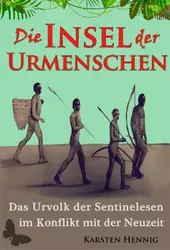
The Sentinelese: The History of the Uncontacted People on North Sentinel Island profiles the indigenous people, famous attempts to contact them, and what’s known and unknown about them. Along with pictures of important people, places, and events, you will learn about the Sentinelese like never before.

Über dieses Buch

There is no record of Marco Polo ever visiting the Andaman Islands, so his brief description of the islanders must have been drawn from a secondary source. They were, he wrote, “a most brutish and savage race, having heads, eyes, and teeth like those of dogs. They are very cruel, and kill and eat every foreigner whom they can lay their hands upon.”

Most subsequent travelers and travelogues have tended to agree, although in an age of inclusion and diversity, the modern understanding and appreciation of the indigenous Andamanese is somewhat more sympathetic. Nonetheless, that one common theme has persisted, in particular in the many colonial-era chronicles, which were all written at a time when Darwin and his contemporaries were rationalizing evolution, and evolutionary divergence. How could it be, they ask, that a small pocket of the human race could be content to linger so far behind in the journey of human development?

The Andaman and Nicobar Islands comprise a tiny archipelago of some 200 islands in the Indian Ocean. They are located in a seemingly insignificant spot in the Bay of Bengal, comprising a combined area of only 3,500 square miles, but the islands are a tropical idyll, populated by dark Indians drawn mainly from the east coast, with a curious aboriginal people who appear more African than Asian. The islands have been within sight of international shipping routes since the very birth of ocean travel, and yet, until the arrival of the great European trading enterprises, the archipelago remained virtually unvisited, and absolutely unsettled by any other than its indigenous inhabitants.

The Sentinelese: The History of the Uncontacted People on North Sentinel Island profiles the indigenous people, famous attempts to contact them, and what’s known and unknown about them. Along with pictures of important people, places, and events, you will learn about the Sentinelese like never before.
Starte noch heute mit diesem Buch für 0 €

  • Hole dir während der Testphase vollen Zugriff auf alle Bücher in der App
  • Keine Verpflichtungen, jederzeit kündbar
Jetzt kostenlos testen
Mehr als 52 000 Menschen haben Nextory im App Store und auf Google Play 5 Sterne gegeben.

  1. 2.0

    Die Panzer: Die Geschichte und das Vermächtnis von Nazideutschlands berühmtesten Panzern des Zweiten Weltkriegs

    Charles River Editors

  2. 3.8

    Hans-Ulrich Rudel: The Life and Legacy of the Luftwaffe’s Deadliest Stuka Pilot

    Charles River Editors

  3. The Colonization of South Africa: The History and Legacy of the European Subjugation of South Africa

    Charles River Editors

  4. 4.5

    The Great Schism: The History and Legacy of the Split Between the Catholic and Eastern Orthodox Churches in 1054

    Charles River Editors

  5. The Biggest Tank Battles of the World Wars: Tank Warfare in History’s Deadliest Conflicts

    Charles River Editors

  6. Ada Lovelace: The Life and Legacy of the Math Prodigy Who Pioneered Computer Science

    Charles River Editors

  7. Imperial Germany’s Colonization in Africa: The History of the German Efforts and Conflicts to Colonize Parts of Africa

    Charles River Editors

  8. Eleanor of Aquitaine and Richard the Lionheart: The History of the Mother and Son Who Shaped Medieval Europe

    Charles River Editors

  9. The Texas Revolution and Mexican-American War: The History and Legacy of the Conflicts that Led to Mexico’s Cession of the American Southwest

    Charles River Editors

  10. Das mittelalterliche Russland: Die Geschichte und das Erbe der Gruppen, die den russischen Staat im Mittelalter entwickelten

    Charles River Editors

  11. The Colonies of British South Africa: The History and Legacy of British Imperialism in Modern South Africa and Zimbabwe

    Charles River Editors

  12. The Iranian Revolution and Iran Hostage Crisis: The History of the Events that Broke American Relations with Iran

    Charles River Editors