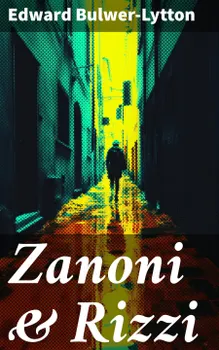
Über dieses Buch

In "Zanoni & Rizzi," Edward Bulwer-Lytton masterfully weaves a tale of romance, mysticism, and philosophical inquiry set against the backdrop of 18th-century Europe. Employing a Gothic narrative style rich with lyrical prose, the novel explores profound existential themes through its enigmatic characters. The intertwining destinies of Zanoni, a Rosicrucian adept, and his mortal love, Viola, raise questions about the intersection of love, immortality, and the pursuit of knowledge. The book embodies elements of the Romantic and Gothic literature movements, illustrating Bulwer-Lytton's engagement with supernatural and transcendental motifs prevalent during the Victorian era, thus positioning it within a rich literary context that questions the limits of human experience. Edward Bulwer-Lytton, a prominent Victorian novelist and politician, was deeply influenced by metaphysical and philosophical currents of his time. His varied interests'—from the occult to sociopolitical commentary'—shaped his literary contributions. "Zanoni & Rizzi" reflects his fascination with the metaphysical, showcasing his ability to critique contemporary society while exploring the mystical dimensions of human existence. Bulwer-Lytton's engagement with the Rosicrucian legend adds depth to the narrative, revealing his nuanced understanding of historical esotericism. Readers who seek an exquisite blend of romance, philosophy, and the supernatural will find "Zanoni & Rizzi" an enriching text. Bulwer-Lytton's eloquent prose invites contemplation on the nature of love and immortality, making it a compelling read for those interested in the depths of human experience. This novel not only entertains but also provokes thought, rendering it essential reading for fans of Gothic and Romantic literature.

In this enriched edition, we have carefully created added value for your reading experience:

- A succinct Introduction situates the work's timeless appeal and themes.

- The Synopsis outlines the central plot, highlighting key developments without spoiling critical twists.

- A detailed Historical Context immerses you in the era's events and influences that shaped the writing.

- A thorough Analysis dissects symbols, motifs, and character arcs to unearth underlying meanings.

- Reflection questions prompt you to engage personally with the work's messages, connecting them to modern life.

- Hand‐picked Memorable Quotes shine a spotlight on moments of literary brilliance.

- Interactive footnotes clarify unusual references, historical allusions, and archaic phrases for an effortless, more informed read.
Starte noch heute mit diesem Buch für 0 €

  • Hole dir während der Testphase vollen Zugriff auf alle Bücher in der App
  • Keine Verpflichtungen, jederzeit kündbar
Jetzt kostenlos testen
Mehr als 52 000 Menschen haben Nextory im App Store und auf Google Play 5 Sterne gegeben.

  1. 100 Meisterwerke der englischen Literatur - Klassiker, die man kennen muss (Kommentiert) : Erweiterte Ausgabe. Hamlet, 1984, Ulysses...

    George Orwell, Charles Dickens, Jane Austen, Katherine Mansfield, H.P. Lovecraft, William Wordsworth, John Keats, Percy Bysshe Shelley, Robert Burns, John Milton, William Shakespeare, Christopher Marlowe, Geoffrey Chaucer, Laurence Sterne, Henry Fielding, Mary Shelley, Emily Brontë, Charlotte Brontë, Anne Brontë, William Makepeace Thackeray, George Eliot, D. H. Lawrence, Herman Melville, Thomas Wolfe, Virginia Woolf, Joseph Conrad, Sinclair Lewis, Walt Whitman, Edgar Allan Poe, Oscar Wilde, Jerome K Jerome, Washington Irving, Bram Stoker, H.G. Wells, Daniel Defoe, Lew Wallace, James Fenimore Cooper, Jonathan Swift, Robert Louis Stevenson, Mark Twain, Lewis Carrol, Edward Bulwer-Lytton, F. Scott Fitzgerald, Arthur Conan Doyle, Jack London, Henry David Thoreau, G.K. Chesterton, Edith Wharton, Henry James, Thomas Hardy, Margaret Mitchell, Kate Chopin, Willa Cather, Charlotte Perkins Gilman, James Joyce, John Galsworthy, Francis Hodgson Burnett, Lucy Maud Montgomery, Louisa May Alcott, Rudyard Kipling

  2. 3.0

    200 Meisterwerke der Literaturgeschichte (Kommentiert) : Erweiterte Ausgabe. Die größten Klassiker der Weltliteratur

    Franz Kafka, Victor Hugo, Fjodor Michailowitsch Dostojewski, Lord Byron, Giacomo Leopardi, Marcel Proust, Henrik Ibsen, Percy Bysshe Shelley, Charles Dickens, Jane Austen, Mary Shelley, Emily Brontë, Charlotte Brontë, Anne Brontë, William Makepeace Thackeray, Bram Stoker, Henry Fielding, George Eliot, William Shakespeare, D. H. Lawrence, Walt Whitman, Herman Melville, Thomas Wolfe, Virginia Woolf, Joseph Conrad, Sinclair Lewis, Lewis Carrol, Edgar Allan Poe, Edward Bulwer-Lytton, Oscar Wilde, H.G. Wells, Daniel Defoe, James Fenimore Cooper, Lew Wallace, Jonathan Swift, Mark Twain, Walter Scott, Nathaniel Hawthorne, Harriet Beecher Stowe, Laurence Sterne, Frances Hodgson Burnett, Arthur Conan Doyle, Wilkie Collins, Edgar Wallace, Robert Louis Stevenson, Jack London, Henry David Thoreau, John Galsworthy, F. Scott Fitzgerald, Rudyard Kipling, G.K. Chesterton, Washington Irvin, O.Henry, Ambrose Bierce, Alexander Sergejewitsch Puschkin, Michail Lermontow, Iwan Sergejewitsch Turgenew, Leo Tolstoi, Nikolai Gogol, Iwan Gontscharow, Nikolai Leskow, Anton Pawlowitsch Tschechow, Maxim Gorki, François Rabelais, Jean De Fontaine, Blaise Pascal, Pierre Corneille, Moliere, Jean Baptiste Racine, Charles Perrault, Voltaire, Denis Diderot, Jean-Jacques Rousseau, Pierre Ambroise Laclos, Antoine-François Prévost, Marquis De Sade, François René Chateaubriand, Stendhal, Honoré de Balzac, Alexandre Dumas, Alphonse de Lamartine, George Sand, Gustave Flaubert, Emile Zola, Guy De Maupassant, Alphonse Daudet, Jules Verne, Joris-Karl Huysmans, Prosper Mérimée, Charles Baudelaire, Stéphane Mallarmé, Arthur Rimbaud, André Gide, Arthur Schopenhauer, Heinrich Heine, Friedrich Schiller, Johann Wolfgang Goethe, Jacob Grimm, Gottfried von Straßburg, Wolfram von Eschenbach, E. T. Hoffmann, Annette von Droste-Hülshoff, Heinrich von Kleist, Friedrich Hölderlin, Theodor Fontane, Gustav Freytag, Gottfried Keller, Theodor Storm, Stefan Zweig, Joseph von Eichendorff, Klaus Mann, Rainer Maria Rilke, Johanna Spyri, Joseph Roth, Karl May, Robert Musil, Heinrich Mann, Sigmund Freud, Friedrich Nietzsche, Dante Alighieri, Giovanni Boccaccio, Giacomo Casanova, Luigi Pirandello, Giosuè Carducci, Gabriele D’Annunzio, Niccolo Machiavelli, Miguel Cervantes Saavedra, Pedro Calderón Barca, Vicente Blasco Ibañez, Knut Hamsun, Homer, Äsop, Herodot, Thukydides, Xenophon, Platon, - Aristoteles, - Sophokles, Euripides, - Aristophanes, Lao Tse, - Konfuzius, Siddhartha Gautama Buddha, Titus Livius, Tacitus, Marcus Tullius Cicero, Vergil, Ovid, Lukian, Petronius, Apuleius, Longos von Lesbos, Mark Aurel, Aurelius Augustinus

  3. 100 Klassiker der Geschichtsschreibung : Die Geschichte des Alten Ägypten, Der Alexanderzug, Römische Geschichte, Herbst des Mittelalters, Die russische Revolution, Der Kampf um Europa

    Edward Gibbon, Leopold von Ranke, J. B. Bury, Theodor Mommsen, Herodot, Thukydides, Xenophon, Arrian, Titus Livius, Tacitus, Gaius Iulius Caesar, Sueton, Polybios, Ammianus Marcellinus, Plutarch, Diogenes Laërtios, Eusebius, Prokop von Cäsarea, Anna Komnena, Agathias, Marc Bloch, L. W. King, George Rawlinson, Edward Bulwer-Lytton, Jacob Burckhardt, Joseph François Michaud, Johan Huizinga, Arthur Middleton Reeves, Niccolò Machiavelli, G.K. Chesterton, Voltaire, Friedrich Schiller, Ricarda Huch, Thomas Carlyle, Charles Downer Hazen, Egon Friedell, Walter Benjamin

  4. 2.0

    Die letzten Tage von Pompeji

    Edward Bulwer-Lytton

  5. The Greatest Sci-Fi Books of All Time

    Jules Verne, Mark Twain, Robert Louis Stevenson, Edgar Allan Poe, William Hope Hodgson, George MacDonald, Percy Greg, Jack London, Arthur Conan Doyle, Ernest Bramah, Jonathan Swift, Cleveland Moffett, William Morris, Anthony Trollope, Richard Jefferies, Samuel Butler, David Lindsay, Edward Everett Hale, Edward Bellamy, Charlotte Perkins Gilman, Edgar Wallace, Francis Bacon, Robert Cromie, Abraham Merritt, Ignatius Donnelly, Owen Gregory, H.G. Wells, Stanley G. Weinbaum, Fred M. White, H.P. Lovecraft, Garrett P. Serviss, Henry Rider Haggard, Mary Shelley, Malcolm Jameson, Edward Bulwer-Lytton, Lewis Grassic Gibbon, Otis Adelbert Kline, C.J. Hyne, Edwin A. Abbott, Arthur Dudley Vinton, Gertrude Barrows Bennett, Hugh Benson, Margaret Cavendish, James Fenimore Coope

  6. 4.1
    #6

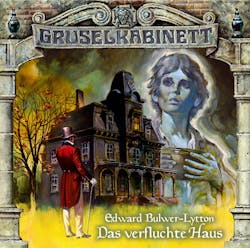
    Gruselkabinett, Folge 6: Das verfluchte Haus

    Edward Bulwer-Lytton

  7. 100 Große Geschichtsbücher - Klassiker, die man kennen muss : Der Peloponnesische Krieg, Der Alexanderzug, Ab Urbe Condita, Napoleonische Kriege, Geschichte des Ersten und Zweiten Weltkriegs

    Tacitus, Thukydides, Plutarch, Theodor Mommsen, Edward Gibbon, Leopold von Ranke, Ricarda Huch, Helmuth von Moltke, Xenophon, Arrian, Titus Livius, Gaius Iulius Caesar, Sueton, Polybios, Ammianus Marcellinus, Diogenes Laërtios, Eusebius, Prokop von Cäsarea, Anna Komnena, Agathias, Marc Bloch, George Rawlinson, Edward Bulwer-Lytton, Jacob Burckhardt, Joseph François Michaud, Johan Huizinga, Niccolò Machiavelli, G.K. Chesterton, Voltaire, Friedrich Schiller, Thomas Carlyle, Charles Downer Hazen, Egon Friedell, Walter Benjamin

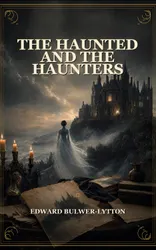
  8. The Haunted and the Haunters

    Edward Bulwer-Lytton

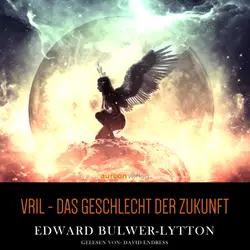
  9. VRIL - Das Geschlecht der Zukunft

    Edward Bulwer-Lytton

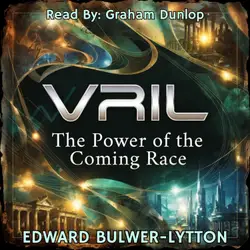
  10. VRIL : The Power of the Coming Race

    Edward Bulwer-Lytton

  11. Die letzten Tage von Pompeji: Historischer Roman

    Edward Bulwer-Lytton

  12. Der Aufstieg und Fall des antiken Athen

    Edward Bulwer-Lytton