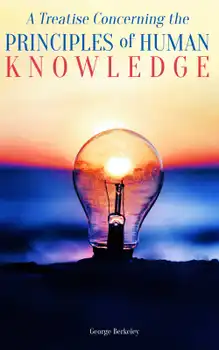
A Treatise Concerning the Principles of Human Knowledge (Annotated) : Enriched Edition. Immaterialism, Perception, and Divine Order in Early Modern Empiricism

A Treatise Concerning the Principles of Human Knowledge is Berkeley's decisive statement of immaterialism: the doctrine that sensible objects exist only as perceived ideas, sustained ultimately by the infinite perception of God. Written in crisp, argumentative prose, the work dismantles abstract ideas, material substance, and representative realism, placing itself at the center of early modern debates after Descartes, Locke, and Malebranche. Its style is polemical yet lucid, seeking not paradox but a restoration of common sense against skeptical metaphysics. George Berkeley, Irish philosopher, Anglican bishop, and one of the great empiricists, wrote the Treatise while still a young scholar at Trinity College Dublin. His religious commitments and philosophical acuity combine in a project meant to defend both ordinary experience and theism. Convinced that belief in matter encouraged skepticism and atheism, Berkeley recast perception as an immediate relation between minds, ideas, and divine order. This book is essential for readers of philosophy, theology, and intellectual history. It rewards careful attention, challenging habitual assumptions about reality while offering one of the most elegant and provocative systems in the canon.

This enriched edition has been carefully crafted to add value to your reading experience.

- A succinct Introduction situates the work's timeless appeal and themes.

- The Synopsis outlines the central plot, highlighting key developments without spoiling critical twists.

- A detailed Historical Context immerses you in the era's events and influences that shaped the writing.

- An Author Biography reveals milestones in the author's life, illuminating the personal insights behind the text.

- A thorough Analysis dissects symbols, motifs, and character arcs to unearth underlying meanings.

- Reflection questions prompt you to engage personally with the work's messages, connecting them to modern life.

- Hand‐picked Memorable Quotes shine a spotlight on moments of literary brilliance.

- Interactive footnotes clarify unusual references, historical allusions, and archaic phrases for an effortless, more informed read.
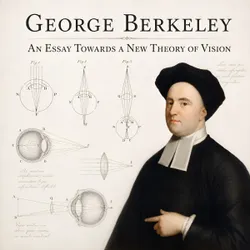
Om denne bog

A Treatise Concerning the Principles of Human Knowledge is Berkeley's decisive statement of immaterialism: the doctrine that sensible objects exist only as perceived ideas, sustained ultimately by the infinite perception of God. Written in crisp, argumentative prose, the work dismantles abstract ideas, material substance, and representative realism, placing itself at the center of early modern debates after Descartes, Locke, and Malebranche. Its style is polemical yet lucid, seeking not paradox but a restoration of common sense against skeptical metaphysics. George Berkeley, Irish philosopher, Anglican bishop, and one of the great empiricists, wrote the Treatise while still a young scholar at Trinity College Dublin. His religious commitments and philosophical acuity combine in a project meant to defend both ordinary experience and theism. Convinced that belief in matter encouraged skepticism and atheism, Berkeley recast perception as an immediate relation between minds, ideas, and divine order. This book is essential for readers of philosophy, theology, and intellectual history. It rewards careful attention, challenging habitual assumptions about reality while offering one of the most elegant and provocative systems in the canon.

This enriched edition has been carefully crafted to add value to your reading experience.

- A succinct Introduction situates the work's timeless appeal and themes.

- The Synopsis outlines the central plot, highlighting key developments without spoiling critical twists.

- A detailed Historical Context immerses you in the era's events and influences that shaped the writing.

- An Author Biography reveals milestones in the author's life, illuminating the personal insights behind the text.

- A thorough Analysis dissects symbols, motifs, and character arcs to unearth underlying meanings.

- Reflection questions prompt you to engage personally with the work's messages, connecting them to modern life.

- Hand‐picked Memorable Quotes shine a spotlight on moments of literary brilliance.

- Interactive footnotes clarify unusual references, historical allusions, and archaic phrases for an effortless, more informed read.
Kom i gang med denne bog i dag for 0 kr.

  • Få fuld adgang til alle bøger i appen i prøveperioden
  • Ingen forpligtelser, opsiges når som helst
Prøv gratis nu
Mere end 52.000 mennesker har givet Nextory fem stjerner i App Store og Google Play.