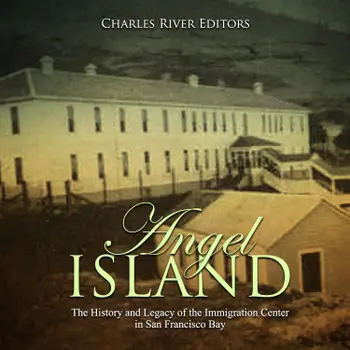
Angel Island: The History and Legacy of the Immigration Center in San Francisco Bay

Angel Island, the largest island in San Francisco Bay at about 740 acres, was originally named when Don Juan Manuel Ayala sailed into San Francisco Bay. Supposedly, the island was named “Angel” because the land mass appeared to him as an angel guarding the bay, and when Ayala made a map of the Bay, on it he marked Angel Island as, “Isla de Los Angeles.” This would remain the island’s name ever since, even as the use of the island would certainly change over time.

The island is currently a large state park with beautiful views of the San Francisco Bay and skyline, but the most noteworthy part of the park is the immigration museum. That site is what makes Angel Island so famous today, as it remains best known for being the entry point for Asian immigrants to the United States from 1910-1940. There is no way to know for sure how many people actually passed through Angel Island because of the destruction of most of the historical documentation in a fire, but historians estimate that it was between 100,000 and 500,000 people.

Angel Island is often referred to the Ellis Island of the West, but many argue that they are extremely different in their preservation of immigrant histories. For one, Angel Island took much longer to preserve, and the preservation of Ellis Island focuses on the positive reception of European immigrants on the East Coast, which plays well to corporate sponsors and the American story. Historian John Bodnar explained that Ellis Island represents “the view of American history as a steady succession progress and uplift for ordinary people.”
Kom i gang med denne bog i dag for 0 kr.

  • Få fuld adgang til alle bøger i appen i prøveperioden
  • Ingen forpligtelser, opsiges når som helst
Prøv gratis nu
Mere end 52.000 mennesker har givet Nextory fem stjerner i App Store og Google Play.

  1. Ny

    Mysteries of the Sea: A Collection of Lost Ships, Supernatural Stories, and Other Odd Tales Underneath the Waves

    Charles River Editors

  2. Ny
    4.0

    Napoleon’s Grande Armée: The History and Legacy of the French Army during the Napoleonic Wars

    Charles River Editors

  3. Ny

    The Catholic Church’s Most Influential Religious Military Orders: The Controversial and Mysterious History of the Knights Templar, the Teutonic Knights, and the Order of the Holy Sepulchre

    Charles River Editors

  4. Ny
    3.5

    The Boxer Rebellion: The History and Legacy of the Anti-Imperialist Uprising in China at the End of the 19th Century

    Charles River Editors

  5. Ny

    The Most Controversial Cases of the Early 20th Century: The Murder of Stanford White, Sacco & Vanzetti, Leopold & Loeb, and the Lindbergh Baby Kidnapping

    Charles River Editors

  6. Ny

    The Jewish Revolts in Antiquity: The History of the Jews’ Uprisings against the Seleucids and Romans in Ancient Judea

    Charles River Editors

  7. Ny
    3.0

    The Age of Reptiles: The History and Legacy of the Mesozoic Era and the Dinosaurs

    Charles River Editors

  8. Ny
    1.0

    Fritz Lang: The Life and Legacy of the Influential German-American Film Legend

    Charles River Editors

  9. Ny
    4.0

    Emperor Hirohito: The Life and Legacy of Japan’s Ruler during World War II

    Charles River Editors

  10. Ny
    3.3

    Modern Latvia: The History and Legacy of Latvia’s Struggle for Independence in the 20th Century

    Charles River Editors

  11. Ny

    Mining Towns in the Wild West: The History of the Construction and Abandonment of the Frontier’s Most Famous Sites

    Charles River Editors

  12. Ny
    4.0

    Saber-Toothed Tigers and Woolly Mammoths: The History of the World’s Most Famous Prehistoric Mammals

    Charles River Editors